
Content Strategy
How to Get Brand Deals with Under 10K Followers (The Micro-Influencer Guide)
October 10, 2026
Stop juggling 12 tools! Build a powerful $200/month creator stack that acts like one seamless system, saving you time and boosting your output.
You don’t need 12 tools to run a creator business—most creators just need a single workflow that connects ideas, output, and income. When your stack is too fragmented, you spend more time switching tabs than creating. Let’s build a realistic $200/month creator stack that behaves like one system.
It starts innocently: a hook generator, an editing plug-in, a scheduling app, a CRM, a media kit builder, a spreadsheet for outreach, a dashboard for analytics… and suddenly you’re paying for subscriptions you rarely open. The hidden cost isn’t money—it’s attention. Every new tool adds a tiny “friction tax” (logins, formatting, exporting, duplicate fields), and those seconds compound into hours.
Here’s a real-world pattern: two creators can post the same number of times, but the one with a streamlined content creator workflow typically wins because they can repeat the process faster. In influencer marketing, even small operational improvements show up in performance: when posting cadence becomes consistent, engagement rates typically stabilize and trend upward over time. For example, creators who use structured planning often see better retention of momentum because they’re not forced to “catch up” every week.
Before you buy anything else, do a quick audit. List every tool you currently use and group it into one of three buckets: Content (ideas, scripts, editing, thumbnails), Distribution (scheduling, publishing, captions, hashtags), and Revenue (pitches, rates, deals, invoices, follow-ups). If you have multiple tools in the same bucket, you likely don’t need them—you need one system to cover that bucket end-to-end.
Let’s design a stack that’s intentionally boring: fewer subscriptions, shared data, and fewer handoffs. Assume you’re a YouTuber or multi-platform creator building weekly content while pitching brands and starting digital products. The goal isn’t to “buy the best software for YouTubers.” It’s to build an operational engine.
System 1: Content Engine (about $90/month)
You need ideation, a script/caption pipeline, distribution-ready drafts, and a schedule. Use one platform (or one integrated workflow) to do: generate content ideas, create hooks, draft scripts/captions, and plan a week of posts. Then schedule everything in one place.
System 2: Performance & Feedback (about $40/month)
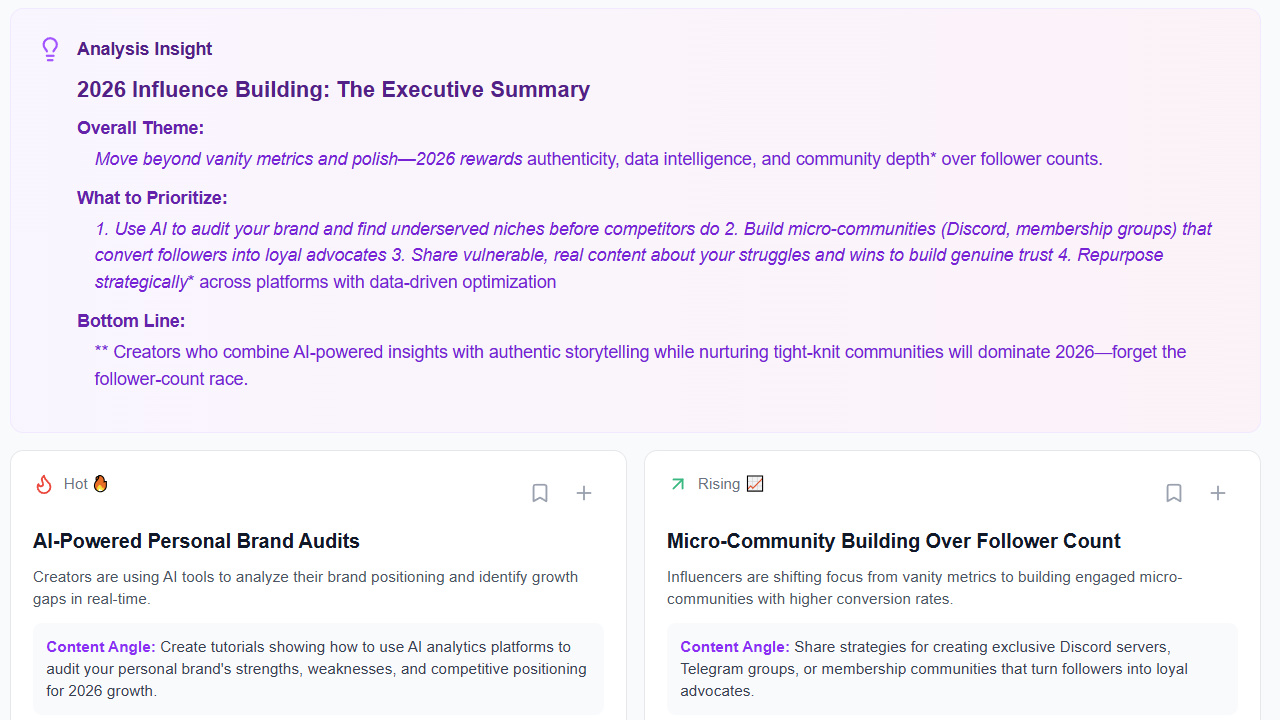
Your next tool shouldn’t be “another dashboard.” It should answer one question: What’s working? Track cross-platform results (saves, shares, reach, engagement rate) and compare formats. This is how you learn what to double down on for the YouTube algorithm 2026 era—where watch behavior and audience signals matter more than “viral luck.”
System 3: Income Pipeline (about $70/month)
For income, you need two things: fast brand outreach + a way to track deals through payment. If your pitches live in email threads and your contracts live in random folders, you’re rebuilding your process every time. Centralize your rates, proposals, and follow-ups.
In practice, this stack often looks like: one content planner/scheduler, one content-creation assistant (hooks + captions + scripts), one analytics view, and one CRM/deal pipeline. That’s how you get “one system” without forcing everything into a single spreadsheet.
If you want how to get more views without burning out, your workflow must be repeatable. Use a simple weekly loop: capture ideas, turn them into scripts, publish, measure, then refine.
Here’s a concrete example for a week of YouTube + short-form content. On Monday, use a hook-focused workflow to generate 10–15 topic angles. You’re not looking for titles yet—you’re looking for “audience pain + promise.” Then pick 2 primary topics for the week. Next, draft one YouTube script and 3–5 short-form companion posts from the same core idea (same angles, different packaging). This matters because creators often lose performance by treating every platform like a separate business.
On Tuesday, schedule your posts. If you publish at inconsistent times or forget captions/hashtags, you’ll lose reach you could have earned with a smoother distribution process. Use a tool that supports both planning (weeks at a time) and auto-scheduling (so you don’t need a separate calendar tool to manage content schedule).
On Wednesday/Thursday, monitor performance. Don’t wait for “the end of the month.” Look at early signals: saves, shares, comment quality, and average watch behavior. Then revise your next set of hooks—this is where creators typically improve fastest. If one format gets higher engagement rate, make it your default for the next batch.
Finally, build a feed-forward habit: keep notes inside your process so “what worked” becomes your next week’s starting point. If you’re also learning content creation tools 2026, the best tool is the one that reduces decision fatigue. Your system should tell you what to do next—rather than forcing you to decide every day.
If you want extra structure for consistency, you can follow the principles in How Consistency Wins the Content Creator Game (Playbook) and adapt the workflow to your platform mix.
Most creators don’t fail because their content is bad—they fail because their business process is chaotic. You might get inquiries, but if you can’t respond quickly or track follow-ups, you bleed deals. A creator business plan isn’t complicated; it’s a sequence you execute every week.
Here’s the lean revenue pipeline: rate clarity → pitch in minutes → proposal → contract → invoice → follow-up. Instead of searching for the “best time to follow up” every time, your pipeline automates the logic.
Use a rate calculator to understand what you should charge based on your real metrics and niche. Then when a brand opportunity appears, generate a brand pitch quickly with a consistent template and tailored talking points. The pitch should match the brand’s goal: education, awareness, product trials, or performance campaigns. If you’re trying to learn how to transition from side hustle to full time, this speed-to-response is one of the biggest leverage points because full-time creators win more deals simply by moving faster.
Track deals from first contact to paid invoice. This prevents a common issue: you think you’re “following up,” but you’re actually following up on the wrong stage. Also, protect yourself with clear contracts and keep invoices ready so payment doesn’t stall at the approval step.
If you’re building long-term income, your pipeline should also support selling digital products creator-style: creator templates, guides, presets, courses, or memberships. Use the same CRM context to segment leads and turn brand traffic into owned audiences over time.
For a deeper angle on turning your audience into revenue streams, read Monetize Your Audience: A Practical Creator Income Playbook.
Most tool stacks fail because they’re optimized for software, not optimized for execution. Your system should make the next action obvious—not make you manage tabs.
iBuildInfluence is designed for creators, not repurposed B2B software—so your workflow stays connected instead of scattered across 12+ apps. For the content engine, you can use the Content Generator to turn one idea into AI posts, scripts, and captions, and then use Hook Lab to generate and score hooks (so you’re not guessing what will earn attention). For planning, Content Planner & Content Queue helps you map weeks of content and auto-schedule so your tool stack doesn’t become a “daily calendar management” job.
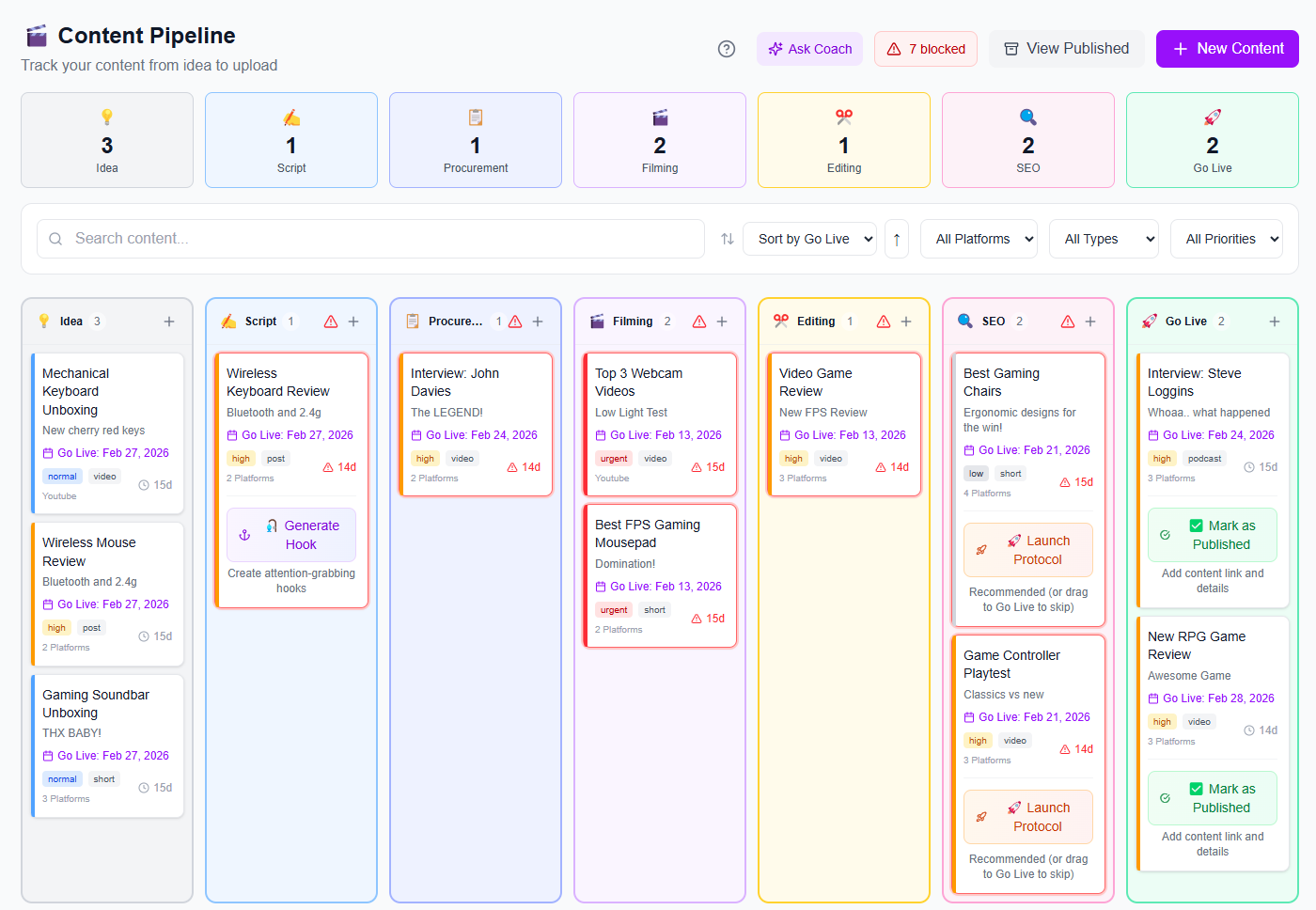
For the revenue pipeline, iBuildInfluence supports the step-by-step selling process with Pitch Machine (AI-written brand pitches in seconds) and Deal Pipeline / Revenue Pipeline to track leads through payment. And if you need clarity on what you should charge, the Rate Calculator can help you set a realistic market rate—especially useful when you’re figuring out how to price yourself as your growth stabilizes.
Start with one system for content production and scheduling, one place to track performance, and one pipeline to manage brand outreach and deals. If you’re building a lean setup, prioritize speed and repeatability over “having everything.” A focused content creator workflow beats a huge collection of apps every time.
Use a single content planner that supports weekly planning and auto-scheduling across platforms. The goal is to keep your source-of-truth in one place so you don’t reformat dates, repost manually, or forget captions/hashtags.
Yes—digital products fit perfectly into a streamlined workflow because you can package content into assets and track customer interest through your revenue pipeline. Focus on your content creation tools 2026 for faster production, then use one system to manage leads, follow-ups, and payments.
You don’t need 12 tools—you need one connected workflow across content, distribution, and income.
A realistic $200/month stack can cover your entire operation when tools are combined by purpose.
Use a weekly loop: ideate → draft → schedule → publish → measure → improve hooks and formats.
Centralize revenue with a deal pipeline so pitches, proposals, contracts, and payment tracking don’t live in separate places.
Platforms like iBuildInfluence help you reduce tab-switching by combining content, planning, analytics, and income workflows.
Found this helpful? Share it:
iBuildInfluence Team
Creator growth strategist at iBuildInfluence. Helping content creators land brand deals, grow their audience, and build sustainable creator businesses.
Try iBuildInfluenceJump in and use the calendar to lock the day your next post goes out.
Open the calendar