Creator Tips
iBuildInfluence to Hit Your Content Creator Goals (Plan + Execute)
September 30, 2026
"Just upload more" isn't the fix. Discover the biggest mistake small YouTubers make and how to build a content engine that actually grows your channel.
If you’re a small YouTuber, you’ve probably heard “just upload more.” The real issue is usually bigger than effort—it’s how you decide what to upload and whether you’re building something that compounds. The biggest mistake small YouTubers make is treating each video like a one-off instead of running a repeatable, data-informed content engine.
Most small channels don’t fail because the creator is untalented—they fail because the channel lacks a system. A system means you can answer three questions before you hit “publish”: Who is this for?, why will they click?, and what will you do next based on performance? When uploads are random, you can’t tell whether your growth is driven by the topic, the packaging, or pure luck.
Here’s what this looks like in real life: a creator sees one “viral” video topic, makes a similar video, then switches niches the next week. Or they publish whenever inspiration hits, resulting in long gaps—then try to catch up with multiple low-prep uploads. That “spray and pray” approach can work for lottery-style luck, but it rarely creates a stable trajectory. And YouTube rewards consistency and audience satisfaction, not just output.
Practical fix (start today): Build a simple weekly pipeline. Pick 1 content “pillar” (for example: beginner SEO tutorials), then 2–3 subtopics you can cover repeatedly. Create a list of 20–30 video ideas within that pillar, then schedule one video per week for 8 weeks. During that cycle, do not pivot to unrelated themes—if you must change, do it intentionally after you review what’s working.
To avoid getting stuck with bland ideas, use packaging planning: decide your hook angle first (the first 5–15 seconds), draft a clear promise, and outline the structure. When creators plan that way, even modest channels tend to earn better click-through and retention because the video matches viewer expectations.
Small YouTubers often look at views but ignore the underlying signals. Views are a lagging indicator. The earlier metrics tell you whether your packaging (title/thumbnail) and audience fit (retention and satisfaction) are working. Without those numbers, you end up repeating what feels right instead of what works.
Consider a common scenario: a video gets 2,000 views in a week, then flatlines. The creator says, “The algorithm didn’t push it,” and moves on. But if that video had a low click-through rate, YouTube may have shown it to fewer people due to poor packaging. If it had strong click-through but weak average view duration, the problem is likely the intro or the mismatch between the promise and the content. If you don’t separate these causes, you’ll “optimize” the wrong thing.
Practical fix: For every upload, track three metrics in the first 48–72 hours: (1) impression click-through rate (CTR) when available, (2) average view duration (or retention curve), and (3) engagement signals like likes/comments relative to views. Then create one decision rule.
Example decision rules:
• If CTR is low but retention is decent: rewrite title/thumbnail and tighten the first 10 seconds.
• If CTR is decent but retention is low: change your hook, remove filler, and make the first “payoff” earlier.
• If both CTR and retention are strong: double down by making a “Part 2,” a deeper tutorial, or a comparison video.
If you do this for only 8 weeks, you’ll stop “guessing” and start building a feedback loop. That shift is the difference between hoping for traction and earning it.
Trends can be powerful, but small YouTubers fall into a trap: they copy the surface of viral videos while missing the real reason they performed. Viral videos usually hit a specific viewer intent—people want a shortcut, an explanation, a template, a ranking, or an honest teardown. If your video doesn’t deliver that intent quickly, YouTube will notice users leave or don’t engage.
Here’s a real example: a creator sees a “$0 to $1,000 in 30 days” video and uploads a “how to make money” episode, but their channel audience mainly watches beginner tutorials. Their video might be accurate but not aligned. The viewer intent isn’t “information about money”—it’s “a plan they can follow this week.” That mismatch often shows up as early retention drops or weak engagement.
Practical fix: Use a trend-to-intent checklist. Before filming, answer: What problem does the viewer think they’re solving by clicking? and What is the fastest path to a win inside this topic? Then design the script so the first major value lands in the first third of the video—not at minute six.
Also, keep a “trend library.” For each trend, record what angle worked (or didn’t): the hook style, video length, topic scope, and whether it was beginner-friendly. Over time, you’ll build a personalized version of “what works,” instead of chasing every spike.
Done right, the result is not just more uploads—it’s more targeted videos. That’s how you increase the chance of earning consistent recommendations rather than one-hit view spikes.
Packaging is not a cosmetic step—it’s a performance lever. Small YouTubers commonly script the whole video, then scramble for a title and thumbnail at the end. But by then, the packaging no longer reflects the video’s strongest moment, and the first impression becomes weaker. On YouTube, click-through and satisfaction are connected; packaging sets expectations, and retention proves whether you delivered.
A fast way to spot this mistake: think about your title/thumbnail promise. If you watched your video with the mindset of a new viewer, would you feel it delivered on the promise in the first 10–30 seconds? If not, the packaging likely isn’t aligned to the video’s actual best moment.
Practical fix: Use a “hook-first workflow.” Pick your single-sentence promise first. Then build your thumbnail text around that promise. Finally, script the intro to confirm the promise immediately.
Example (for a channel about productivity):
• Title promise: “Stop wasting mornings: the 3-step routine I use in 12 minutes.”
• Thumbnail: “12-MIN MORNING” + one clear visual cue (timer, checklist).
• Intro goal: deliver step 1 within the first 15–30 seconds, then preview steps 2–3 so viewers stay.
If you want better results, test two packaging directions per month (not random changes every video). Consistent testing turns content creation into an experiment, not a gamble.
Small creators frequently publish inconsistently—sometimes multiple videos in a week, then nothing for three weeks. That may feel harmless, but inconsistent schedules make it harder for the audience to form habits and for YouTube to understand what your channel reliably offers.
Also, when you’re behind, you may cut corners: shorter research, weaker scripts, less refined thumbnails, and no time to improve retention. The result is a cycle: inconsistent upload → lower performance → creator uncertainty → even more inconsistent output.
Practical fix: Choose a realistic cadence you can sustain for 2–3 months. If weekly is too much, start with every 10–14 days. If weekly is doable, protect the schedule. Use a “production calendar” that includes research days, scripting, filming, editing, and packaging time.
For content creator workflow stability, aim for a repeating process: create 2–4 scripts at once, batch film, then edit on a predictable cycle. This keeps the quality consistent and makes it easier to build a pipeline.
If your goal is how to transition from side hustle to full time, consistency isn’t just marketing—it’s operational. You can’t scale income (ads, sponsors, or sell digital products creator offers) if your publishing process can’t run on a dependable rhythm.
The algorithm can’t reward what you don’t measure. Stop chasing views—start building a system that turns every upload into the next decision.
iBuildInfluence supports the exact creator workflow mistake small YouTubers make: relying on vibes instead of a system. Use Trend Scout to discover topics before they peak, then funnel those ideas into a repeatable plan with Content Planner and Content Queue so you stop “random uploading” and start scheduling a consistent pipeline.
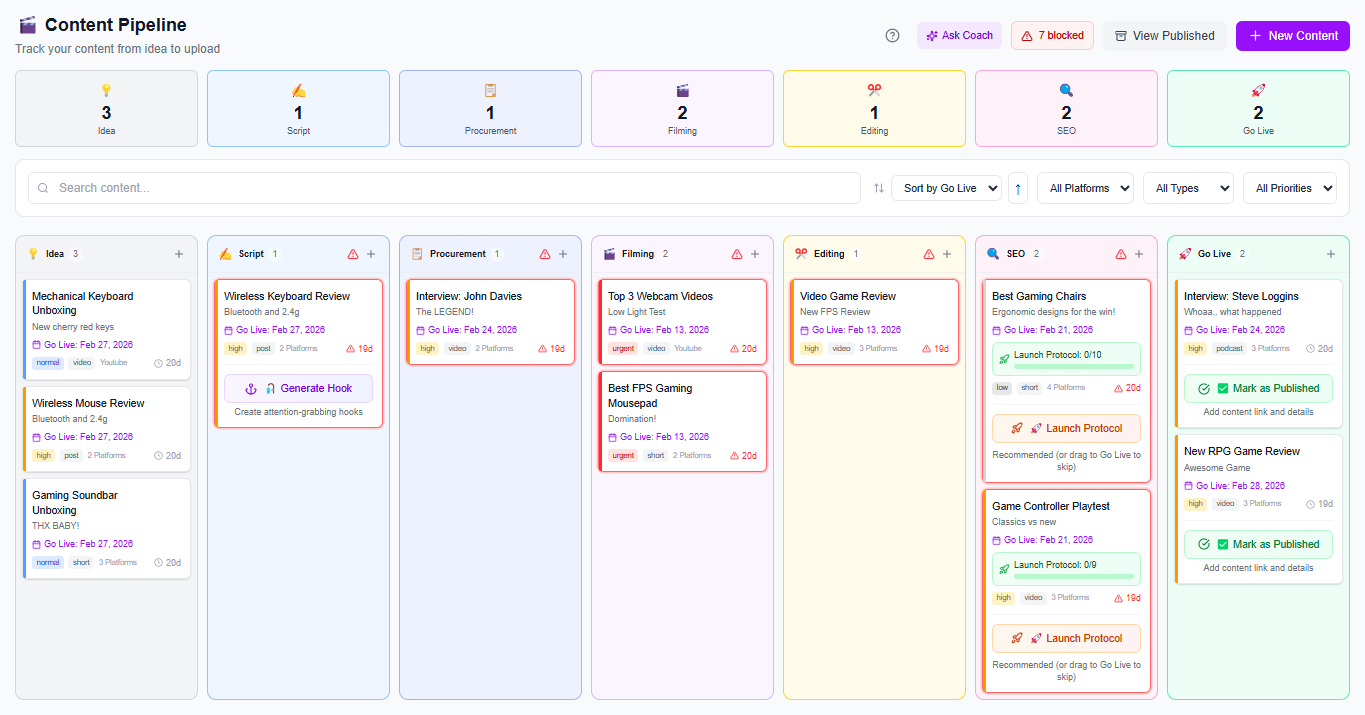
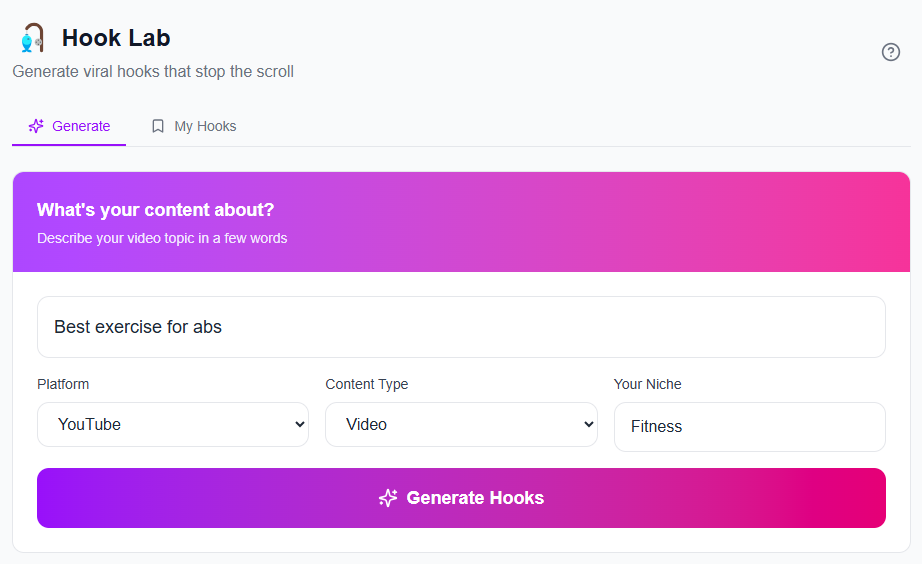
For performance optimization, use Social Statistics to analyze what’s actually working (engagement rate, reach, and cross-platform signals) and pair it with a clear content loop. For packaging support, Hook Lab helps generate and score hooks so you can strengthen the first seconds—the part most likely responsible for retention drops. Together, these tools help you build a content creator business plan that aligns topics, hooks, and publishing rhythm.
The biggest mistake is treating each video as a one-off instead of running a repeatable, data-informed content system. They upload without a consistent schedule, then guess why videos perform the way they do. The fix is a workflow: plan themes, improve packaging, and use early performance signals to guide the next upload.
Focus on improving click-through and retention together. Use better hooks (especially in the first 10–20 seconds), align your title/thumbnail promise with the video’s first payoff, and test packaging directions consistently. Then review performance quickly so you double down on what works instead of starting over each time.
Use scheduling and planning tools so your content creator workflow stays consistent. A practical approach is to batch ideas into a pipeline using a content planner, then auto-schedule with a queue. Platforms like iBuildInfluence also support this with analytics and hook generation to reduce guesswork.
The biggest mistake small YouTubers make is publishing without a repeatable, measurable content system.
Stop guessing—track early signals like CTR/packaging fit and retention, then use clear decision rules.
Use trends, but match viewer intent; don’t copy viral topics without the underlying “why they clicked.”
Plan titles and thumbnails first, then write the intro to deliver the promise immediately.
Maintain a sustainable upload schedule and build a pipeline so quality and consistency don’t collapse.
Found this helpful? Share it:
iBuildInfluence Team
Creator growth strategist at iBuildInfluence. Helping content creators land brand deals, grow their audience, and build sustainable creator businesses.
Try iBuildInfluence