Income & Monetization
Diversify Beyond YouTube: Multiple Income Streams for Savvy Influencers
September 28, 2026
Learn how to find your creator niche sweet spot—where the right audience is already looking to buy, not just admire.
Most creators don’t fail because they’re not talented—they fail because they pick a niche with the wrong “buyer intent.” You can earn views, likes, and even subscribers, but still struggle to convert if your audience isn’t primed to spend.
The “creator niche sweet spot” is the overlap between: (1) topics people actively search for, (2) problems they pay to solve, and (3) content you can repeatedly produce without burning out. This guide shows you exactly how to find that overlap and validate it with real tests.
If you want an audience that buys, your niche shouldn’t be “what you like”—it should be “what people need help with and already spend money on.” A great way to evaluate niche ideas is to score them using buyer-intent signals.
Use this quick framework (rate each 1–5): Search intent, commercial intent, budget reality, and content repeatability. For example:
Case example: “Meal prep” vs “Meal prep for busy moms who work night shifts.” Both can get views. But the second one attracts people with clear constraints and a higher likelihood to pay for solutions (meal planning templates, coaching, grocery systems, digital recipes, subscription plans).
Next, check commercial intent in the real world. Look for products, communities, and platforms where money already changes hands. A niche with multiple active brands and creators selling something is usually a better starting point than one where everyone is “hoping” to monetize later.
One stat to anchor this: e-commerce and creator marketplaces are crowded for a reason—people prefer buying from a trusted guide. If you can’t find existing “paid solutions” for your niche, you’ll spend months educating before you can sell.
Many creators validate niches using engagement metrics (“I got 2,000 views!”). That’s useful, but it doesn’t prove willingness to buy. Instead, validate using offer-first testing: test a low-risk paid or lead-capture offer while you measure demand.
Here’s a simple 10-day validation sprint:
Day 1–2: Choose one core problem your audience wants solved (e.g., “I need a system to track brand deals and get paid faster”).
Day 3: Create a simple offer: a digital template, mini-course, or a paid “audit” (even $9–$29 is fine to test). If you’re not ready to sell, start with a lead magnet that naturally leads to a paid product.
Day 4–7: Publish 3–5 pieces of content that speak directly to that problem. Make the content outcome-focused, not generic. Example: “Here’s the exact 90-day deal tracker I use to avoid ghosting and get to payment” is more buy-aligned than “I talk about brand deals.”
Day 8–10: Measure conversion signals: click-through to your offer page, email opt-in rate, and—if you charge—early purchase rate. Even a small number matters. If you have 500 landing page visits and 50 opt-ins, you likely found buyer intent. If you have 500 visits and 1 opt-in, you likely have attention without demand.
If you’re building a YouTube strategy, remember: views are a top-of-funnel metric. Use a conversion lens. The fastest way to increase how to get more views while still converting is to align your video topic with a commercial outcome—then back it up with a strong hook.
For deeper alignment, you can pair this with YouTube CTR Mastery: Thumbnails, Hooks & Viewer Psychology to ensure the people who click are the same people likely to buy.
The niche sweet spot is rarely “one big category.” It’s usually a sub-niche where you can consistently publish and be the obvious choice. Think of it like owning a shelf in a store: the shelf is small enough to be reachable, but stocked with customers who know what they’re looking for.
How do you find sub-niches that sell? Look for “problem keywords” and “solution keywords.” “Fitness” is broad. “Low-impact workouts for people with knee pain” is specific. “Instagram growth” is broad. “How to get more followers fast with content repurposing workflows” is specific.
Then, test the content pipeline: can you produce 30–60 days of content without constantly switching themes? If your plan requires 20 different interests, your positioning will blur—and your audience won’t associate you with outcomes.
Practical exercise: write down 10 problem statements your ideal buyer repeats. Then convert them into content angles with outcomes and timeframes. Examples:
• “I wasted money on ads—how do I fix my targeting?” → content angle: ad diagnosis checklist + template
• “I’m consistent but my views stall” → content angle: distribution system audit + hook rewrite examples
• “I can’t get brand deals because my outreach looks generic” → content angle: offer-led pitches + tracking workflow
If you want an example of mapping niches to monetization, influencer marketing niches often work well when the “buyer” is clear: creators selling services, brands hiring, or agencies managing talent. You can connect that to your future revenue pipeline by learning how partnerships and sponsored content convert—this pairs nicely with Influencer Marketing for YouTubers: Partnerships & Sponsored Content That Converts.
Once you start publishing, don’t just watch growth—watch behavior. Demand shows up in what people do after they click: saves, shares, time spent, repeat engagement, and conversions to email or offers.
Here are the highest-signal metrics for “audience that buys”:
1) Email capture rate: If your content is valuable, people will opt in. A healthy starting benchmark: 1%–5% opt-in from landing pages, depending on traffic quality and page fit.
2) Saves and shares: On platforms where saves are available, they often correlate with intent. People don’t save random content—they save actionable resources.
3) Click-through to offers: Track clicks on your call-to-action links. If your CTR is strong but purchases are low, your offer may need clearer value.
4) Engagement quality: Comments that ask “how much,” “what template,” “can you share the link,” or “what’s the process” are direct buyer language.
5) Retention / completion rate (for video): If you can keep attention while teaching, you’re earning trust—the real prerequisite for paid trust.
To apply this, run a “content-to-offer” loop. Choose one offer and create 5–7 content pieces around it: tutorials, templates, case studies, and “mistake to fix” posts. Then evaluate which formats produce the best conversion signals.
If you’re simultaneously working on growth and conversion, it helps to connect your hook and thumbnail strategy to commercial topics. That’s one reason many creators improve both reach and monetization when they systematize their content workflow. (If you’re exploring how to build a creator workflow end-to-end, you’ll likely find value in a structured approach like the 90-Minute Batch Workflow: Script to Schedule a Week.)
After you find a sub-niche with buyer intent, you need consistent positioning. This is what stops your audience from perceiving you as “interesting” instead of “useful.”
Create a positioning statement using this template:
I help [specific audience] achieve [measurable outcome] using [unique method/toolset] without [common pain].
Example:
• “I help early-stage creators turn sponsorship outreach into paid deals using AI-assisted pitch workflows—without spending hours rewriting outreach from scratch.”
Then use the statement to guide content:
• Every post must answer one of these questions: What’s the outcome? What’s the method? What mistake are we avoiding? How do I start today?
Consistency doesn’t mean posting the same thing—it means repeating the same promise. Over time, the algorithm and humans both learn what you’re “for,” and your audience becomes more likely to buy because they recognize the pattern.
This is also how you transition from side hustle to full time: not by trying random niches, but by building repeatable proof that your audience pays for the result you deliver.
Pick a niche where the buyer already has a wallet—and then earn trust with content that solves the problem faster.
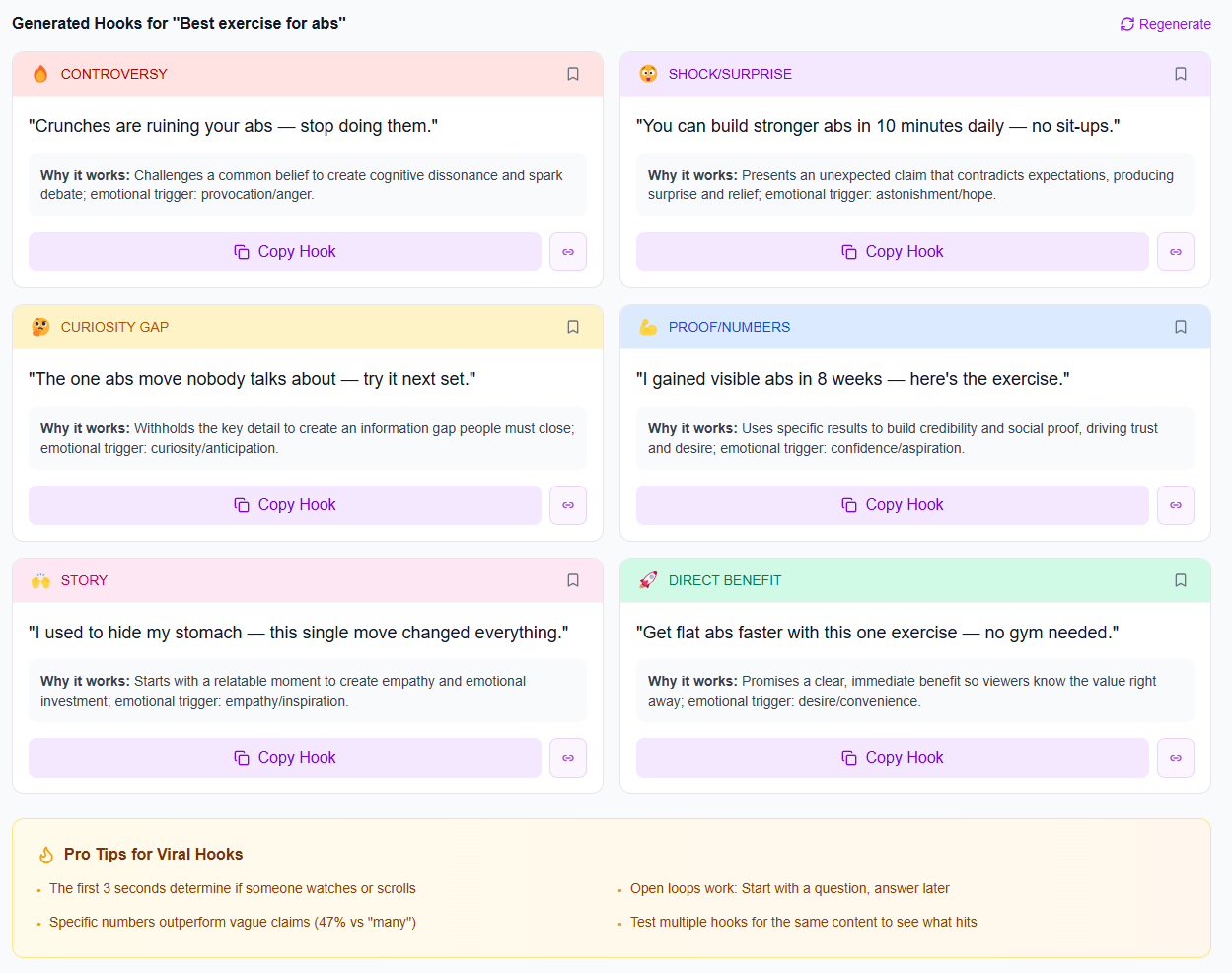
Finding the niche sweet spot is easier when you can connect content performance to buyer signals. With iBuildInfluence, you can use Trend Scout to discover topics before they peak and Hook Lab to generate and score hooks that fit your audience’s intent. This helps you test niche angles that are both timely and conversion-minded.
To validate offers and scale monetization, iBuildInfluence also supports your full creator workflow. Use Social Statistics to compare what’s driving saves, shares, reach, and engagement rate across platforms—then plan your next content batch with Content Planner & Content Queue. When you’re ready to sell, the platform’s Pitch Machine and Deal Pipeline help you align your niche with real brand opportunities and track deals from outreach to payment, reducing the “views but no money” gap.
Start by looking for problems tied to existing paid solutions—templates, courses, services, or active communities. Then run an offer-first validation test (lead magnet or low-cost digital product) and measure opt-ins, clicks, and early purchases—not just views.
Use a narrow sub-niche and create one high-clarity offer that solves a specific outcome. Publish problem-led content for 2–4 weeks, include a consistent CTA, and use an email list to nurture buyers until you have enough proof to raise prices.
Yes—if your content strategy matches both viewer intent and conversion intent. Use strong hooks and thumbnails to attract the right audience, then ensure your video teaches an outcome and includes a clear next step (email, resource, or offer).
The niche sweet spot is overlap: buyer intent + repeatable content + real monetization paths.
Validate with offer-first testing (opt-ins, clicks, early purchases), not engagement alone.
Choose sub-niches where you can own the problem and build consistent positioning.
Track behavior signals (saves, CTR, email capture, comment language) to confirm demand.
Use a systemized creator workflow to scale what works as you transition from side hustle to full time.
Found this helpful? Share it:
iBuildInfluence Team
Creator growth strategist at iBuildInfluence. Helping content creators land brand deals, grow their audience, and build sustainable creator businesses.
Try iBuildInfluencePrice the sponsored post from your audience, not a guess.
Open Rate Calculator