Income & Monetization
Diversify Beyond YouTube: Multiple Income Streams for Savvy Influencers
September 28, 2026
Discover 10 creator-friendly digital product ideas that actually make money—plus pricing, validation steps, and launch tactics.
If you’ve ever thought, “I should monetize, but I don’t want to sell cheesy courses,” you’re not alone. The fastest way to build income as a creator is to sell digital products that solve a specific problem for a specific audience. In this guide, you’ll get 10 digital product ideas that actually make money—with practical steps to validate, price, and launch.
Most creators don’t have a “content problem”—they have an execution problem. A results system product packages the exact process your audience needs to go from A to B. This is why templates and SOPs (standard operating procedures) consistently sell: they’re immediate, repeatable, and reduce uncertainty.
Real example: A YouTube gaming creator can sell a “30-Day Video Production Sprint” bundle: script template, shot list checklist, thumbnail spec sheet, and an SOP for batching. Buyers aren’t purchasing “information”—they’re purchasing speed and clarity.
How to build it this week: List your last 3 wins. For each win, write a 5-step SOP (what you did, in what order). Then convert it into assets: Notion/Google Sheets templates, checklists, and fill-in-the-blank documents.
Include a 1-page “How to Use This” guide with examples.
Toolkits work when they save time and remove decision fatigue. You’re not selling an abstract “tool,” you’re selling the inputs your audience needs to produce better work. Think: hook libraries, editing presets, swipe files, concept prompts, and content angle matrices.
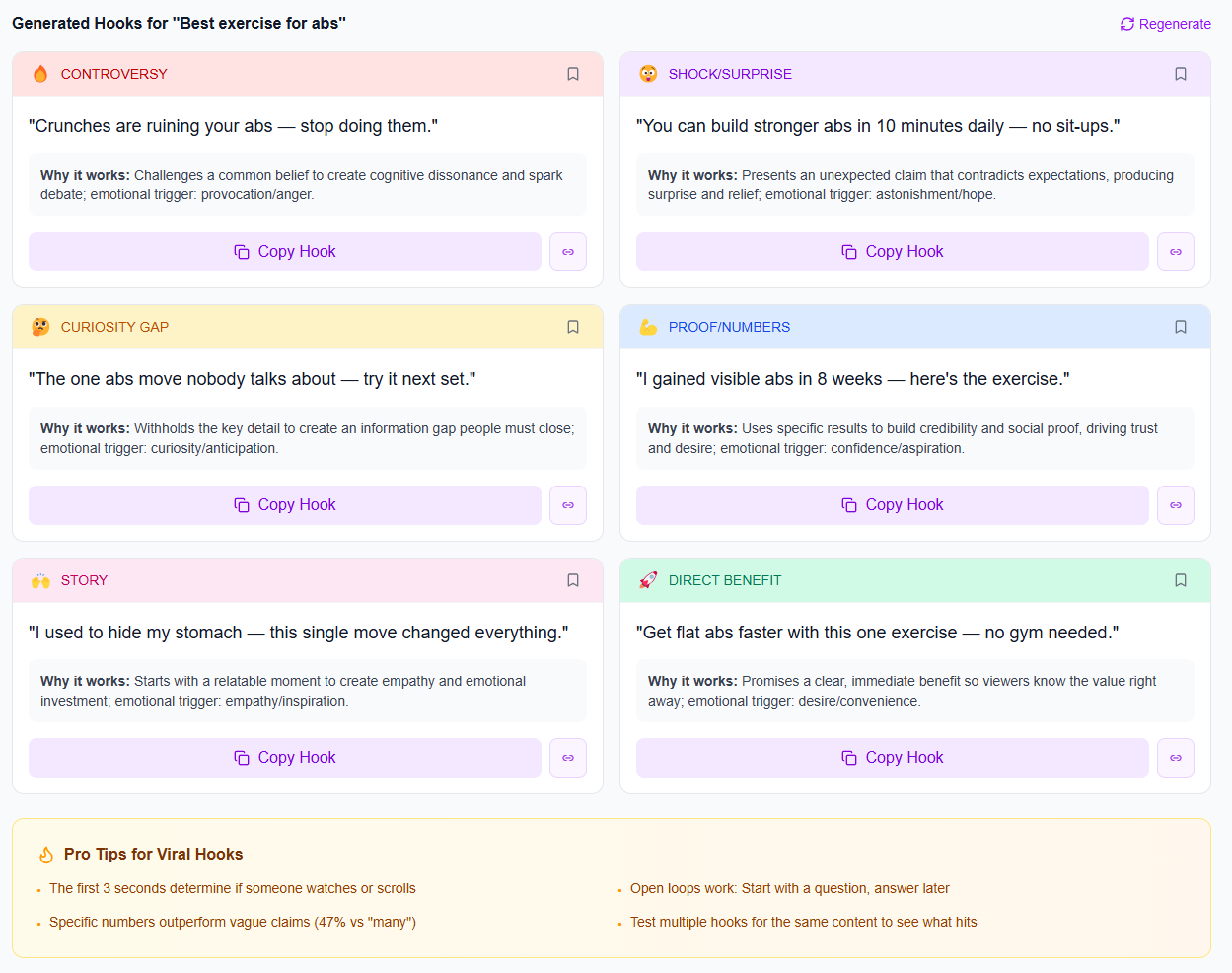
Real example: A fitness creator can sell a “Meal Prep Hook Toolkit” with 100 content angles, 25 caption frameworks, and 10 structure templates for Reels/Shorts. A creator can generate posts faster because they’re not starting from scratch.
Practical steps: Use your own content backlog to build the toolkit. Pick the top 20 posts by engagement (saves/shares) and reverse-engineer the patterns. Then bundle the assets into tiers (e.g., Basic: 25 templates, Pro: 100 templates + examples).
You don’t need a massive course to make sales. Micro-workshops are powerful because they focus on one outcome, one timeframe, and one clear deliverable. In practice, they sell extremely well to creators who are stuck and need momentum.
Real example: A creator who teaches YouTube growth can run a 90-minute workshop called “CTR Fix in 48 Hours.” It would include a thumbnail teardown checklist, hook rewrite templates, and a live activity where students rewrite 3 titles and 3 hooks.
Pricing guidance: Start between $19–$59 for a workshop recording + worksheet, or $99–$299 if you include live Q&A or a 1-time review. The key is to keep scope tight. If you can’t explain the result in one sentence, it’s too broad.
If your goal is more view growth, pair this with proven optimization thinking like YouTube CTR Mastery: Thumbnails, Hooks & Viewer Psychology so your workshop teaches what changes behavior—not just what looks cool.
Swipe files sell because they remove the hardest part of posting: the first draft. Many creators struggle with consistency because writing from scratch takes too long. Selling a library of scripts and caption formulas is a direct answer to that bottleneck.
What to include: For each content format, provide: 10–30 scripts (video/shorts), 50 caption hooks, and a “post structure” page (opening, value, proof, CTA). You can also sell creator-specific variants (e.g., “Story-based scripts” vs. “Direct response scripts”).
Realistic numbers: A library with 30 scripts and 50 hooks can sell for $29–$149 depending on niche and how tailored it is. The higher the specificity (and the more you show your scripts in action), the easier it is for buyers to say yes.
Pro move: Create a “Script-to-Post Conversion” walkthrough video inside the product. Buyers don’t just want scripts; they want to know how to adapt them to their voice.
Brands don’t buy your creativity—they buy certainty. If you can package “sponsor-ready” assets, you reduce risk for decision-makers and increase conversion for your own future deals. For buyers, these products also help them understand what makes campaigns perform.
Two angles that sell: (1) “Campaign Pitch Kit” templates (brief intake form, KPI sheet, deliverable scope). (2) “Compliance + Deliverable Checklist” for creators (usage rights reminders, posting schedule checklist, UTM tracking guide).
Example product: A “Creator Sponsor Pack” containing: 3 pitch email templates, a 12-slide proposal outline, an acceptance checklist, and an invoice-ready contract checklist. This is especially useful for small creators transitioning into branded work.
If you want a deeper foundation on partnerships that convert, reference Influencer Marketing for YouTubers: Partnerships & Sponsored Content That Converts to inform how you structure your deliverables and messaging.
A calendar product is valuable when it saves planning time and increases consistency. The trick: make it niche and ready-to-publish. Don’t sell a generic monthly planner—sell a themed 2–4 week content pack with post ideas, hooks, captions, and CTAs.
What to include: 14–28 posts (or Shorts episodes) with: headline/hook, caption, CTA, hashtag suggestions, and a “repurpose map” (how to turn one idea into multiple formats). Add a version for beginners and an advanced version (e.g., basic posting vs. analytics-based iteration).
How to validate: Post a teaser: “I’m turning my next 14 posts into a pack—who wants it?” Offer a pre-order discount for the first 25 buyers. If you don’t get interest, fix the scope before building the full thing.
If you teach—formally or informally—an authority playbook is one of the most durable products you can create. It’s basically a curriculum: what to learn, in what order, and why. Buyers pay for structure.
Example: A creator teaching personal finance might sell “From Zero to Investing Basics (6 Lessons + Workbook).” Each lesson includes a worksheet, example walkthrough, and a short quiz. Finance is regulated-ish, so you’d include disclaimers and focus on education, not financial advice.
Pricing: For an 6–8 lesson workbook, typical pricing is $39–$199. For a curriculum plus feedback (even limited), it can go higher. Again: scope and outcomes matter more than duration.
Full 1:1 coaching can be time-heavy, but async coaching scales. You can sell structured feedback where you give buyers a rubric plus optional review add-ons. The product becomes a “coach in a box,” and you preserve your time.
How it works: Create a rubric (e.g., for thumbnail quality, hook clarity, or brand alignment). Buyers submit one asset. You grade it against the rubric and return notes using pre-written feedback patterns so the process is repeatable.
Real example: “Thumbnail Clinic (Async)” includes: 20-point thumbnail checklist, 10 examples of good vs. bad composition, and a submission form. Optionally add a second tier with a 10-minute Loom review.
This also complements ideas like Biggest Mistake Small YouTubers Make (and How to Fix It), because your rubric can directly address the most common failure mode you see.
People don’t just want followers—they want an owned audience. That’s why “email funnel packs” and lead magnet kits sell. You’re helping buyers capture attention and nurture it into sales.
Product idea: “Creator Email Starter Kit” including 5 lead magnet concepts, 2 downloadable lead magnet templates (PDF + landing page copy), 4 email sequences (welcome, value, story, offer), and a simple “send cadence” guide.
Action steps: Build the kit from what you wish you had when you started. Then include a quick checklist: setup, welcome email, nurture emails, and the first paid offer email. Buyers need a “first month” plan—not theory.
Some creators sell extremely well by curating a niche marketplace: resources people buy because they match a specific use case. This works if you’re known in that niche and can package assets that fit workflows.
Examples: (1) Canva templates for a specific niche (wedding photographers, fitness studios, podcast covers). (2) Lightroom preset bundles with a clear “style” promise. (3) Social media posting packs for a niche like real estate agents.
How to make it monetize: Don’t sell “random templates.” Sell by use case: “Realtor Open House Promo Pack (20 posts + captions).” Add a short guide: how to edit in Canva, what fonts to use, and how to post for best results.
Tip: Use your own analytics to pick formats that perform. Cross-platform data helps you understand what your audience actually engages with and what you should package next.
The best digital products feel like a shortcut: they compress time, reduce uncertainty, and deliver a result your audience can use immediately.
Creating and selling digital products gets much easier when you can validate demand and package content into assets quickly. With Trend Scout, you can discover trending topics before they peak—so your product idea is aligned with what people are actively searching for. Use Hook Lab to generate and score viral hooks for your landing page, sales video script, and product description (one idea can become a full content package).
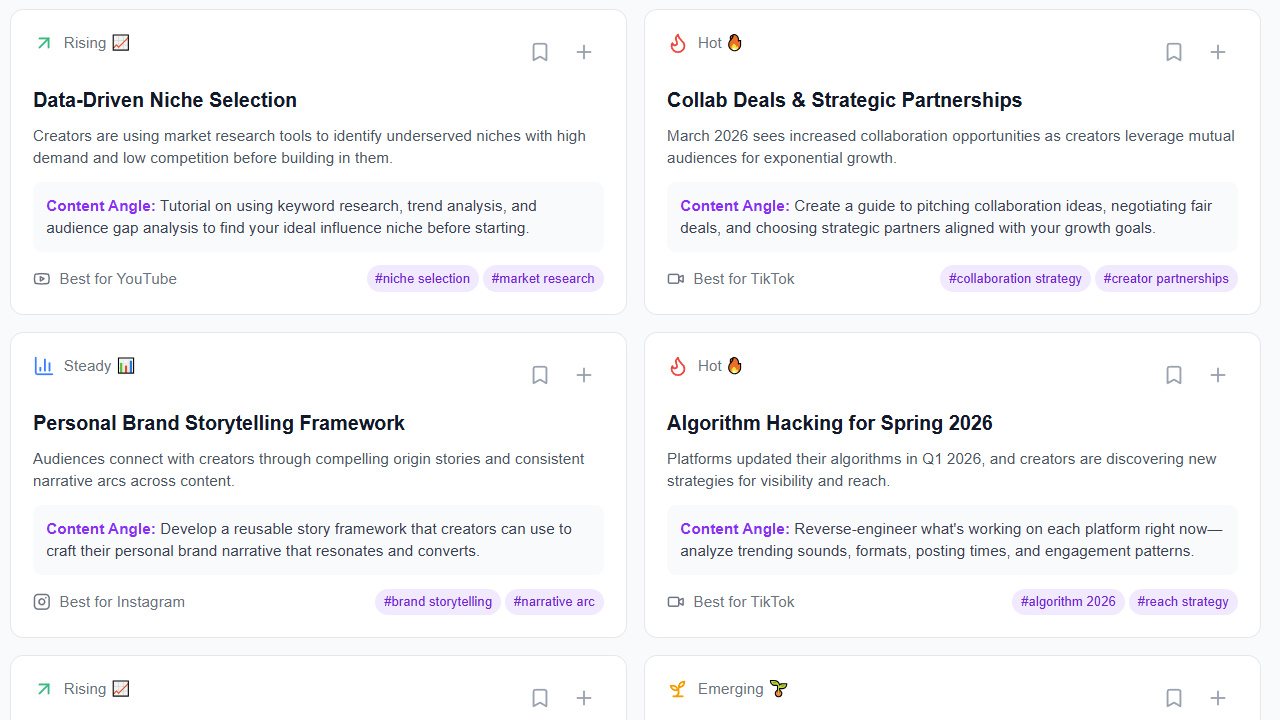
Once you build your product, turn it into a repeatable launch and delivery system. With Content Planner & Content Queue, you can schedule posts and drive pre-orders across platforms consistently, while Social Statistics helps you track saves, shares, and engagement rate to see which messaging converts. If you’re pitching partner promotions for your launch, Pitch Machine can help you draft outreach faster, and your Deal Pipeline can track progress from pitch to payment.
Start with products that don’t require heavy production, like templates, checklists, and swipe files. Choose one narrow problem your audience already asks about and package your exact solution. Pricing can begin as low as $19–$49 to reduce buyer friction.
Validate with demand signals: your most viewed posts, comment questions, DMs, and saves/shares. Turn the top repeated question into a deliverable (e.g., a workbook, SOP, or toolkit) and pre-sell to test interest before you build the full product.
Charge based on outcome and effort, not time spent. As a rule of thumb: micro-templates and libraries often sell at $29–$149, while structured workshops and curriculums land around $99–$299. If you include feedback or a live element, you can price higher.
Sell outcomes, not information: templates, toolkits, and systems that create speed and clarity.
Keep scope narrow: one outcome, one audience, one deliverable—micro-products convert better.
Validate before you build fully: pre-orders, teaser posts, and demand signals from engagement.
Bundle for use: include examples, walkthroughs, and “how to adapt” guidance.
Use tooling to scale execution: trend discovery, hook generation, and scheduled launches make consistency easier.
Found this helpful? Share it:
iBuildInfluence Team
Creator growth strategist at iBuildInfluence. Helping content creators land brand deals, grow their audience, and build sustainable creator businesses.
Try iBuildInfluencePrice the sponsored post from your audience, not a guess.
Open Rate Calculator