Income & Monetization
Diversify Beyond YouTube: Multiple Income Streams for Savvy Influencers
September 28, 2026
No big following? No problem. Brands buy results, not just reach. Learn the step-by-step to land your first brand deal by focusing on proof, positioning, and a winning pitch.
Getting your first brand deal can feel impossible when you don’t have a massive following—until you realize brands don’t only pay for reach. They pay for outcomes: trust, conversions, creative execution, and consistency. This guide shows you a practical, step-by-step way to land a brand deal with a smaller audience using proof, positioning, and a pitch that makes it easy to say “yes.”
If you’re stuck thinking “I need 10K+ followers to get a deal,” you’re filtering yourself out of opportunities that are designed for emerging creators. Many brands are actively seeking creators who can produce high-quality, on-brand content for specific segments—especially for product launches, localized campaigns, and retargeting.
Here’s a useful reality check: engagement often matters more than raw follower count. For example, a creator with 2,000 followers who consistently earns 8–12% engagement per post can deliver more measurable value than a creator with 50,000 followers who averages 1–2%. The “proof” is what you can demonstrate—views, watch time, saves, click intent, conversions, and brand alignment—so you need to build it intentionally.
Action step (today): pick one niche outcome you can credibly help with (examples: “helping busy runners choose shoes,” “showing beginner-friendly skincare routines,” “explaining software setups for small teams”). Then list three types of proof you can show in a pitch: (1) past content performance, (2) content quality, and (3) the audience you serve (even if small).
Brands expect a certain level of competence. If your profile looks inconsistent—random posting, unclear themes, or no examples of content styles—your pitch will get ignored. But you don’t need viral posts to get started. You need repeatable evidence that you can produce content that looks good and performs well.
Create a mini “proof pack” with 5–7 pieces of content that demonstrate the exact deliverable you’re asking for. For instance, if you want a skincare deal, build a set of posts/reels around: ingredient breakdowns, routine demos, before/after (if applicable), and “how I use it” story formats. For a fitness deal: form tips, beginner meal templates, and training progression clips. If it’s an app or software: screen-record tutorials, setup guides, and quick “what I changed and why” walkthroughs.
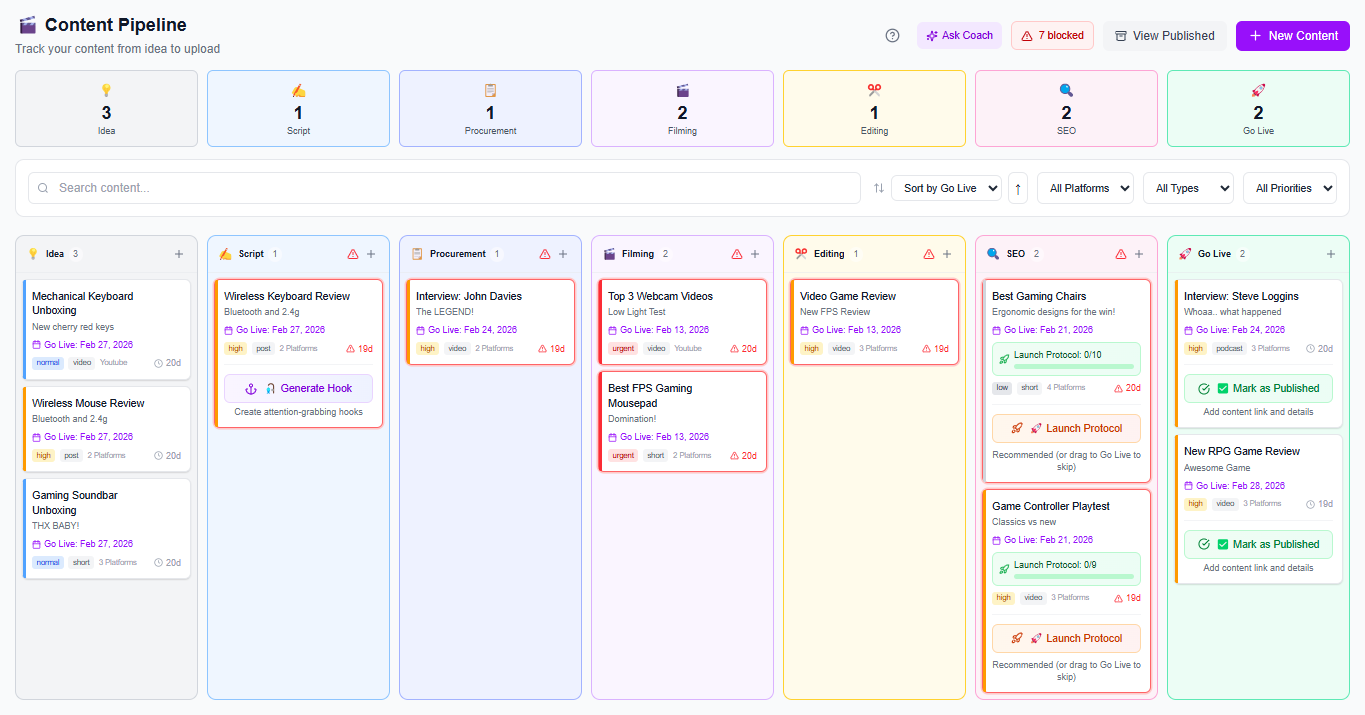
Use your analytics to quantify outcomes. Even basic metrics help. Cross-platform analytics can show you which posts drove the most engagement rate, saves, shares, and average watch time—signals brands care about because they correlate with interest and purchase intent. If you’re wondering how to get better hooks and retention, start with stronger openings. A simple way to improve results fast is to upgrade your first 1–3 seconds, since that’s where most viewers decide to stay or swipe.
Action step (this week): take 3 of your best-performing posts and rewrite the same idea in a new format tailored to brand deliverables. Example: turn a popular “tips” post into a short tutorial video with captions and a clear “who it’s for” statement in the first second. Then document the performance (views, engagement rate, and saves/shares if available) so you can cite it in outreach.
If you want a hook-focused approach, use this guide on building viral openings: The First 5 Seconds Is Everything — A Creator's Guide to Viral Hooks.
Many creators make the mistake of pitching vague “sponsored content” without a clear scope. Brands don’t want uncertainty; they want an outcome they can plan around. If you’re small, your advantage is flexibility and speed. So define a simple package you can deliver reliably within 7–14 days.
Here are realistic first-deal offers that often work without big reach:
Option A: 1 short-form video (15–45s) + 3 story frames. Keep it focused: one problem, one product, one result. Example: “How I organize my desk to stop procrastinating (and the organizer I use).”
Option B: UGC-style bundle for ads. Even if brands don’t run you as a long-term creator, they may buy content for performance campaigns. Offer: 3 variations of the same script (problem/solution/testimonial, “3 reasons,” and a “mistakes” angle).
Option C: Digital product integration. If you’re selling templates, guides, or communities, you can propose a partnership where the brand gives you a code to drive opt-ins. This can be especially effective as a sell digital products creator path.
To choose the best offer, ask: what deliverable does your niche naturally consume? If your audience loves quick tutorials, pitch tutorial deliverables. If they love routines, pitch routine-style content. If they love reviews, pitch “honest review with who it’s for” scripts.
Action step: draft one “starter package” and keep it consistent. Your first brand deal should be low-friction to approve. Then create 2–3 script angles for the package so you can tailor the offer to each brand without rebuilding from scratch.
Outreach is where creators with small followings win—if they target smart and pitch clearly. Instead of emailing big brands randomly, focus on companies that actively run influencer programs or launch new products. Look for brand signals: frequent product updates, seasonal campaigns, community-led marketing, and creators already tagging the brand.
Your goal is to make the brand think, “This creator is made for this campaign.” That means your pitch should include:
1) One-line relevance: why them, why you, why now.
2) Proof: cite 1–2 posts with performance numbers (example: “My last tutorial on X got 18k views and a 9.4% engagement rate”).
3) Deliverable clarity: what you’ll make (format, length, number of assets) and when.
4) Usage idea: suggest how they can use it—feed post, stories, ads, landing page embed, or email inclusion.
5) A low-risk call-to-action: offer two time slots for a quick call or ask if they’re open to a paid test.
One practical approach is to work with a creator-specific workflow: find brand contacts, craft tailored outreach, and keep a deal tracker so you don’t lose leads. A lot of first-time creators send messages in batches and then follow up randomly. That’s why deals stall. You need a repeatable pipeline.
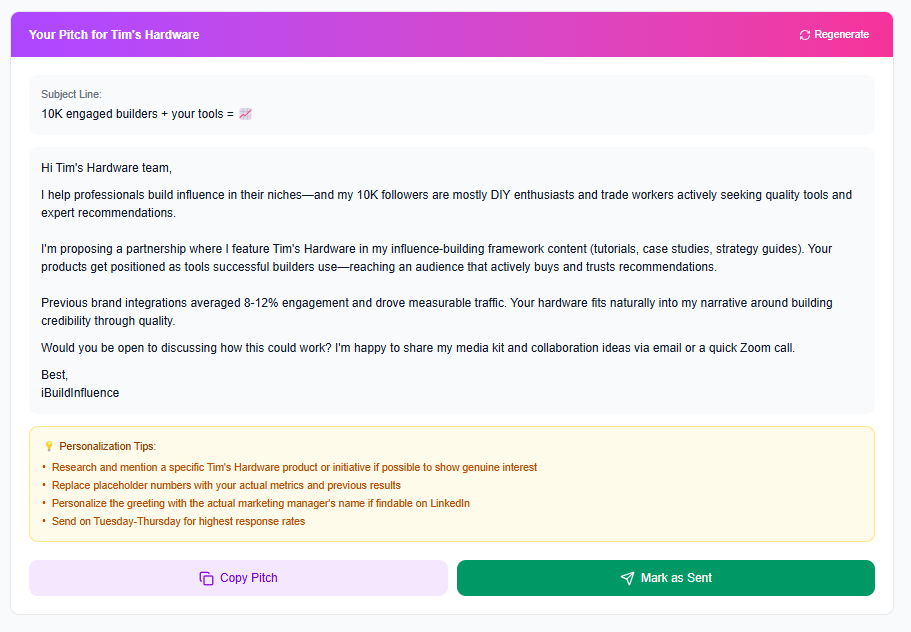
If you want to learn how to structure a pitch for conversions, this internal guide is excellent: How to Write the Perfect Pitch to Brands (iBuildInfluence Pitch Machine).
“Brands don’t hire you for your follower count—they hire you for your ability to create content that fits their audience and moves their metrics.”
Landing a first brand deal is easier when you treat it like a system, not a one-off scramble. iBuildInfluence includes tools built for creators across your content, outreach, and deal pipeline—so you can stay consistent while you pitch. For example, you can use Media Kit to auto-generate a professional profile with your live stats, which helps brands trust you even before you hit big numbers.
On the sales side, iBuildInfluence’s Pitch Machine speeds up tailored brand outreach by generating brand-ready pitches in seconds, and the Deal Pipeline lets you track leads from first message to contract and payment. That means your follow-ups are organized and you can learn what’s working. If you’re also rebuilding your content to look more “brand-friendly,” Social Statistics helps you identify which posts drive the strongest engagement signals so your pitch uses real performance data—not guesses.
You don’t need a specific number. Many small creators win deals by demonstrating strong engagement, clear niche fit, and consistent content quality. Brands care more about audience relevance and proof of performance than follower count alone.
Include: (1) why you’re a fit for that brand, (2) 1–2 examples of your best content with simple performance metrics, (3) what deliverables you’ll produce (format, number of assets, timeline), and (4) a low-risk next step. Keep it short and make the offer easy to approve.
Use your outreach process and your content process together. Create deal-ready proof by posting content that matches the deliverables you’re pitching, then measure what performs. A consistent creator workflow—planning, posting, and tracking results—helps you get better quickly and become more “brandable” over time.
You don’t need a big following—brands buy outcomes, not just reach.
Build a “proof pack” of 5–7 relevant posts and use real performance signals (engagement, saves/shares, watch time).
Pitch clear, low-friction deliverables you can execute reliably in 7–14 days.
Target brands with active campaigns and write pitches that include relevance, proof, scope, and a simple next step.
Use a system to track outreach and deal progress so follow-ups and conversions don’t fall through.
Found this helpful? Share it:
iBuildInfluence Team
Creator growth strategist at iBuildInfluence. Helping content creators land brand deals, grow their audience, and build sustainable creator businesses.
Try iBuildInfluence