
Content Strategy
Why Posting More Isn’t the Answer: Grow Smarter in 2026
July 9, 2026
Copy viral trends the smart way: remix formats, track performance, and build audience trust—so every trend iteration compounds growth.
Viral trends feel like shortcuts—until you try them and nothing happens. The difference isn’t “being lucky.” It’s whether you copy the right parts of a trend (the mechanism), while you keep your brand voice (the differentiator). When you do that, copying viral trends becomes a repeatable growth engine, not a random gamble.
Most creators fail because they copy the surface: the exact hook, the same caption, the same edits, sometimes even the same jokes. But platforms reward the underlying pattern that makes the content easy to watch, share, and binge. That “mechanism” could be a fast narrative arc, a surprise reveal, an audience-specific list format, or a signature pattern of pacing.
For example, imagine you see a viral Reel that uses a “3 mistakes → quick fixes” structure. Copying the mechanism means you create your version: “3 mistakes I made editing shorts → here’s what changed my retention.” You still use the same structure because it’s proven, but you swap in your lived experience, niche examples, and production style. That keeps your content recognizable while still riding the same attention pathway.
Practical steps for “mechanism copying”:
Step 1: Write down the trend’s template in one sentence (e.g., “Problem → proof → step-by-step → CTA”).
Step 2: Replace every “generic” element with a specific one from your audience (numbers, screen recordings, personal receipts).
Step 3: Keep 60–70% of the format, change 30–40% of the content. This balance often preserves performance while protecting your originality.
Copying viral trends enhances your growth only when you enter the trend while the algorithm still sees it as fresh. Timing matters because most platforms show the trend to early adopters first, then expand distribution if watch-time and engagement signals look strong. If you post after the cycle peaks, you may still get views—but your content competes against an oversaturated wave.
Think in timing windows, not dates. A trend often has phases: early curiosity (people click to see what it is), mid adoption (people imitate), and late fatigue (people scroll past because they’ve seen too many variants). Your goal is to publish during the early-to-mid phase with a better execution than the average imitator.
Real-world example: creators who jump on a format like “POV: when you…” often get better results when they post within the first 24–72 hours and deliver a stronger payoff in the last third of the video. If you post a week later with the same joke, you’re not competing for attention—you’re competing for patience.
Practical steps to hit the timing window:
Step 1: Track recurring sounds/formats and measure how quickly they saturate (how many reposts appear in your niche feed within 2 days).
Step 2: Create a “trend queue” of 5–10 candidates so you can move fast when a format spikes.
Step 3: Run a 2-post test: one “mechanism copy” for fast validation and one “signature remix” that leans harder into your personal angle.

Copying viral trends can be more than view-chasing if you treat each trend post as an experiment. Every time you replicate a format, you can systematically improve hooks, pacing, and CTAs based on actual performance. This is how trend copying becomes a content creator workflow—where growth compounds rather than resets.
Here’s what “audience learning” looks like in practice. Let’s say you run a series using a viral “before/after” editing trend. After the first post, you notice viewers stay longer during the reveal but drop during the setup. Your next iteration should tighten the setup: remove background context, show the “after” 1 second earlier, and add a caption that frames the reveal as a measurable outcome (“I went from blurry to crisp in 15 minutes”). You’re still using the same trend mechanism, but you’re optimizing the viewing journey.
Numbers you can use to guide iteration (benchmark-style, not guarantees): if your average video engagement rate is 2–4%, and a trend version hits 6–10%, that’s a sign the format is aligned with distribution. Then watch retention signals: if viewers drop before the payoff, the mechanism isn’t failing—the execution timing is.
Practical steps to convert trend posts into learning loops:
Step 1: Create a simple tracking sheet: hook type, first 3 seconds, payoff time, CTA style, and results (views, engagement rate, saves/shares).
Step 2: Identify one variable to change per post—never rewrite everything at once.
Step 3: After 3 iterations, double down on the highest-performing element and stop copying low-signal trends.
Algorithms don’t just find content—they categorize creators. When your account uploads are inconsistent, distribution gets harder because the system struggles to predict who will like you. Trend copying helps when you use a signature layer: a recognizable style that stays consistent across different trends.
Your signature layer can be your tone (confident, funny, calm), your editing rhythm, your topic boundaries (only software workflows, only fitness for busy people), or your narrative promise (you always deliver a template, a checklist, or a result). Even if you copy the viral format, your audience should feel like, “This is clearly them.”
Example: suppose a viral trend is a “typing sounds + quick tips” video. A signature layer might be that you always end each tip with a real example from your own workflow (screen recordings, before/after settings, or your exact prompt). The format brings attention; your signature makes people trust you.
Practical steps to build a signature layer quickly:
Step 1: Pick one “non-negotiable” creative rule (same font style, same pacing style, same CTA format).
Step 2: Create 2–3 “repeatable assets” that you can drop into any trend (intro template, end card template, recurring on-screen text style).
Step 3: Write a one-sentence content promise (e.g., “I help creators get more views without going viral”). Then make sure every trend post delivers that promise in a new way.
This is also a strong path if you’re trying to how to transition from side hustle to full time: consistency plus measurable improvement turns random experiments into dependable output—what brands and audiences both want.
One viral post can boost your numbers, but a series creates identity. When you copy a viral trend repeatedly in a structured way, you train your audience on what to expect—so new viewers immediately understand your value. Series content also makes production faster because you’re reusing the template and refining a known winning structure.
Start by selecting a trend format that matches your niche and create a weekly series. For instance, if “myth vs fact” videos are trending in your space, you can turn it into “Myth vs Fact for [your niche]” and publish 3–5 episodes across a month. Each episode borrows the trend mechanism, but the topic and example become your differentiator.
For YouTube specifically, remember the compounding effect of consistent packaging (topic + title pattern + retention strategy). Many creators ask about YouTube algorithm 2026 and “how to get more views,” but the practical answer is usually: increase consistency in packaging and audience promise, then optimize retention. Trend formats can be a powerful packaging strategy if you stay faithful to your channel identity.
Practical steps to scale into a series:
Step 1: Choose one trend mechanism and define your series theme (what each episode will deliver).
Step 2: Batch your production: film 4–6 episodes in one session using the same template.
Step 3: Recycle winning intros and CTAs across episodes to lower your creative risk.
Step 4: After each episode, adjust one element based on performance (hook strength, payoff speed, or CTA).
Copy what the algorithm rewards (the mechanism), but remix what your audience buys (your perspective).
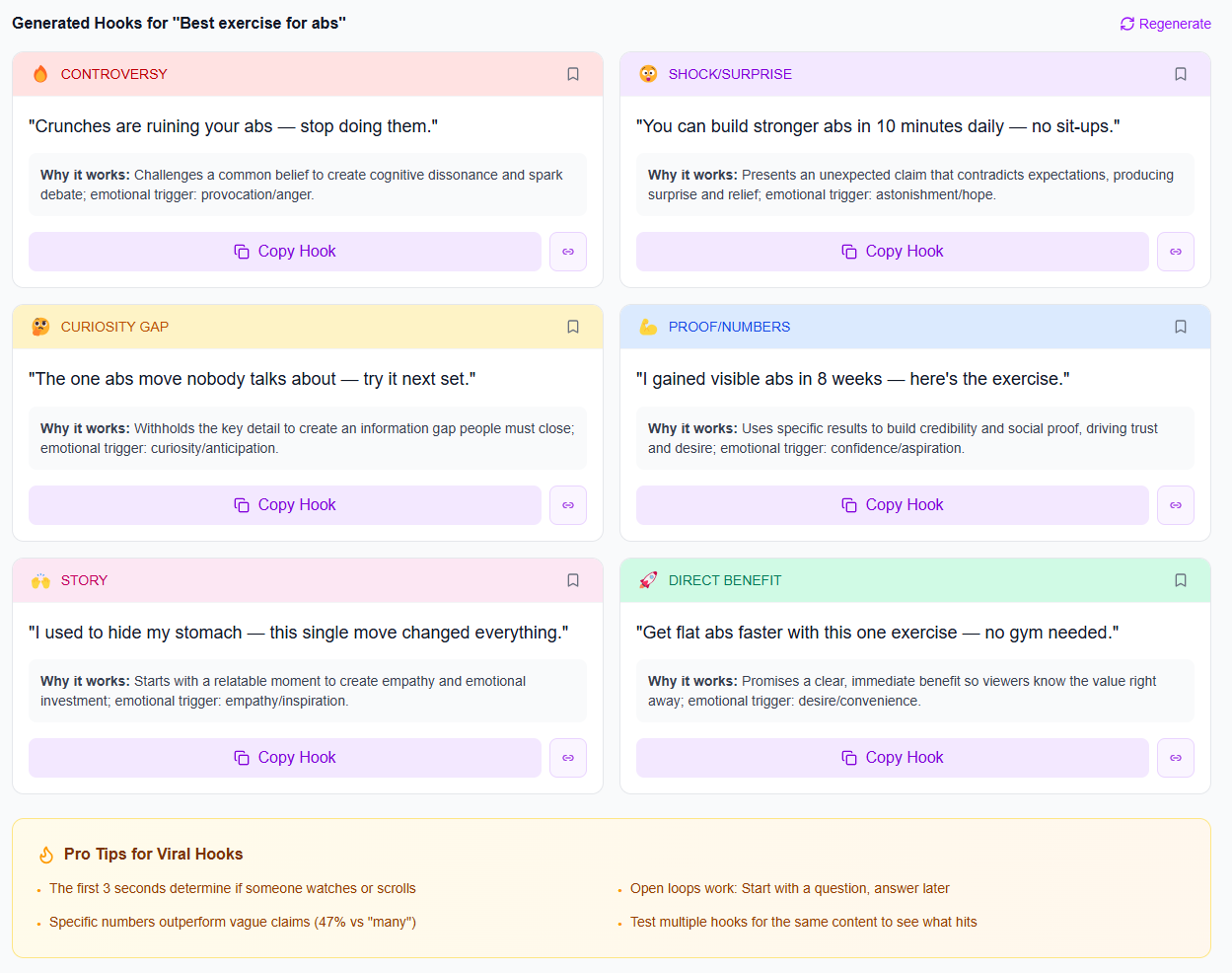
If you want to copy viral trends without burning time, you need a system: find early signals, create fast iterations, and measure results. iBuildInfluence supports this with Trend Scout for trending topic discovery before they peak, plus Hook Lab to generate and AI-score multiple hooks per topic—so you’re not guessing which opening line will earn the click.
Once you publish, use Social Statistics to see what’s working across platforms (saves, shares, engagement rate), then turn your best-performing templates into repeatable output using Content Planner & Content Queue. If you’re also building toward income, tracking content performance alongside outreach helps—your next step can be prepared through your creator workflow for brands via deal management tools like Deal Pipeline and faster pitching with Pitch Machine.
Yes—when you copy the format mechanism and remix it with your niche, voice, and proof. Viral trends can bring initial attention, but your originality determines whether viewers follow and stick around.
Keep a consistent “signature layer” (tone, pacing, topic boundaries, and CTA) while swapping in the trend’s structure. Aim for 60–70% format similarity and 30–40% content change to protect both trust and identity.
Run a small test first: 2 posts to validate the mechanism, then 3 total iterations to improve one variable at a time (hook, payoff timing, or CTA). If performance doesn’t improve after 3 attempts, move on to a new trend or a different angle.
Copy the trend’s mechanism (template/pattern), not the entire script.
Post in the early-to-mid timing window to avoid late saturation and repost fatigue.
Use trend posts as experiments—optimize hooks, retention, and CTAs based on results.
Add a consistent signature layer so you look original to humans and recognizable to platforms.
Scale into series content to turn one viral moment into compounding audience growth.
Found this helpful? Share it:
iBuildInfluence Team
Creator growth strategist at iBuildInfluence. Helping content creators land brand deals, grow their audience, and build sustainable creator businesses.
More from iBuildInfluenceJoin thousands of creators using iBuildInfluence to land brand deals, grow their audience, and build real income.
Start Free ΓÇö No Credit Card Required