
Platform Growth
How Small Channels Can Beat Big Creators (Smart Strategies)
July 25, 2026
Stop chasing virality. Use this practical 30-day system to engineer YouTube signals—clicks, watch time, and future clicks—with real examples and numbers.
Growing from a small YouTube channel to consistent monthly momentum is not about “going viral”—it’s about building repeatable signals. YouTube rewards videos that earn watch time, engagement, and future clicks, and those signals can be engineered from day one. This guide gives you a practical system (with examples and numbers) to grow your channel sustainably.
For small channels, the goal isn’t just “get clicks.” The first battle is getting the right audience to click your video instead of the competing results YouTube shows them. A common mistake is writing titles that sound clever but don’t clearly answer the viewer’s question.
Use this simple framework: Outcome + Timeframe/Specificity + Proof/Angle. Examples: “I Tried 3 Shorts Editing Styles for 14 Days—Here’s What Worked” or “Budget Desk Setup ($120) for Better Audio (No New Mic).” Your thumbnail should reinforce the same promise—large readable text (3–6 words), one clear focal point, and a visual that matches the first 3 seconds of the video.
Then measure. If your impressions are rising but views are stagnant, you likely have a click-through problem. If views rise but retention is low, your video’s message/structure is the issue. This is why you should review metrics by video, not by vibes.
Once someone clicks, YouTube’s algorithm increasingly asks: “Will they keep watching?” Small channels often underperform because the opening is either too slow, too generic, or too “intro-heavy.” A strong opening also sets expectations so viewers feel the video is worth finishing.
Try this retention checklist before you publish: (1) Start with the payoff or the tension within 5–10 seconds, (2) state who the video is for and what you’ll deliver, (3) show a quick “proof moment” (demo, result, or mistake) early, (4) remove or shorten your intro music/credits. For example, if your video is a tutorial, begin with the final result on screen for 2–3 seconds, then rewind: “Here’s the exact steps, and I’ll also show where most people mess up.”
Use realistic targets. Many established channels average 30–50% average view duration (varies by niche and length). Small channels can’t expect identical numbers, but you can still set benchmarks. For a 10-minute video, if your average view duration is 2:30–3:30, you’re not “dead,” but you likely need clearer structure: tighter sections, fewer off-topic tangents, and more frequent “why this matters” moments.
If you’re serious about YouTube growth, treat every video as a test. Change one variable at a time (hook style, pacing, or chapter structure) and keep a log. Over 8–12 uploads, your channel should start improving measurably.
YouTube SEO is often misunderstood as “stuff keywords in your title.” The better approach is match search intent: what the viewer wants to accomplish when they search. You’re not ranking for one keyword—you’re ranking for a question, problem, or decision.
Start with topic selection that has clear intent: “how to,” “best software for YouTubers,” “YouTube algorithm 2026,” “how to get more views,” “beginner setup,” “editing workflow,” “thumbnail tips,” etc. Then build your video around those queries. For example, if your target is “best software for YouTubers,” include comparisons, pricing considerations, and a recommendation for specific use cases (shorts editors vs long-form tutorials). That increases satisfaction signals—viewers feel understood and stay longer because the content answers the full need.
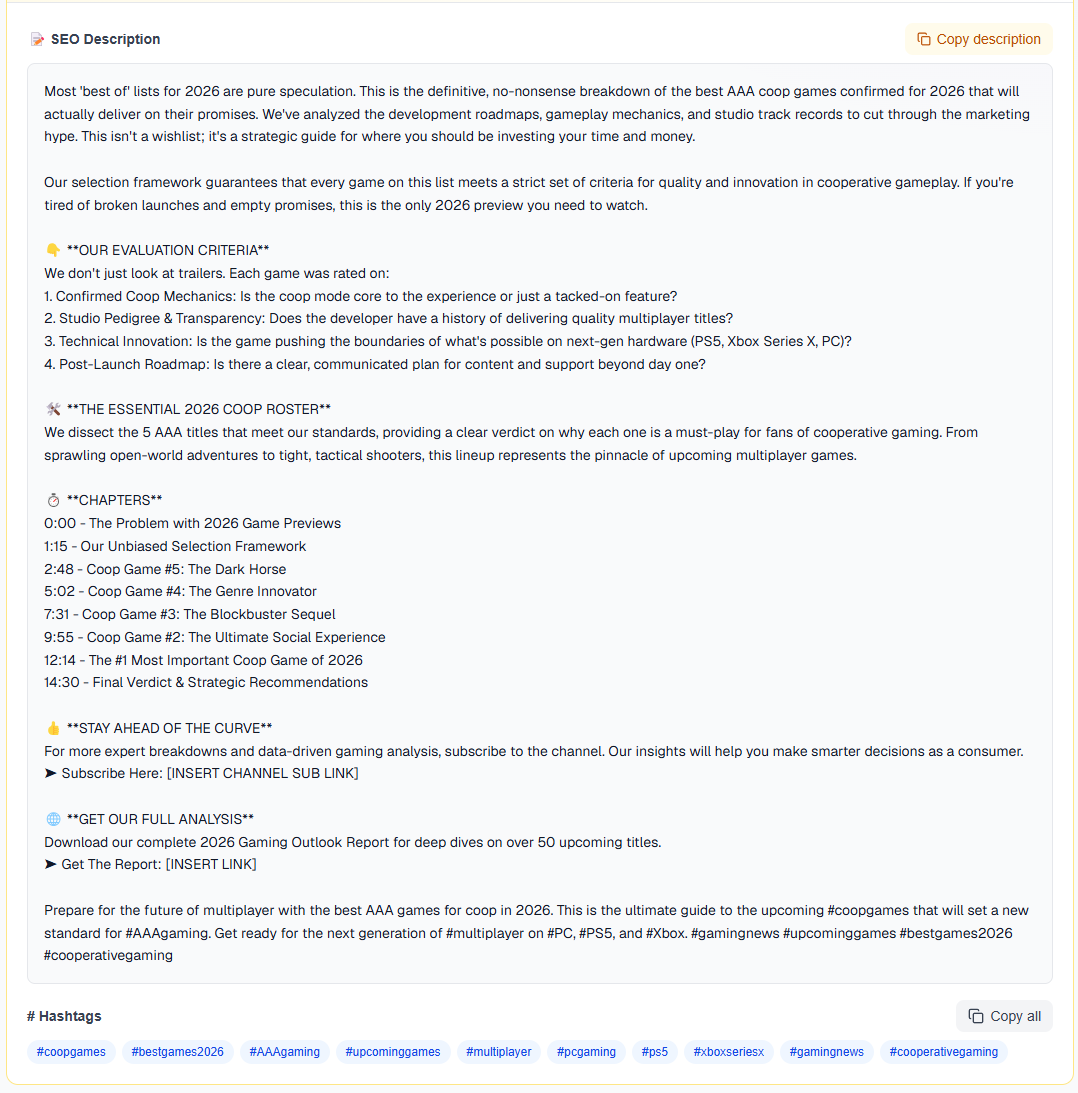
Structure your description with usefulness: first 2–3 lines should summarize the outcome, followed by timestamps, key tools, and links. Add chapters for longer videos. Chapters help viewers navigate and can improve watch behavior by reducing drop-off at natural breaks.
One practical step: write your first 5 minutes as a “search intent roadmap.” If your audience searched for “how to transition from side hustle to full time” (or any creator-business goal), include constraints, realistic timelines, and a step-by-step plan. The more your video reads like the exact help someone is seeking, the more likely your video earns repeat views and shares.
If you want a deeper look at what works across the next wave of content, read Viral Content in 2026: What Actually Works for Creators to align your strategy with how discovery is trending.
Small channel growth accelerates when you stop thinking “upload when I feel like it” and start treating YouTube like a content creator workflow. You don’t need daily uploads. What you need is a steady cadence that lets you learn from data and iterate.
Here’s a 30-day system you can run immediately: Week 1 create 2 videos; Week 2 create 2 videos; Week 3 create 2 videos; Week 4 create 1 short and 1 long-form, or keep publishing to hit 7–8 total uploads. The key isn’t volume—it’s consistent experiments. Assign each video a single “growth hypothesis.” Examples: “Video A improves click-through with a clearer outcome promise,” “Video B increases retention by removing intros and tightening pacing,” “Video C improves search ranking with intent-matched sections and chapters.”
Then build a feedback loop: 48 hours after upload, review (1) CTR, (2) average view duration, (3) audience retention graph (where do they drop?), and (4) traffic sources (search, browse, suggested). Use those insights to edit your next upload—not just to judge performance. If a video underperforms, avoid the emotional spiral. Ask: “Which metric failed first?” Fix the corresponding element next time.
Repurposing is optional, but smart repurposing is powerful. For each long-form video, create 2–4 Shorts from your best-performing segments (your “most replayable” moments). Short-form can’t replace long-form growth, but it can drive initial attention to your channel and strengthen topic familiarity.
For consistency strategy and tactical scheduling, check How Consistency Wins the Content Creator Game (Playbook).
YouTube doesn’t operate in a vacuum. Even if viewers discover you on YouTube, social signals help you earn more engagement, comments, and return viewers. Small channels can compound growth by designing community touchpoints around each video.
Use a “comment-driven” tactic: pin one question at the top of the comment section that’s directly tied to the video outcome. Example: if your tutorial is about audio, ask: “What mic are you using right now—and what problem do you want to fix?” Then respond to the first 20–30 comments early. This increases early engagement, which can improve the chance of more recommendations.
Also align your external promotion with the video’s purpose. Share your video on the platform where your target audience already discusses that exact topic—Reddit communities, creator Facebook groups, niche Discords, or X threads. Post a short context snippet rather than “watch my video.” Example: “If you’re getting flat audio, try this test: record 10 seconds, listen for clipping at the quietest part—then adjust gain.” That approach earns clicks because it offers value before the call to action.
Finally, don’t ignore the “channel signals” side. Playlists, consistent style, and clear branding make your channel feel trustworthy. When viewers binge one video, playlists increase the odds they continue watching—boosting session-level performance.
Small channel growth isn’t luck. It’s a loop: promise (thumbnail/title), payoff (hook), momentum (retention), and progress (SEO + iteration).
To grow a small YouTube channel, you need speed and consistency without sacrificing quality—and iBuildInfluence is built for that. With the Content Planner & Content Queue, you can plan your next few weeks of video topics and automatically schedule your output so you’re not scrambling for uploads. This directly supports the “publish like a creator business” approach: more tests, faster learning, fewer missed opportunities.
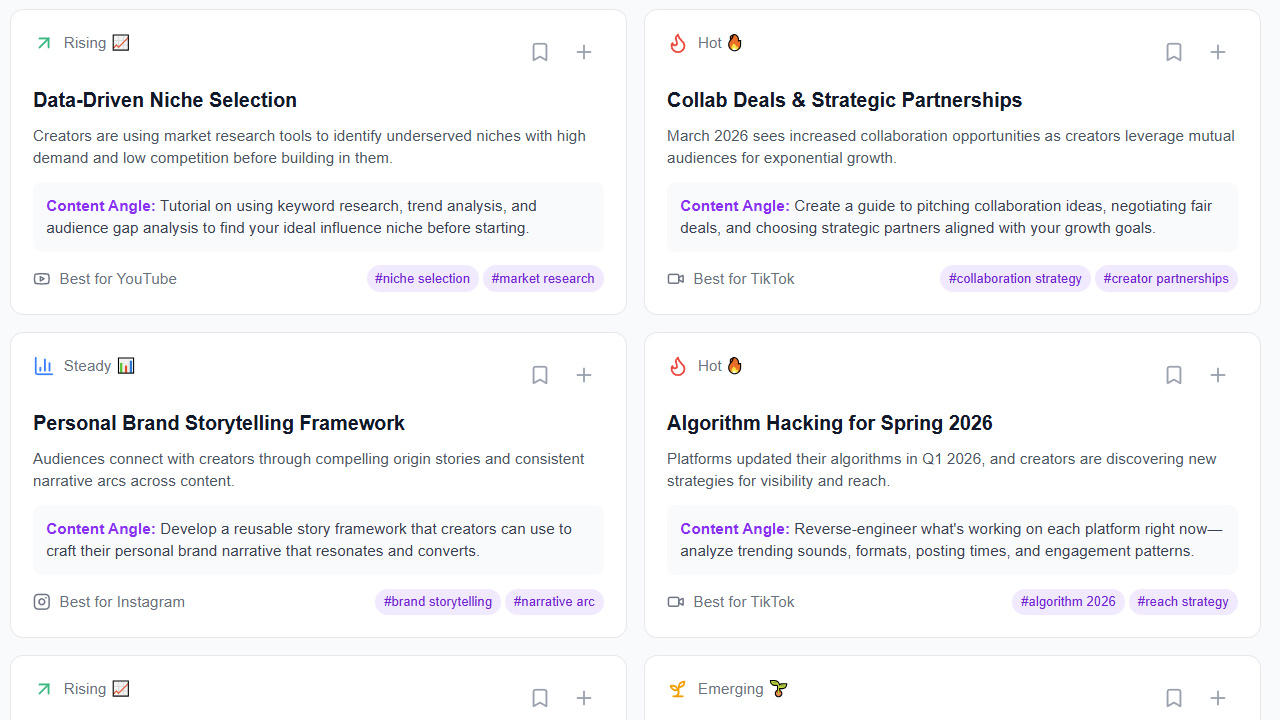
For better videos, use Trend Scout to discover topics before they peak and Hook Lab to generate and score viral hooks by topic (50 options per topic, AI-scored). That means you can rapidly brainstorm multiple opening angles, pick the strongest, and write better retention-focused scripts—improving the areas that most often block small channel growth.
Most small creators grow faster with consistency than with maximum volume. Aim for 3–5 uploads per week (or 2 long-form per week if that’s your limit), then maintain that cadence for 8–12 weeks. The key is having enough uploads to run experiments and learn what improves click-through and retention.
Focus on two levers first: click-through rate (thumbnail + title) and average view duration (hook + pacing + clarity). Then optimize for search intent using YouTube SEO basics—title clarity, description usefulness, chapters, and intent-matched video structure. If you improve those, you’ll increase both browse and search performance over time.
YouTube algorithm changes still come back to core signals: watch time, engagement, and satisfaction. In practice, that means making viewers want to click (promise), stay (retention), and keep watching after (session behavior like suggested/playlist). Use your analytics to identify which metric is limiting growth, then iterate your next upload accordingly.
Engineer click-through with a clear outcome-based title and matching thumbnail—then track CTR by video.
Win the first 30 seconds using payoff-first openings, reduced intros, and expectation-setting.
Do YouTube SEO by search intent, not keyword stuffing—structure sections to fully answer the viewer’s question.
Run a 30-day publishing pipeline with one growth hypothesis per video and a weekly metrics review.
Use community signals (pinned questions, early comment responses) and playlists to extend viewer sessions.
Found this helpful? Share it:
iBuildInfluence Team
Creator growth strategist at iBuildInfluence. Helping content creators land brand deals, grow their audience, and build sustainable creator businesses.
Try iBuildInfluenceFollowers and engagement across your channels, in one view.
Open Social Statistics