Platform Growth
How Small Channels Can Beat Big Creators (Smart Strategies)
July 25, 2026
YouTube's algorithm is shifting dramatically in 2026—and your old tactics won't cut it anymore. Discover which metrics actually matter now, why watch time is no longer king, and exactly how top creators are adapting to capture exponential growth.
YouTube's algorithm is shifting in ways that will fundamentally change how creators succeed in 2026. If you're still relying on tactics from 2023 or 2024, you're already falling behind. The platform's latest updates prioritize authentic engagement, video quality signals, and viewer retention patterns in ways that reward consistency and punish manipulation—and creators who understand these changes first will capture disproportionate growth.
YouTube has been transparent about moving away from vanity metrics as the primary ranking signal. In 2026, the algorithm increasingly measures genuine viewer satisfaction rather than just watch time or click-through rate. This means a 12-minute video with a 65% average view duration will outrank a 25-minute video with 40% average view duration, even if the longer video gets more total watch time.
The platform is also weighing viewer feedback velocity—how quickly your audience engages in the first 30 seconds after upload. This isn't new, but the weighting has intensified. YouTube's machine learning now looks at whether viewers who clicked your thumbnail actually stayed past the hook, and it distributes recommendations accordingly within the first 6 hours of upload. Additionally, the algorithm now factors in channel authority signals—viewers are more likely to see recommendations from creators with consistent upload schedules and proven expertise in their niche, not just viral one-hit wonders.
Your opening hook in 2026 isn't optional—it's the difference between 500 views and 50,000 views. YouTube's algorithm prioritizes videos where 70%+ of viewers stay past the first 30 seconds. This means your intro must immediately communicate value or curiosity, not branding or fluff.
Creators winning in 2026 are using pattern interrupts and immediate context. Instead of "Hey guys, today we're talking about...", successful creators open with a surprising statement, a visual cut, or a specific problem: "I made $47,000 from this one YouTube strategy most creators ignore" or "This is why your videos stop getting recommended after day 3." The difference matters—pattern interrupt openings see 12-18% higher 30-second retention than traditional intros.
Real example: A finance creator tested two thumbnails and hooks for identical content. Hook A was generic ("3 Ways to Invest $1000"). Hook B was specific ("Why $1000 in this index fund beats 99% of investors"). The second version generated 3.2x more impressions in the first week because YouTube's algorithm detected superior early-view retention and promoted it more aggressively.
In 2026, YouTube's algorithm increasingly favors creators with high subscriber-to-view ratios and repeat viewer behavior. If 100,000 people watch your video but only 500 are subscribers, the algorithm notes that you're attracting one-time viewers. But if 40,000 people watch and 15,000 are repeat viewers from your subscriber base, YouTube sees stronger community strength and recommends your content more broadly.
This shift means creators need to invest in community building alongside content creation. End screens should ask viewers to subscribe with specific value ("Subscribe for weekly strategy breakdowns, not daily fluff"). Community posts should encourage interaction and discussion, not just promotion. Creators building engaged communities see 2.5-3x more algorithmic lift per upload than those focused purely on content quality alone.
Practical approach: Create a "subscriber-exclusive" content series—even if it's just a weekly 8-minute strategy video available 24 hours early for subscribers. This signals to YouTube that your subscribers have higher lifetime value, and the algorithm rewards you with better recommendations to non-subscribers who might also subscribe.
2026 rewards specificity. YouTube's algorithm is smarter at identifying topical authority—whether you're a generalist or a specialist. A channel that uploads about "productivity, finance, and business" will see slower growth than a channel with identical production quality focused solely on "personal finance automation." The algorithm learns viewer intent more accurately and pushes niche authority harder.
This doesn't mean you can't have multiple content pillars, but it means YouTube favors creators with clear categorization. If you have three content verticals, consider whether a single channel serves all of them or whether multiple channels would accelerate growth. Many successful 2026 creators maintain a main channel (50% of uploads) plus focused sub-channels, each ranked as an authority in their niche.
The YouTube algorithm in 2026 doesn't reward viral moments—it rewards sustainable growth patterns. Creators who understand this shift their strategy from "How do I get one video to blow up?" to "How do I become the go-to creator for this specific problem?"
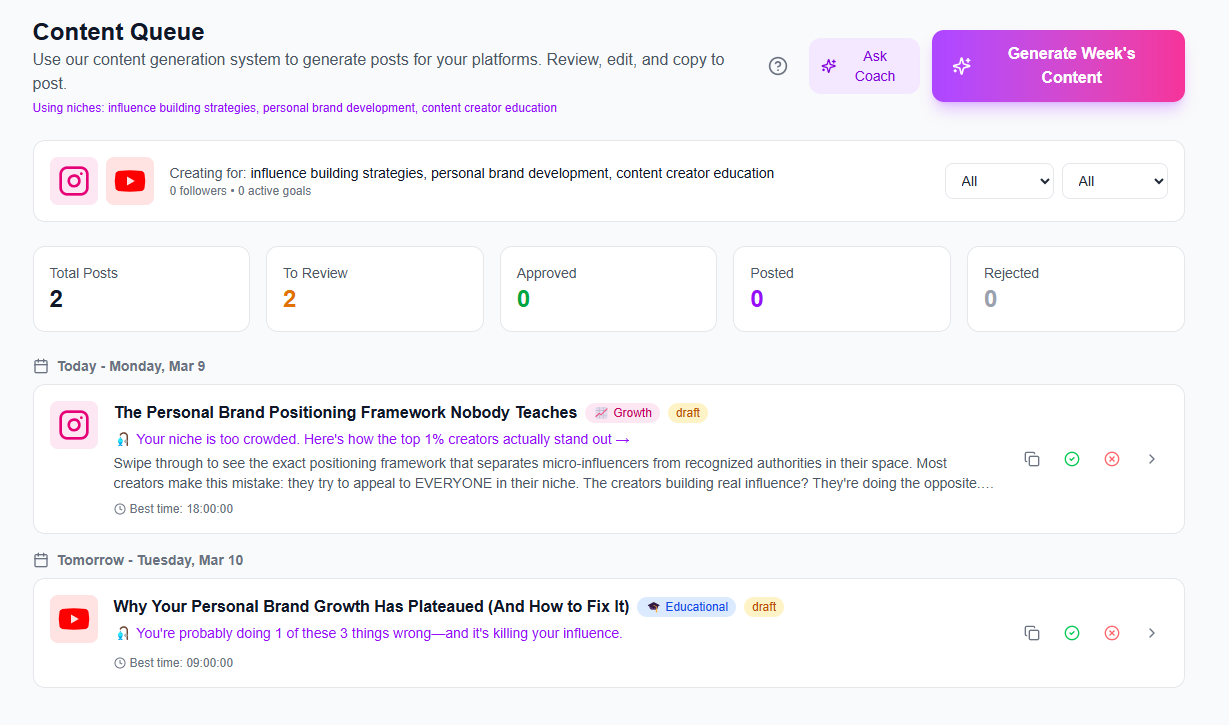
Adapting to YouTube's 2026 algorithm requires data-driven decisions and strategic consistency—two areas where iBuildInfluence makes a measurable difference. The Content Planner and Content Queue tools help you maintain the consistent upload schedule that YouTube's algorithm now heavily weights. Instead of uploading sporadically, you can plan 4-8 weeks of content in advance, ensuring the authority signals that drive algorithmic lift. Meanwhile, Trend Scout identifies emerging topics in your niche before they peak, allowing you to publish content when YouTube is actively ranking similar topics—timing that dramatically improves your initial distribution.
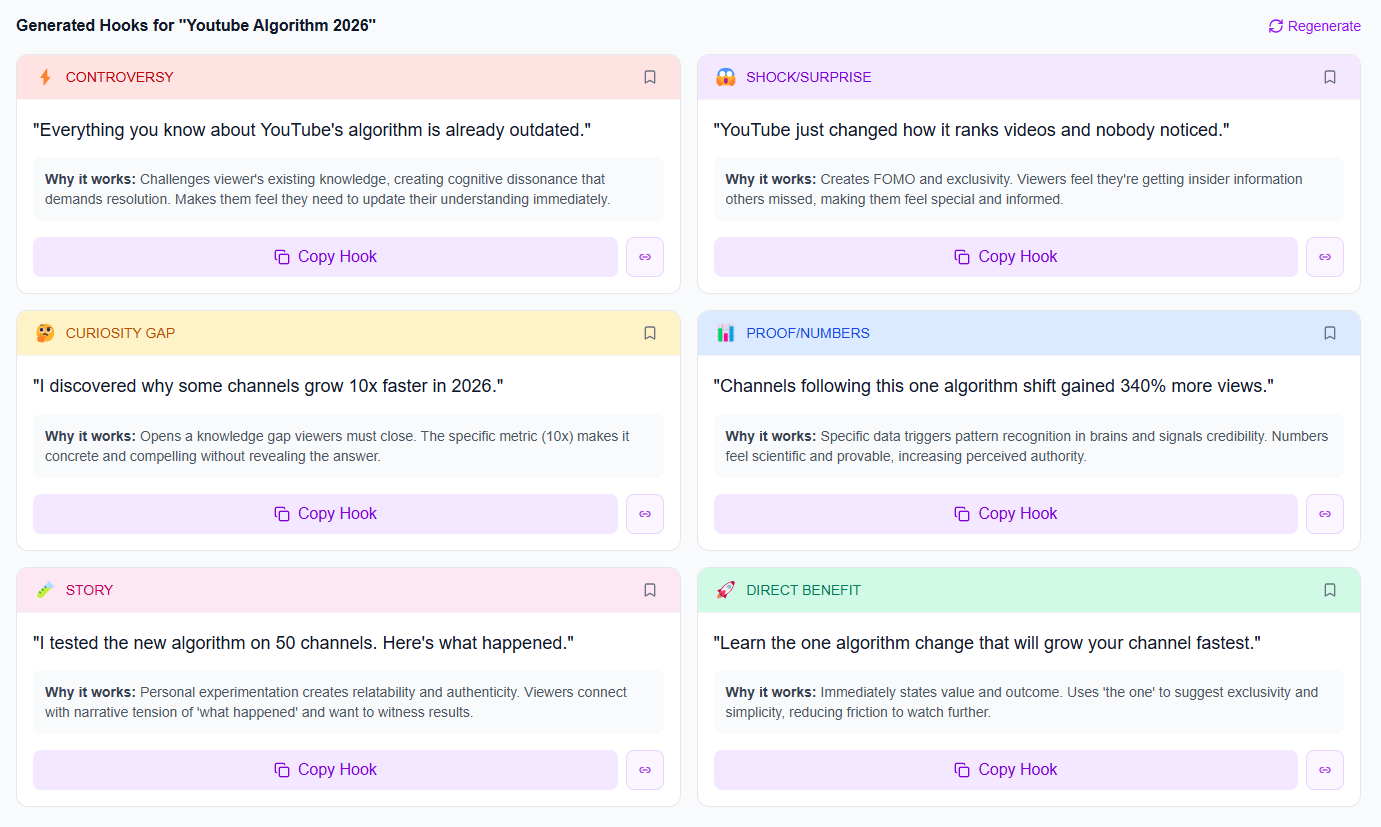
For optimizing that critical first 30 seconds, Hook Lab generates and scores variations of viral hooks on any topic, ranked by engagement potential. This removes guesswork from your opening and ensures you're testing hooks that actually match YouTube's 2026 engagement signals. Paired with Social Statistics, which tracks your average view duration, watch time, and engagement rate across all uploads, you get real feedback on which hooks and content patterns drive the 70%+ early retention YouTube now prioritizes. Additionally, Creator Coach analyzes your entire channel context—your upload consistency, niche focus, and subscriber patterns—and recommends specific adjustments to match 2026 algorithm expectations. The result isn't guessing what works; it's implementing data-backed strategies that align with how YouTube actually ranks content in 2026.
YouTube's 2026 algorithm prioritizes authentic viewer satisfaction and early-video retention over total watch time—optimize your first 30 seconds to keep 70%+ of viewers engaged.
Channel authority and consistent upload schedules now carry more weight than viral potential—build sustainable growth patterns, not one-hit wonders.
Niche specificity outperforms broad appeal—position yourself as the go-to creator for a specific problem, not a generalist covering multiple topics.
Subscriber loyalty matters more than raw views—focus on repeat viewers and community engagement to signal strength to the algorithm
Use data tools to track retention patterns and test hooks systematically, eliminating guesswork from your adaptation strategy.
Found this helpful? Share it:
iBuildInfluence Team
Creator growth strategist at iBuildInfluence. Helping content creators land brand deals, grow their audience, and build sustainable creator businesses.
Try iBuildInfluenceJump in and use Social Statistics to see what is actually growing.
Open Social Statistics