Income & Monetization
From Views to Income: Optimize Your YouTube Monetization Strategy
August 26, 2026
Most online income vanishes. Learn why content creation builds lasting assets, an audience, and repeatable monetization that compounds over time. Get your proven plan.

“Earn online” sounds crowded—but content creation keeps winning because it creates compounding assets: an audience, search visibility, and repeatable monetization. Unlike most side hustles, your work doesn’t disappear after a day of effort. If you want a real content creator business plan you can grow over time, start with the channel you can control: content.
Most online income ideas depend on constant outreach, one-off transactions, or algorithm luck. Content creation, on the other hand, turns your expertise into something shareable and discoverable. Your posts can keep earning attention weeks or months later—especially when you build for both feeds and search.
Consider the compounding mechanics. If you publish consistently, you accumulate: (1) clips, tutorials, and “proof” that make conversion easier, (2) social proof as your engagement improves, and (3) distribution layers such as YouTube search, TikTok discovery, Instagram Reels recommendations, and Google results. This is why creators can build multiple revenue streams from one content engine: brand deals, affiliate links, memberships, and digital products.
In practice, creators often monetize before they “feel big.” A common path is micro-niche authority → audience trust → offers. For example, a fitness creator can share weekly workout breakdowns, then sell a 6-week program; a B2B creator can publish case studies, then license templates or consulting retainers. The content becomes the product’s “front door.”
The fastest way to earn is not to chase random trends—it’s to build a content creator workflow that reliably produces audiences and leads. Start with a simple model: choose one content pillar, define a monetization path, then create content that matches both discovery and buyer intent.
Here’s a practical framework you can run in 14 days:
Step 1: Pick one niche promise. Example: “I help new investors build a beginner-friendly portfolio in 30 minutes a week.” Your promise tells viewers why to follow you.
Step 2: Map 3 content formats to your promise. For the investor niche: (a) explainers (“3 mistakes beginners make”), (b) proof (“here’s my monthly performance breakdown”), and (c) conversion (“download my checklist”).
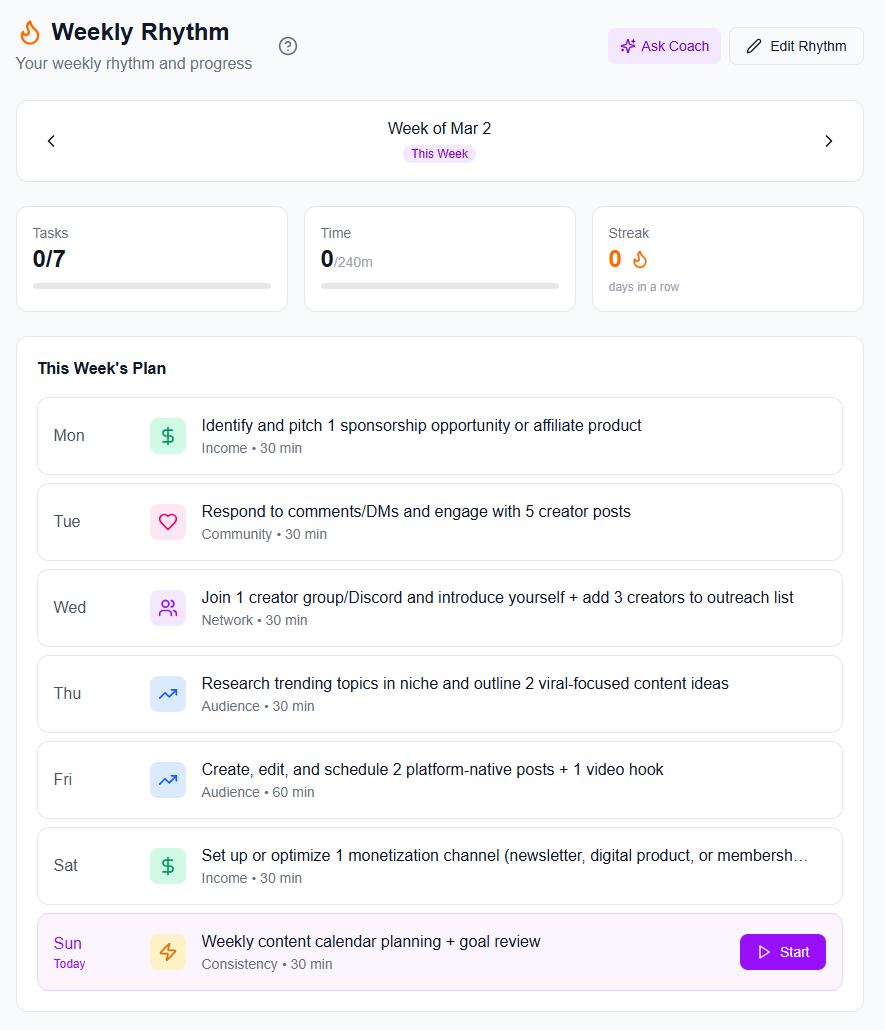
Step 3: Create a repeatable posting rhythm. Don’t invent from scratch every time. Use a weekly cadence: 2 educational posts, 1 proof post, 1 conversion post. This structure reduces burnout and makes your output predictable.
Step 4: Use hooks and clarity to increase retention. If people watch longer, algorithms reward you and sponsors pay more. A simple rule: lead with the outcome, then show the steps. If you struggle with hooks, check The First 5 Seconds Is Everything — A Creator's Guide to Viral Hooks.
Step 5: Track what earns, not what’s “pretty.” Look at engagement rate, saves/shares, click-through to your link, and audience growth per post—not just follower counts. You’re building an income system, not a vanity dashboard.
If you want online income, you need more than traffic—you need offers. The best creators monetize in layers. Your first layer is usually “low-friction” (affiliate, email opt-in, lead magnet). The next layer is a paid digital product or a service. After that, you layer higher-ticket brand partnerships and retainers.
A reliable progression looks like this:
Layer 1: Earn attention. Publish content that targets specific problems. Use examples and numbers. Example: “How to budget your first $1,000 using the 50/30/20 split—then automate it.”
Layer 2: Capture demand. Convert viewers into an email list with a lead magnet: a checklist, template, mini-course, or swipe file. This is key because your audience isn’t fully dependent on platform volatility.
Layer 3: Sell something small. A digital product fits well for creators because it scales. If you’re a design creator, sell a bundle of editable templates; if you’re a productivity creator, sell a Notion workflow. This is a strong way to sell digital products creator while you learn what your audience actually buys.
Layer 4: Add higher-ticket offers. Packaging and retainers can turn income into something consistent. For instance, once a creator has case studies from content, they can sell “done-for-you” services or monthly management.
If you want examples of a path that balances speed and sustainability, review Packaging & Retainers: Monthly Income from Creator Deals. The takeaway: your content proves value; your offer packages it.
For even better results, align your content with each monetization layer. Conversion posts should feel like help, not hard selling. A “download the checklist” post can outperform a generic promo because it solves a specific pain point and reduces decision friction.
Algorithms change, but fundamentals don’t. The creators who win long-term treat content like a performance system: they test hooks, measure retention and engagement, then iterate. This is also the practical definition of how to get more views without guessing.
Start with three measurable goals per post:
1) Discovery: Are people seeing your content? Track reach and impressions.
2) Engagement: Are they interacting? Track saves, shares, comments, and engagement rate.
3) Intent: Are they taking the next step? Track link clicks and opt-ins (if applicable).
For creators posting video, retention matters. Even a small improvement in average view duration can noticeably increase distribution. One reason YouTube still rewards consistency is that the platform can learn your audience faster when you publish on predictable topics. If you’re planning around long-form, use guidance like YouTube Algorithm 2026: How to Get More Views Consistently.
For short-form creators, build for “repeatability.” Make content series: “Day 1 of learning X,” “Monday breakdown,” “30 days of templates,” etc. Series reduce cognitive load because viewers know what to expect. This also helps you avoid burnout.
To smooth the process, use a content engine that blends ideation with planning and scheduling. A tools to manage content schedule approach ensures you publish on time and test the right variables—hook, topic angle, format, and length—rather than randomizing everything. If you want an easy starting point, see Complete Guide to Building a Content Calendar for Consistent Views.
Your content doesn’t just earn in the moment—it builds a searchable trail of proof that keeps attracting buyers. Treat every post like an asset, not a gamble.
iBuildInfluence is an all-in-one creator management platform designed to make this whole system easier to execute—so you publish consistently, improve faster, and monetize without chaos. Instead of juggling scattered spreadsheets and notes, you can plan, generate, and schedule content in one place, aligned to your income goals.
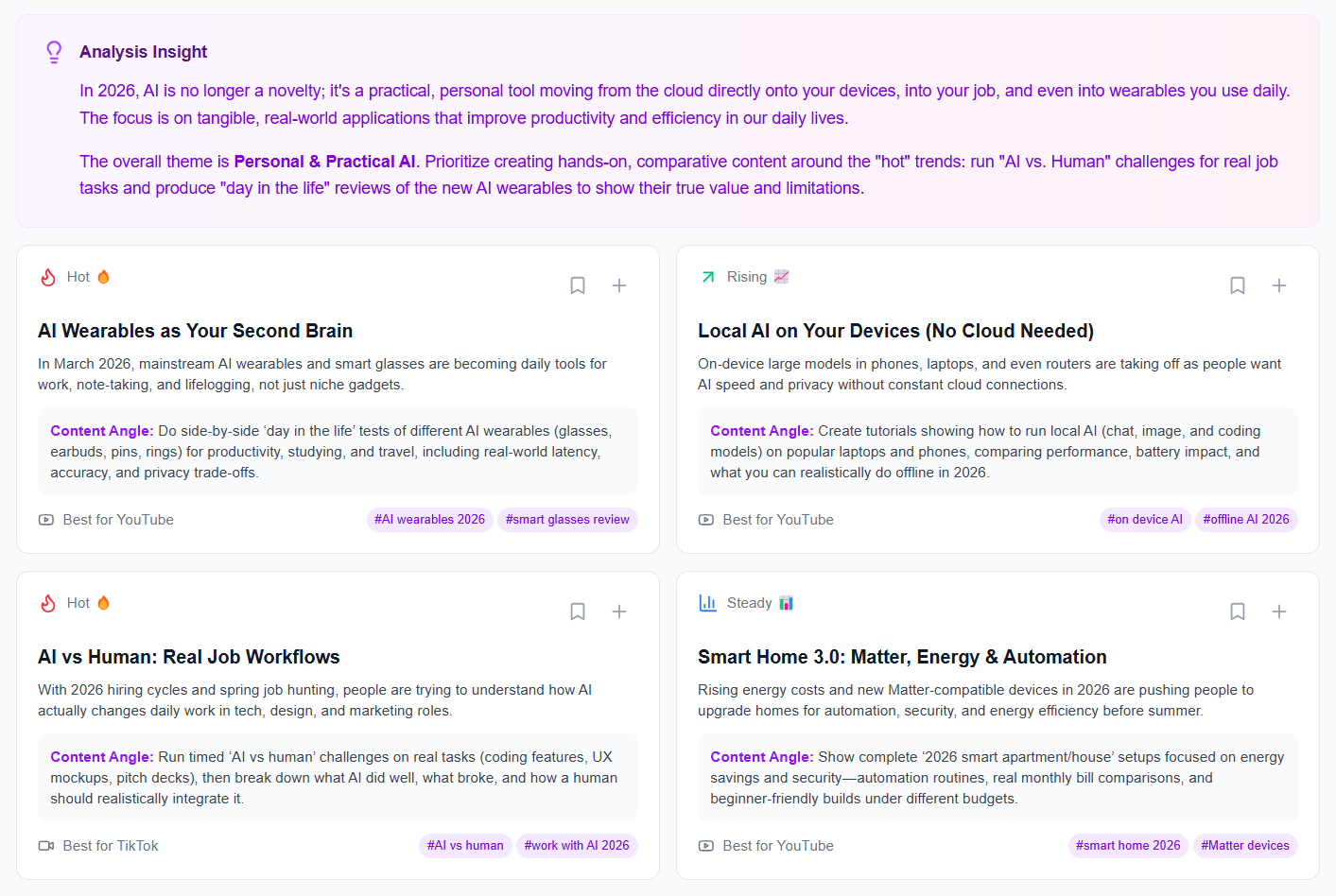
For example, use Trend Scout to find topics before they peak, then build posts with the Content Generator so one idea becomes a complete content package (hooks, captions, and scripts). When you’re ready to refine what’s working, Social Statistics helps you compare performance across platforms (saves, shares, reach, engagement rate). And when it’s time to turn attention into revenue, Pitch Machine and your deal tracking in Revenue Pipeline / Deal Pipeline help you move from “I want brand deals” to “I’m getting paid,” with less friction.
For many people, yes—because it builds compounding assets: audience trust, discoverability, and multiple monetization routes. While it takes consistency, content creation is more resilient than one-off gigs because your work keeps generating interest.
Some creators see early income within a few weeks (especially through affiliate links or fast offers), but stable results often take 3–6 months of consistent publishing. The timeline depends on niche competitiveness, posting frequency, and whether you monetize with offers that match audience intent.
Start with one niche promise, one or two content pillars, and a weekly cadence you can sustain. Build a funnel: free content → email list (lead magnet) → small digital product or service → higher-ticket deals once you have proof. You can also use a structured workflow and analytics to iterate quickly.
Content creation wins because it creates compounding assets—audience trust, search visibility, and reusable proof.
Build a system (pillar → formats → cadence → metrics) so you know exactly what to post and what to measure.
Monetize in layers: email capture, small digital products or services, then brand deals and retainers.
Use data (reach, engagement, retention, conversions) to drive continuous improvements and how to get more views.
Platforms like iBuildInfluence support consistency with tools for ideation, scheduling, analytics, and pitching deals.
Found this helpful? Share it:
iBuildInfluence Team
Creator growth strategist at iBuildInfluence. Helping content creators land brand deals, grow their audience, and build sustainable creator businesses.
More from iBuildInfluenceJoin thousands of creators using iBuildInfluence to land brand deals, grow their audience, and build real income.
Start Free