
Platform Growth
How Small Channels Can Beat Big Creators (Smart Strategies)
July 25, 2026
Struggling for YouTube views? It's not your talent, it's the 2026 algorithm. Discover what YouTube truly prioritizes for consistent growth and stop guessing.
If your videos aren’t popping off the way they used to, it’s probably not your talent—it’s the model. The YouTube algorithm in 2026 is even more focused on audience intent, satisfaction, and long-term engagement signals than ever before. Let’s break down what to optimize (and how), so you know exactly how to get more views without guessing.
In 2026, YouTube’s primary job is to keep viewers watching and feeling like their time was well spent. That means the algorithm doesn’t just reward “clicks”—it rewards watch behavior and satisfaction across the session. Two videos can have the same CTR, but the one that increases session time and reduces quick pogo-sticking (clicking away fast) will usually win.
Practically, think in three layers: thumbnail-click intent (CTR), video engagement (retention, rewatches, average view duration), and viewer satisfaction (likes, comments that reflect real value, shares, and whether YouTube keeps serving your video to similar audiences). You’ll see this in your analytics: when your CTR is decent but your average view duration is weak, YouTube learns that the click promise doesn’t match the payoff.
Example: Suppose you post a “3 Tools to Edit Faster” short. Your CTR looks great because the thumbnail is clear. But if viewers bounce within the first 10–20 seconds, your audience satisfaction signal drops. Next week, your impressions shrink even if the click-through was strong. The fix is usually not another thumbnail—it’s aligning the first 5 seconds with the exact promise and delivering a fast “win.”
Many creators chase CTR with clickbait, then wonder why performance stalls after the initial spike. In 2026, YouTube systems increasingly reward accurate clicks—when the thumbnail and title are aligned with the actual first moments of the video. That’s why hook strategy matters: the thumbnail earns the click, but your opening seconds decide whether YouTube keeps pushing.
Use a “promise + proof + path” hook formula. Promise: what the viewer gets. Proof: why you can deliver it (a result, experience, or framework). Path: what steps you’ll take in the next few seconds. For example, instead of “How to Grow on YouTube,” try “I grew from 2K to 25K in 60 days—here’s the exact workflow I used (timestamps included).” It’s specific, time-bound, and concrete.
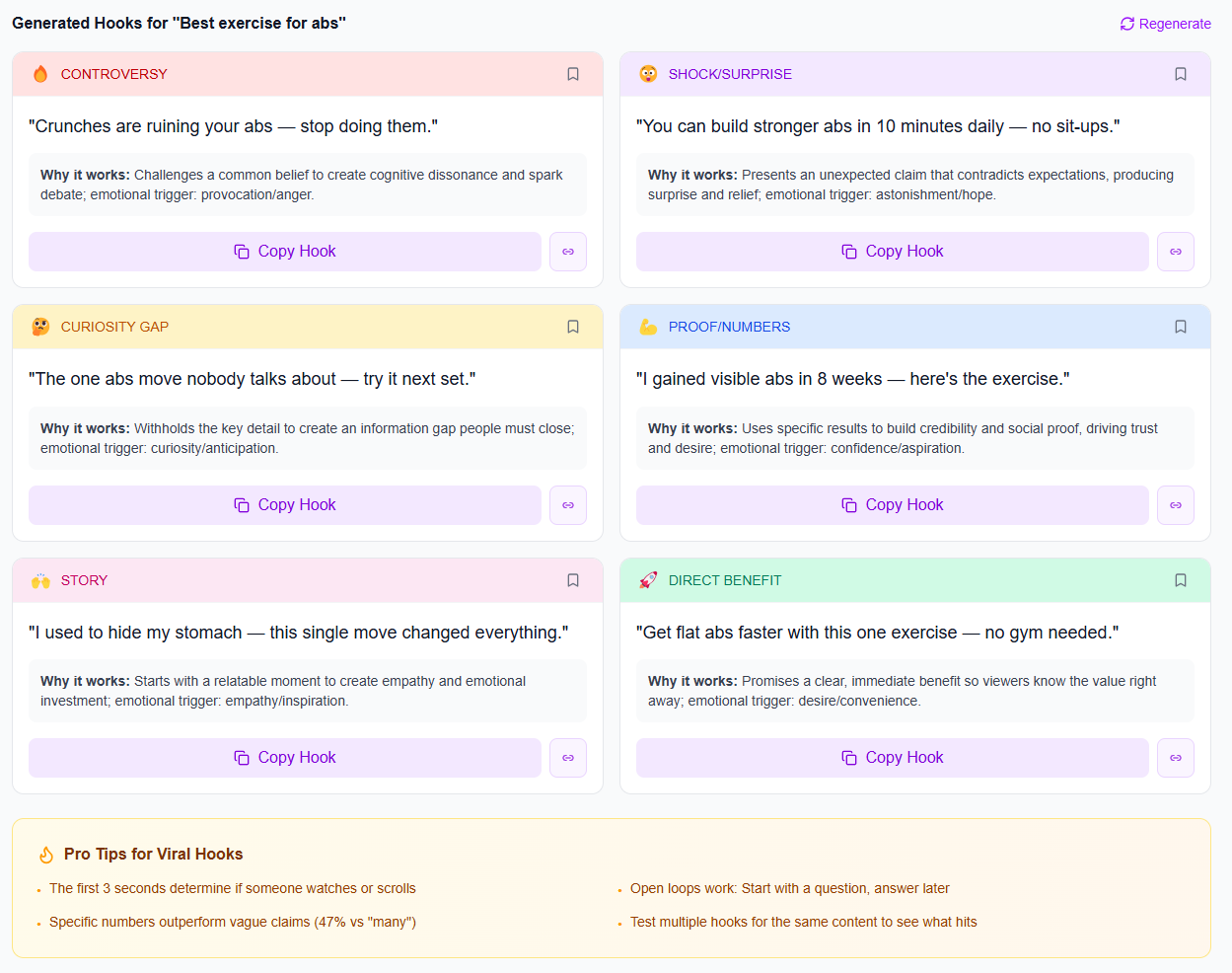
Action plan: Create 5–8 hook variations for each video concept, then test them systematically. If you can only test one element, test the opening line first (what you say in the first 10 seconds), because it influences satisfaction and retention immediately. If you test thumbnails, keep the topic consistent—don’t change the promise while changing the design.
If you want a repeatable approach to hooks, iBuildInfluence’s Hook Lab is designed to generate and score hooks so you can choose options that are more likely to earn clicks and hold attention. (More on that below.) For the deeper “why” behind hook timing, you may also find this helpful: The First 5 Seconds Is Everything — A Creator's Guide to Viral Hooks.
Retention in 2026 isn’t only about editing speed—it’s about how clearly your video delivers value in segments. Viewers stay when each segment answers an implicit question: “Is this still relevant to what I came for?” The algorithm interprets consistent engagement as satisfaction, which then improves distribution.
Try building every video with 3–5 distinct segments, each starting with a micro-hook and ending with a payoff. Example for a tutorial: Segment 1 (Problem): “If your videos aren’t getting recommended, it’s usually because…” Segment 2 (Fix): “Here’s the exact setup step-by-step.” Segment 3 (Proof): show results from your own channel or a case study. Segment 4 (Repeatable system): “Use this checklist every time.” Segment 5 (Next video): bridge to the next logical topic.
Real numbers you can use: For many creators, a strong benchmark is improving average view duration and reducing early drop-off in the first third. If your average view duration is under 25–35% of video length, focus on the first 30–45 seconds and the transition points (intro → main content; concept → steps). A common win is rewriting intros to start with the outcome, then explain the “why” after the viewer is already invested.
Quick diagnostic: If viewers drop right after your intro, the hook promise is too vague or delayed. If they drop after the first “how-to” step, your explanation may be missing clarity or pacing. If they drop around your middle sections, your video may lack segmentation (too much continuous information without a reason to stay).
In 2026, YouTube increasingly evaluates how videos perform within a watch session. That means your content strategy shouldn’t just aim for one video—it should aim for a sequence of videos that match audience intent. When viewers watch one of your videos and immediately continue with another, your distribution potential increases.
Use playlists intentionally: create public playlists that reflect viewer goals, not just your personal organization. Example playlist titles: “Start Here: YouTube Growth for Beginners,” “Video Editing Workflows (Fast & Clean),” or “How to Improve CTR Without Clickbait.” Make each playlist a natural path—each video should resolve a problem that the next video builds on.
Series strategy (high leverage): Pick a format you can repeat—like “YouTube teardown #1–#10” or “3 improvements in 30 days.” Then create each episode with a clear progression. Viewers who watch episode 1 are more likely to continue if episode 2 follows a predictable framework.
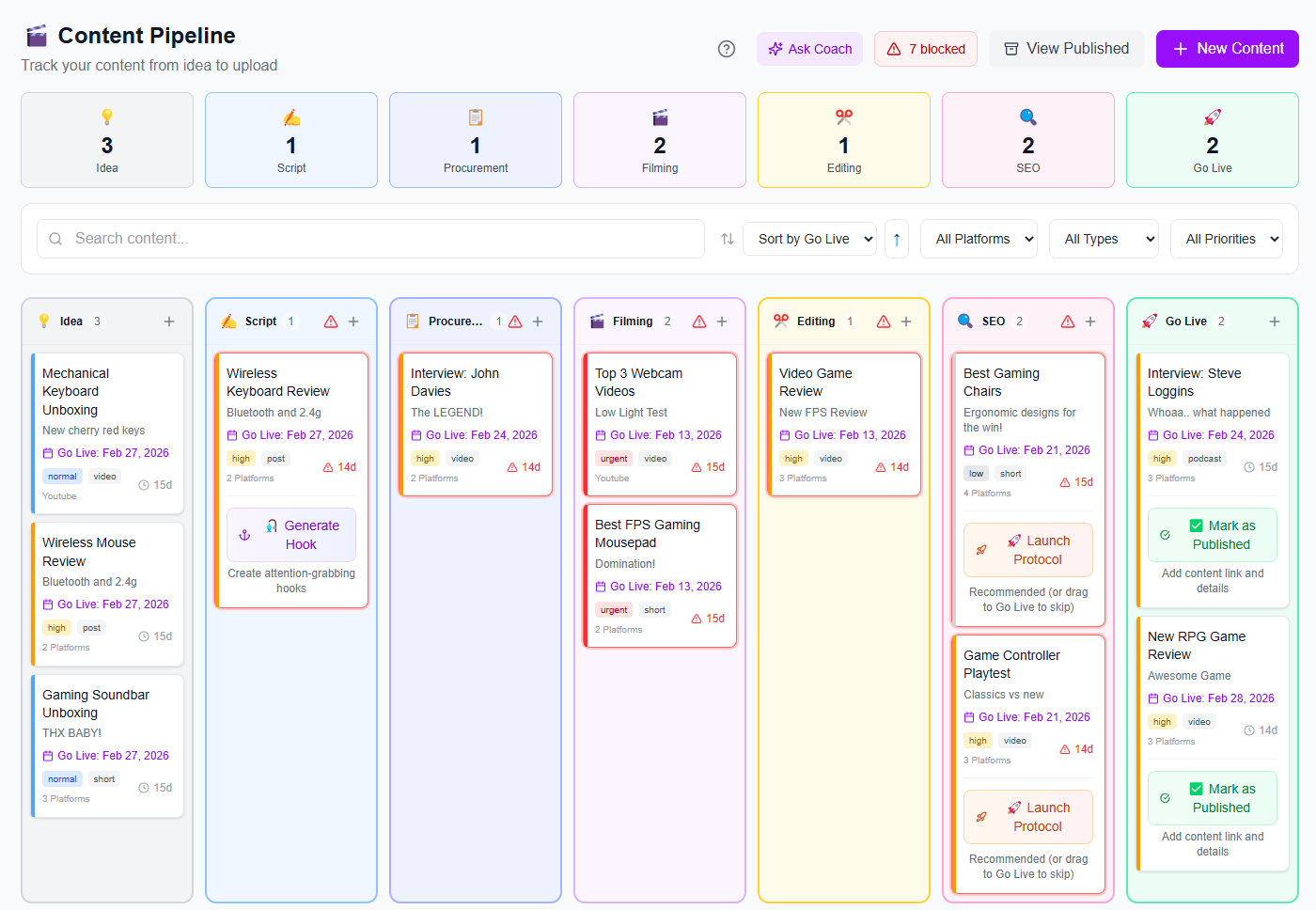
Also, treat your upload schedule as a system, not vibes. Consistency helps your audience learn when to expect content, and it helps you iterate faster. If you’re planning a month of videos, use a repeatable workflow: ideate → script → produce → optimize → publish → review → repeat. If you want a workflow that explicitly supports scheduling, you can use Complete Guide to Building a Content Calendar for Consistent Views as a foundation.
The biggest difference between channels that grow in 2026 and channels that plateau is not the tools—it’s the feedback loop speed. YouTube rewards iteration, but only if you interpret the metrics correctly. A “bad” video isn’t always a failed video; it may just be a misalignment between the promise and the delivery, or a mismatch between audience and topic.
Here’s a practical measurement loop you can run after every upload: check CTR (thumbnail/title effectiveness), check audience retention (where people leave), check engagement signals (likes, comments, shares), and review how your video performs over time (does it plateau quickly or keep earning views?). Then decide one targeted improvement for the next upload in the same series.
Example iteration: Video A: CTR 6%, retention drops heavily at 0:20. Fix for Video B: tighten the intro and show the result in the first 10 seconds (without explaining everything yet). Video B then hits CTR 7.5% and retention improves because the opening matches the promise. Even if Video B has slightly lower likes, stronger retention can still drive better recommendations.
If you want more operational structure, consider tools to manage your content schedule and track performance consistently—because you can’t improve what you don’t measure. In 2026, many creators are also using “content creation tools 2026” not to replace creativity, but to reduce workflow friction so they can publish, test, and iterate more often.
The algorithm doesn’t reward your best day. It rewards your most consistent audience satisfaction—clicks that match, retention that holds, and a session path that keeps viewers watching.
To make the YouTube algorithm 2026 work for you, you need two things at scale: better decisions and faster execution. iBuildInfluence helps on both fronts. You can use the Hook Lab to generate multiple hook options per topic and score them, so you’re not guessing which opening will improve retention and reduce early drop-off. That directly supports your CTR + early satisfaction goals.
Then use Content Planner & Content Queue to map out weeks of uploads and auto-schedule, turning “consistency” into a system instead of a hope. For post-publication optimization, Social Statistics gives cross-platform performance insights (like reach and engagement rate) so you can compare what’s working and repeat it. If you’re also pitching collaborations or building brand partnerships around your channel, the Deal Pipeline helps track progress from outreach to payment—useful when your view velocity starts attracting sponsor interest.
In 2026, the biggest factors typically include CTR (thumbnail/title match), retention (how long viewers stay), and session impact (whether viewers continue watching more of your content). Satisfaction signals like meaningful engagement also influence how broadly YouTube distributes your video.
Focus on “accurate clicks”: make the thumbnail and title promise something specific, then deliver that exact benefit immediately in the first seconds. Use segmented value, clear transitions, and proof-based hooks so viewers feel the video matches what they expected.
A consistent cadence that you can sustain usually performs better than random bursts. Pair that with iteration: after each upload, improve one targeted element (hook clarity, pacing, or structure) based on retention and CTR patterns.
The YouTube algorithm 2026 prioritizes audience satisfaction across a watch session—not just clicks.
Boost CTR by matching thumbnail/title promises with a “promise + proof + path” hook in the first 10 seconds.
Improve retention using segmented value: micro-hooks, clear steps, and payoffs at predictable points.
Increase session time with series formats, smart playlists, and intentional “next video” momentum.
Win long-term with a rapid feedback loop: measure CTR, retention drop-off, and engagement, then iterate per video format.
Found this helpful? Share it:
iBuildInfluence Team
Creator growth strategist at iBuildInfluence. Helping content creators land brand deals, grow their audience, and build sustainable creator businesses.
Try iBuildInfluenceJump in and use Social Statistics to see what is actually growing.
Open Social Statistics