
Platform Growth
How Small Channels Can Beat Big Creators (Smart Strategies)
July 25, 2026
Starting from zero on social media? Stop guessing. This 30-day launch system shows you how to hit the algorithm with repeatable signals & earn trust for explosive growth.

Starting from zero can feel brutal—until you realize most “growth” advice is backwards. The fastest way to grow a new social media account isn’t about luck; it’s about hitting the algorithm with repeatable signals (watch time, saves, shares, and clicks) while your profile earns trust.
In the next 30 days, you’ll run a launch system that makes your content easier to discover and easier to believe, using practical steps you can execute this week.
New accounts fail early because they publish content that’s interesting to the creator—but unclear to the viewer. Before you chase virality, lock in a simple positioning statement: who you help + what result you deliver + how you do it.
Use this quick template to define your account:
“I help [audience] achieve [outcome] using [your method].”
Example: “I help busy parents grow healthy habits using 10-minute routines.” Or: “I help fitness beginners learn form with slow-motion breakdowns.”
Then translate it into profile assets:
Bio: one sentence positioning + one credibility cue (even small).
Profile pic: high-contrast face/brand mark.
Link: one destination (start with a simple welcome page or lead magnet).
Pin 3 posts: (1) your best “what I do” post, (2) your most actionable tutorial, (3) a credibility/proof post (results, story, or teardown).
This matters because algorithms increasingly route people to content that matches their expectations. If your niche is muddy, viewers scroll—even if your video is good.
If you want the fastest way to grow a new social media account, you must earn attention immediately. On most short-form platforms, the decision to keep watching happens before viewers understand your topic. A practical rule: your first line should include a specific promise or sharp contradiction, not a generic intro.
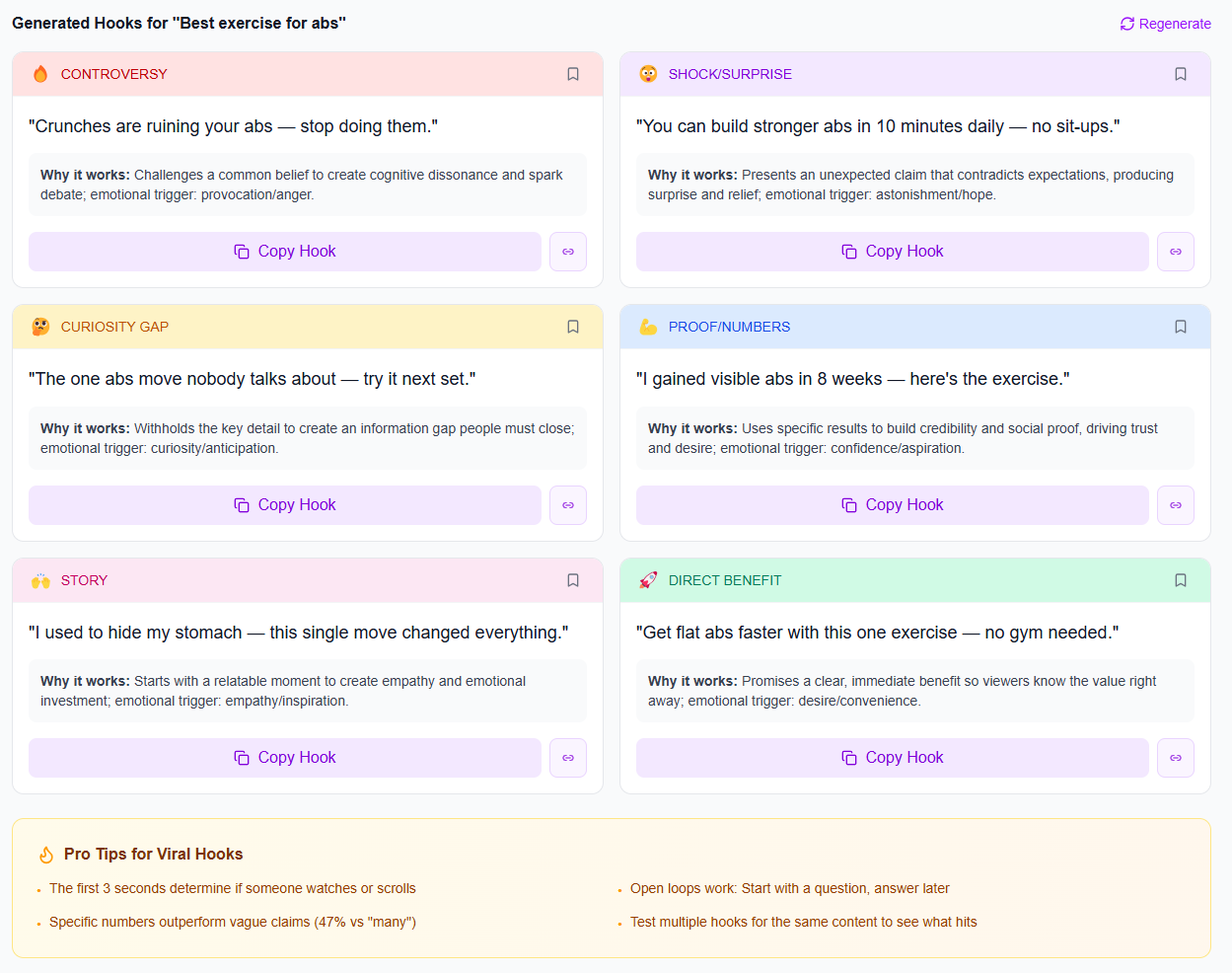
Try this hook menu (use 1 per post):
Contradiction: “Stop doing X—do this instead.”
Specific outcome: “In 7 days, you’ll be able to…”
Common mistake: “If your videos look blurry, it’s probably not your camera.”
Ranking: “The 3 mistakes I see every new creator make…”
Pattern interrupt: show the result first, then explain how.
Now add structure so the hook doesn’t waste effort. Use a simple 4-part flow:
Hook (0–2s) → Value (2–20s) → Proof (quick example, 1 stat, or demonstration) → Next step (CTA).
Example script for a “how to get more views” post:
Hook: “Here’s why your videos get views but not follows.”
Value: “Most people post without a content series, so the algorithm can’t categorize you.”
Proof: “Series posts usually get higher saves because they feel like a mini-guide.” (Even if you don’t have your own analytics yet, you can still test this—more on that below.)
CTA: “Comment ‘SERIES’ and I’ll share my template.”
If you want a faster workflow for hook ideation, check out The First 5 Seconds Is Everything — A Creator's Guide to Viral Hooks and then adapt the best hook styles to your niche.
Consistency isn’t “post every day no matter what.” The fastest growth often comes from focused bursts that train both viewers and the algorithm. Think like a TV channel: if people know what to expect from you, they watch more of what you release.
Start with 3 content pillars. Keep them narrow enough to repeat, broad enough to create 30 ideas. Example pillars for a creator starting today:
Pillar A (Teach): tutorials, checklists, breakdowns.
Pillar B (Prove): results, before/after, experiments, behind-the-scenes.
Pillar C (Persuade): myths, comparisons, “I tried X so you don’t have to.”
Then use a 10-day sprint inside your first 30 days:
Days 1–3: “Explain your promise.” 3 posts tied to Pillar A.
Days 4–6: “Show receipts.” 3 posts tied to Pillar B (even small proof counts).
Days 7–10: “Install beliefs.” 4 posts tied to Pillar C + comment prompts.
Posting volume targets (practical ranges):
- If you’re new and can do short-form: aim for 4–7 posts/week minimum for the first month.
- If you can only manage 2–3 posts/week, switch to higher quality and add distribution via comments and cross-posting.
Why bursts work? Because early testing needs multiple variations quickly. Most creators who “go viral” aren’t randomly lucky—they’re simply the ones who tested enough hooks and formats in a short window.
To keep your launch organized, use a structured plan. A helpful reference is Complete Guide to Building a Content Calendar for Consistent Views—then apply it as a 30-day experiment, not a forever schedule.
At the start, you don’t need perfect analytics—you need signals. The fastest way to grow a new account is to identify what content type earns the strongest “intent” actions: watch time, shares, and saves. Those behaviors often indicate that people found the post useful enough to return to it.
Use a simple scoring system per post (for the first 30 days):
Hook score (0–2): Did people keep watching past the first 3 seconds?
Value score (0–2): How many saves or shares relative to reach?
Trust score (0–2): Did comments include questions or follow requests?
Format fit (0–2): Does the topic belong to your pillars?
Then run this weekly loop:
Step 1 (48 hours after posting): check engagement rate and retention proxies (where available).
Step 2 (Day 3–5): identify 1 winner format and 1 weak area.
Step 3 (Next week): double down on the winner and change only one variable in your next test (hook style, length, or CTA).
Example experiment: You post three videos in a week. Two are tutorials, one is a “myth-bust.” The myth-bust video gets 2x saves and more profile clicks. For the next batch, keep the same audience promise but test three hooks that start with “Everyone says X, but the real reason is Y.”
If you’re planning for long-term growth, this is also where content creation tools 2026 workflows start to matter—because creators win by improving iteration speed. A strong workflow lets you test more ideas without burning out. (That’s also why “best software for YouTubers” and short-form creators increasingly overlap: data + planning + execution in one place.)
When your follower count is near zero, reach is limited. So you borrow attention from existing communities and creators. The fastest way to grow a new social media account is to create distribution routes, not just hope the algorithm finds you.
Start with 3 distribution tactics:
1) Comment like a creator, not a spammer.
Spend 20–30 minutes/day on 10–15 posts from larger accounts in your niche. Leave comments that add an example, a counterpoint, or a mini-template. Aim for comments that are “worth reading,” not “worth liking.”
2) Use “series sharing.”
Instead of random one-off posts, build mini-series: “Part 1 of 5: …” Your early viewers become returning viewers because they expect the next installment. This also improves discoverability because multiple posts share a consistent theme.
3) Collaborate early with low-friction formats.
Ask for: duet/stitch, quick Q&A feature, or a mutual teardown (“I’ll review your setup—send me 1 clip”). Collaborations work even when you’re small if the content format is valuable for their audience.
And don’t ignore profile-level conversion. Pin the best “start here” post. Your goal is to turn discovery into follows. This is where consistency meets trust: every new viewer should quickly understand what you do and why following you matters.
Growth is just iteration: test a clear promise, earn attention fast, then repeat what earns saves and shares—not what feels good to post.
To execute the 30-day plan efficiently, you need a workflow that connects content creation, distribution, and performance tracking. iBuildInfluence supports this with tools across multiple growth pillars—so you’re not juggling spreadsheets, notes, and reminders.
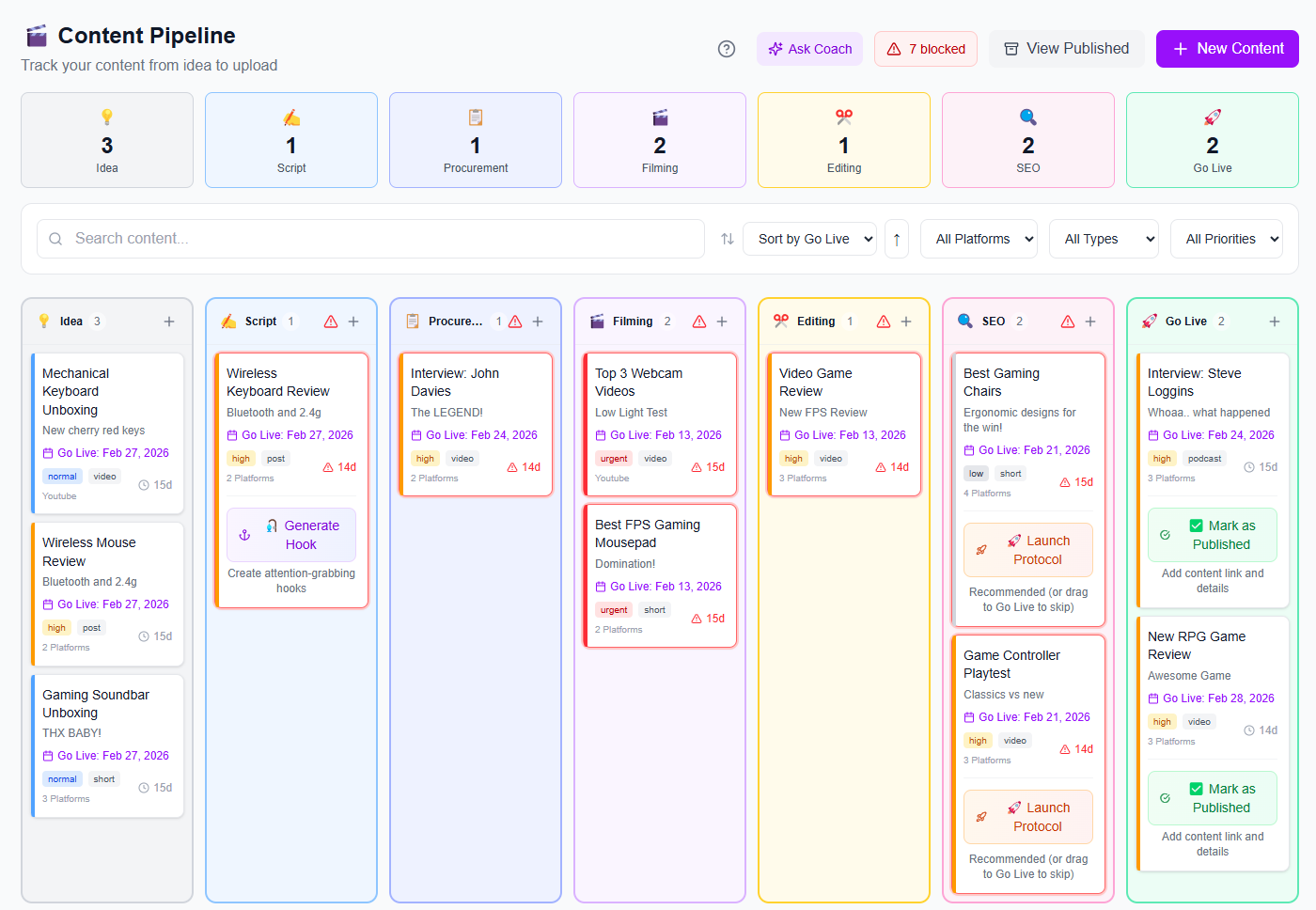
For the fastest start, use Hook Lab to generate and AI-score hooks per topic (so you can test hook styles quickly). Then plan and schedule with Content Planner and Content Queue, which helps you keep your burst cadence without missing posting days. Finally, track what actually works using Social Statistics across platforms, so you can double down on the posts that earn saves, shares, and meaningful engagement.
The fastest way is to publish content with a clear niche promise, strong hooks in the first 1–2 seconds, and a repeatable format across 3 content pillars. Then track performance based on engagement signals like saves and shares, and iterate weekly by changing only one variable at a time.
For most new creators, 4–7 posts per week is a strong starting target for the first month. If you can’t do that volume, focus on fewer but higher-quality posts and keep the same pillars so your audience learns what you stand for.
Boost views by earning retention with hook-first structure and distribution through comments and low-friction collaborations. Also, reuse your strongest series formats—viewers are more likely to follow when they see consistent themes and clear “next steps.”
Define your positioning in 60 minutes so new viewers instantly understand why to follow.
Use hook-first structure (promise in the first 2 seconds) and a consistent 4-part video flow.
Run 30-day bursts with 3 content pillars to train your audience and test faster.
Measure what matters—saves, shares, and retention signals—then iterate weekly.
Increase discovery off-platform with community commenting, series sharing, and early collaborations.
Found this helpful? Share it:
iBuildInfluence Team
Creator growth strategist at iBuildInfluence. Helping content creators land brand deals, grow their audience, and build sustainable creator businesses.
Try iBuildInfluenceJump in and use Social Statistics to see what is actually growing.
Open Social Statistics