Content Strategy
How to Write TikTok Hooks That Stop the Scroll (Top 5)
October 2, 2026
Learn how to price sponsored posts in 2026 using audience size, engagement, deliverables, and performance tiers—plus templates and tools.
Pricing a sponsored post in 2026 shouldn’t be a guessing game—or worse, a race to the bottom. Brands now expect more than reach: they want clarity on deliverables, audience fit, and measurable outcomes. This guide gives you a practical, numbers-based way to set your rate and negotiate like a pro.
In 2026, the fastest way to undercharge is to base your rate on followers alone. A sponsored post is a bundle: your attention (distribution), your creative labor (production), your credibility (trust), and your audience’s probability to act. So your “how much to charge” should be built on deliverables + audience performance + risk level.
Use a simple framework you can explain to brands: Base Fee (time + production) + Audience Premium (fit + engagement) + Performance Add-ons (bonus for results or additional usage). For example, if a skincare brand wants a single Instagram feed post, you might charge a base rate for the creation and editing, then add a premium if your audience skews toward active skincare buyers (not just “interested”).
If you want a quick sanity check, many creators use CPM-style math (cost per 1,000 views/impressions). Even if brands don’t speak “CPM,” it helps you avoid inconsistent pricing. As a reference point: micro-to-mid creators often land in the low-to-mid single digits dollars CPM for average outcomes, while highly targeted audiences and strong engagement can push effective CPM higher. The key is to calculate based on your typical reach, not worst-case posts.
One reason pricing gets messy is that “sponsored post” can mean wildly different scopes. In 2026, brands commonly request multiple assets: feed + story sequence, a short-form video, link-in-bio mentions, UGC-style clips, and sometimes paid usage rights for ads. Your rate should scale with what you’re producing and how far the campaign extends.
Here’s a practical deliverables ladder you can adapt:
Level 1 (Light touch): 1 post (e.g., static image + caption) with 1 revision round.
Level 2 (Standard): 1 short-form video or Reel + 2–3 stories (or a story thread) + 1 revision round.
Level 3 (Campaign-ready): 1 main post + story sequence + 1 additional cut-down (or pinned comment CTA) + optional usage rights.
Level 4 (Rights + performance): Everything above plus whitelisting/paid usage (brand can run it as ad creative), or a performance bonus tied to tracked links.
Usage rights are where rates can jump. If a brand wants to use your content in ads for 90 days, that’s not the same as “organic posting.” A common negotiation approach is to quote a lower “organic-only” fee and a higher “paid usage” fee, rather than bundling them into one number. For example: “Organic post: $X. Paid usage (30–90 days): +$Y.” This keeps the conversation clean and makes it easier to compare offers.
Two creators can have the same follower count and completely different sponsor value. Sponsorship pricing should reflect audience quality—especially for niches where purchase intent matters (fitness, SaaS, personal finance, beauty, and supplements). So how do you quantify “audience premium” without sounding subjective?
Look at your average engagement rate, typical saves/shares, and link-click behavior (if you’ve tracked it). For YouTube creators, sponsors also care about watch time, audience retention, and how quickly viewers understand the value proposition (which affects ad-read effectiveness). For TikTok/Shorts/Reels creators, watch completion and rewatch rate (when available) can matter as much as views.
Actionable step: build a simple “Sponsor Value Sheet.” Include:
• Average reach/impressions per post (last 8–12 weeks)
• Engagement rate and top-performing formats (e.g., “hook style A”)
• Saves/shares % for posts that include a CTA (e.g., “save this for later”)
• Your niche fit score (0–10) based on whether sponsors’ customers match your audience
• Proof of conversion: tracked links, promo code usage, or email list growth from past campaigns
Example: If your average Reel gets 40k views but only 1,000 clicks from a link in bio, that matters. Conversely, if your same audience delivers high saves and consistent click-through for affiliate offers, that’s sponsor gold. This is also why you should avoid one-off pricing based on a viral anomaly—price using your baseline, then offer a bonus if the campaign overperforms.
In 2026, many brands want flexibility because budgets vary week-to-week. That’s your opportunity to structure packages that protect you and increase the chance they say yes. Rate tiers let you stay confident while giving brands a “menu” of choices.
Try a three-tier offer (send it in your pitch or proposal):
Tier A (Fixed, organic-only): 1 post + basic CTA + caption approvals. Best for awareness campaigns.
Tier B (Enhanced): 1 main post + stories + pinned comment CTA + 24–48h reporting. Best for consideration campaigns.
Tier C (Performance-leaning): Enhanced deliverables + tracked link or promo code + bonus payout if you hit agreed milestones (e.g., leads, conversions, or a minimum CTR).
Performance bonuses should be specific enough to measure and fair enough to be achievable. For instance: “$75 bonus if link CTR exceeds 2.5%,” or “$200 bonus for 50 tracked purchases.” If you can’t access conversion tracking, don’t pretend you can—use proxy metrics like link clicks, view-through on story frames, or code redemption.
Also remember: your time has value. Pricing should include content prep, scriptwriting, production, editing, community management, and reporting. If you’re “only posting,” you still do pre-work. A sponsor who asks for multiple revisions, strict brand guidelines, or last-minute scheduling risk should increase your fee.
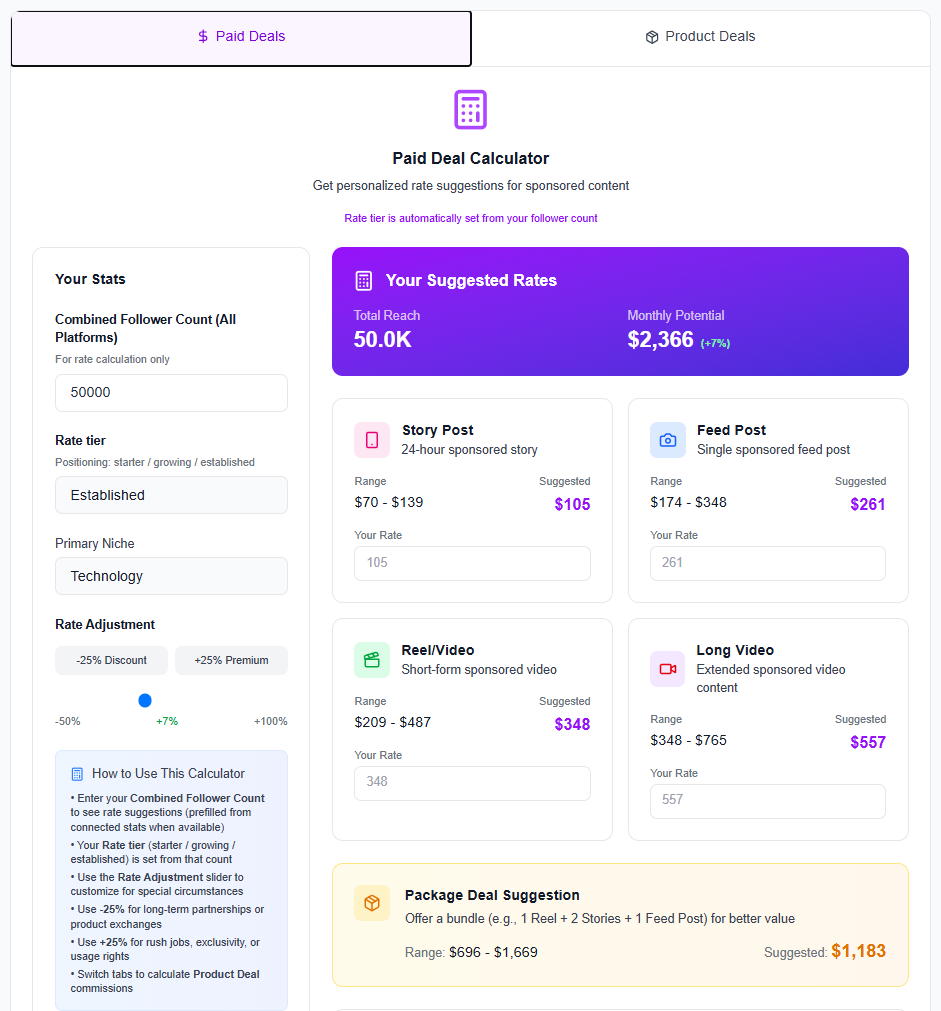
Benchmarks help you start, but you should always adjust based on niche fit, engagement, and deliverables. Below are realistic starting ranges many creators use as negotiation anchors (your actual rate may be higher or lower depending on format and history of results).
Example A: 10k–25k followers (high engagement niche)
• Organic feed post: $75–$200
• Reel/short-form video: $150–$400
• Bundle (main post + 3 stories): $250–$650
If the brand requests paid usage rights, add a usage fee (often $150–$600+ depending on duration).
Example B: 25k–100k followers (consistent baseline views)
• Short-form video: $300–$1,000
• Post + stories bundle: $500–$1,500
• Campaign package (2 assets + usage): $1,000–$3,000+
If you’ve proven CTR or code redemption before, you can justify moving toward the high end.
Example C: 100k–500k followers (multi-format creators)
• Main short-form + stories: $1,200–$4,000
• Multi-video campaign + reporting: $3,000–$10,000+
Usage rights become a major lever here; you can price “organic only” separately from “ad rights.”
Important: platform category matters. If you’re running content tuned for the buying moment (tutorials, comparisons, product explainers), sponsors pay more because your content is closer to intent. If your channel is mainly entertainment with low purchase adjacency, you’ll usually charge less unless engagement and audience demographics are extremely strong.
Price your sponsorship like a campaign manager, not like a human billboard. Your fee covers production, distribution, and the trust you borrow from your audience.
To charge confidently, you need consistent data, fast packaging, and a repeatable creator workflow. iBuildInfluence supports that across multiple steps of the sponsorship lifecycle. For example, Social Statistics helps you review cross-platform performance (engagement rate, reach, saves, shares) so you can back up your rate with real numbers instead of vibes. That’s especially useful when you’re building a “baseline value” rather than pricing off one viral post.
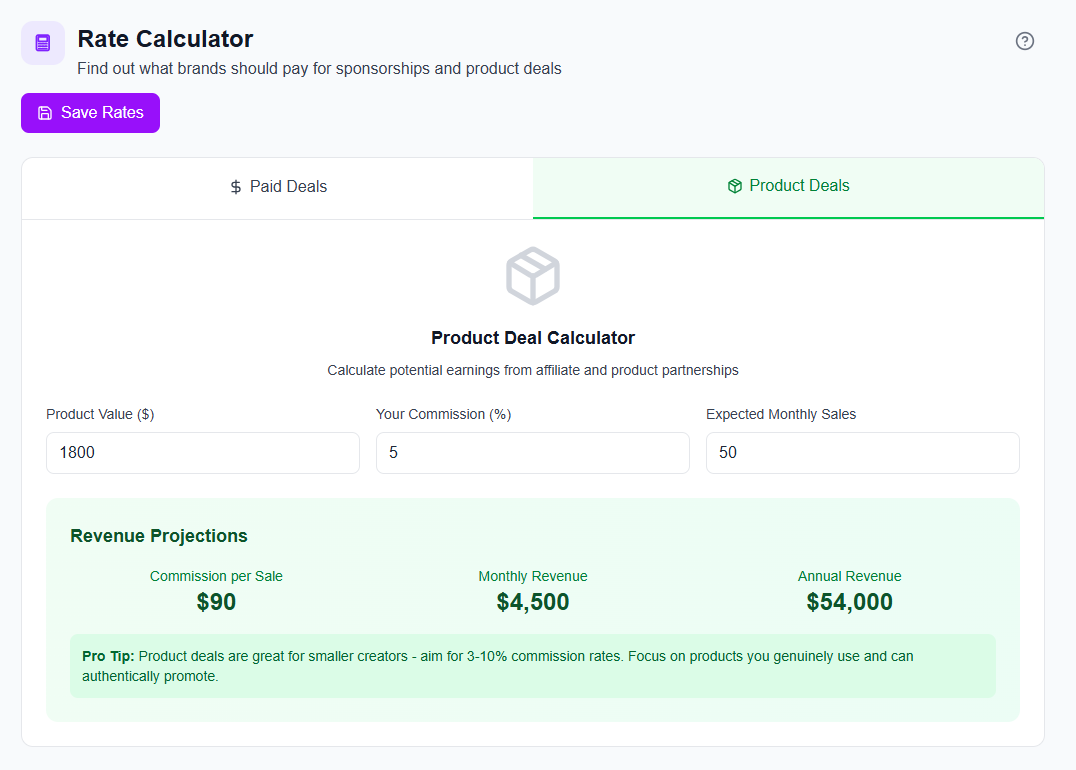
When it’s time to secure deals, iBuildInfluence can also streamline outreach and contracting. With Pitch Machine, you can generate tailored brand pitches in seconds, while Deal Pipeline and Revenue Pipeline keep each conversation tracked from first message to payment. Once you land the agreement, Contracts & Invoices help protect your terms (deliverables, deadlines, usage rights) so you avoid scope creep and get paid faster—both essential when you’re scaling how to transition from side hustle to full time.
Base your pricing on your average performance over the last 8–12 weeks, then offer tiered options. If your niche has predictable spikes, you can charge a standard fee and add a performance bonus tied to agreed metrics like CTR or tracked clicks.
In 2026, package pricing is usually stronger because sponsors often request multiple assets (feed/video + stories + usage). Deliverable pricing also keeps scope clear and helps you avoid undervaluing story mentions or cut-downs that take real time to produce.
Include deliverables, posting timeline, revision rounds, CTA method (link/code), and reporting expectations. If usage rights or whitelisting are requested, specify duration and platform usage. You can reference your typical engagement metrics from Social Statistics to show proof and build trust.
Don’t price sponsored posts by follower count—use a framework: deliverables + audience premium + risk.
Charge for scope and usage rights separately; “organic-only” and “paid usage” should have different fees.
Build an audience premium from engagement, saves/shares, baseline reach, and conversion signals.
Offer rate tiers and performance add-ons to reduce brand risk while protecting your time.
Use consistent performance history (not viral outliers) so your pricing stays stable and defensible.
Found this helpful? Share it:
iBuildInfluence Team
Creator growth strategist at iBuildInfluence. Helping content creators land brand deals, grow their audience, and build sustainable creator businesses.
Try iBuildInfluence