Income & Monetization
How Many Subscribers Do You Need to Make $1,000 a Month on YouTube in 2026?
October 26, 2026
Stop counting followers—brands count engagement. Discover the ONE metric that actually determines your earning potential and how to position your niche for premium payouts.
Before you can monetize effectively, you need to know exactly what your audience is worth to brands and what problems you solve for them. This starts with deep audience understanding—not just follower count, but engagement rate, demographics, and psychographics. A creator with 50,000 highly engaged followers in a specific niche (say, sustainable fashion or AI tools) will always earn more than someone with 500,000 disengaged followers scattered across random interests.
Take time to analyze your analytics. Look at which content generates the most saves, shares, and meaningful comments—not just likes. These are the signals that show real value. Instagram Reels with 10,000 saves are worth more to a brand than one with 50,000 likes but minimal shares. Your niche clarity also matters enormously. If you're a fitness creator, brands selling protein powder will pay premium rates. If you're everything to everyone, you're valuable to no one.
Document your core audience segments. Who follows you? What do they care about? What problems are they trying to solve? This information becomes your foundation for how to grow your audience strategically and attract sponsors who align with their needs.
The biggest mistake aspiring full-time creators make is depending on a single income source. Platform payouts are unreliable (YouTube AdSense fluctuates, TikTok's creator fund is minimal), brand deals are seasonal, and algorithms change constantly. Real full-time creator income comes from stacking multiple revenue streams together.
Here's a realistic breakdown that works: 30% from brand partnerships and sponsorships, 25% from digital products (courses, templates, e-books), 20% from passive income for content creators (affiliate marketing, ad revenue), 15% from community monetization (Patreon, membership programs), and 10% from services (consulting, coaching, one-on-ones). This mix ensures that if YouTube changes its algorithm or a brand campaign flops, your income doesn't collapse.
Start with what's easiest for your platform and audience. If you're on YouTube, enable AdSense while simultaneously building a digital product. If you're on Instagram, launch affiliate partnerships while creating a lead magnet to build an email list. The key is starting now—don't wait until you have 100,000 followers to diversify. Begin with 10,000.
Brand deals are where most creators earn their serious money early on. A single sponsorship can pay $1,000–$50,000+ depending on your reach, engagement, and niche. But you won't get these deals by waiting for brands to find you. You have to pitch.

First, know your rate. Don't guess. Calculate it based on your engagement rate, audience size, and niche demand. A common starting point: multiply your average views/impressions by $0.01–$0.05 per 1,000 views (depending on niche and engagement). So if you average 100,000 views per post with a 5% engagement rate, you're worth roughly $1,000–$5,000 per sponsored post. Document this in a professional media kit that shows real stats—not inflated projections.
Next, build a list of 50–100 brands you'd genuinely partner with. Not every brand with a budget, but ones that align with your values and audience needs. Research the decision-makers at these brands—marketing managers, influencer coordinators, brand partnerships leads. Personalized pitches get 5–10x higher response rates than generic templates. Mention specific reasons why your audience is perfect for their product. Reference recent content of theirs. Show you've done homework.
Start with micro-partnerships: smaller brands, local companies, or emerging startups who have tighter budgets but move faster. Land 3–5 of these, document the results (engagement lift, conversions if tracked), and use them as social proof to attract bigger deals.
Digital products are the bridge between sporadic brand income and true passive revenue. They require upfront work but generate income repeatedly without ongoing effort. Examples include online courses, downloadable templates, guides, presets, or memberships.
The best digital products solve a specific problem for your audience. If you're a productivity creator, sell a notion template system. If you're a marketing strategist, sell a content calendar template. If you're a fitness coach, sell a 12-week workout program. Keep your first product simple and focused—don't try to build a comprehensive course right away. A $47–$97 guide or template can sell to 2–5% of your audience without heavy marketing.
Price based on value, not effort. Something that takes you 20 hours to create might be worth $200 if it saves someone 40 hours or makes them $1,000. Underpricing is the most common creator mistake. You can always launch at $47 and raise it to $97 after 50 sales.
Use email to drive most of your sales. Build your audience's email list from day one—yes, day one—because you don't own Instagram followers or YouTube subscribers, but you own email addresses. A list of 5,000 email subscribers is worth more than 100,000 social followers for product sales.
Own your audience. This is non-negotiable for full-time creator income. Social platforms can change algorithms, ban accounts, or shut down entirely. Email is the only channel you truly control. Start collecting emails immediately through lead magnets (a free PDF, video, checklist, or template that's genuinely valuable).
Your email list becomes your most reliable revenue channel. A list of 10,000 engaged subscribers can generate $5,000–$20,000+ per product launch, depending on your open rates and conversion. Beyond sales, email also deepens relationships with your most loyal audience, making them more likely to support you through Patreon, memberships, or services.
Create a simple content hub (a bio link page or personal website) where you own the experience. This is where you drive people from social platforms. Not back to Instagram or YouTube where the algorithm decides your fate—to your space where you control how people consume content and where they buy.
The creators making six figures aren't the ones with the most followers. They're the ones with the most diversified income and the strongest direct relationship with their audience.
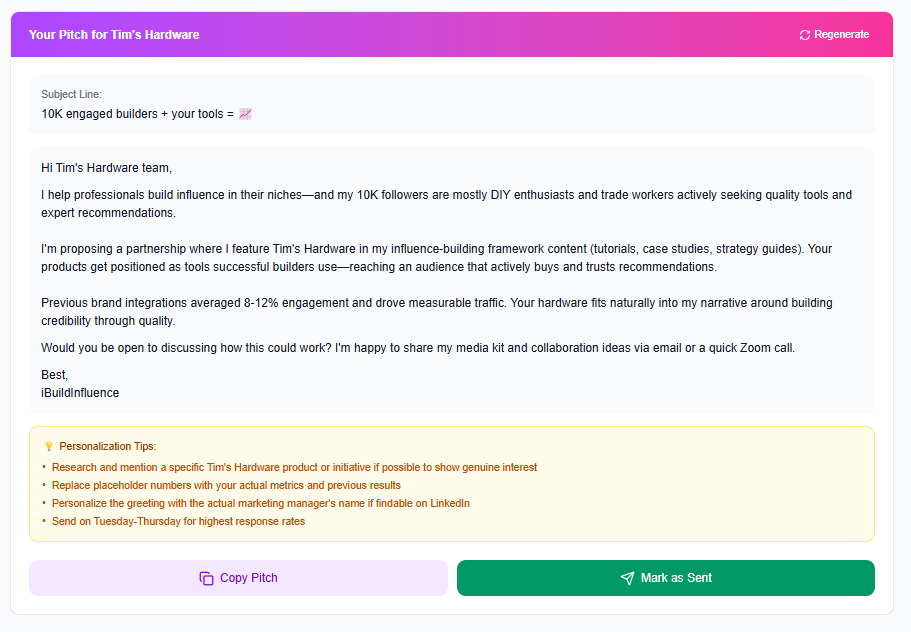
Turning social media followers into full-time income requires systems and data. iBuildInfluence is built specifically for this challenge. The platform's Pitch Machine generates AI-written brand partnership pitches in seconds, and the Revenue Pipeline / Deal Pipeline tracks every sponsorship and partnership from pitch to payment—so you never lose track of a deal or miss a follow-up. The Rate Calculator instantly shows you your exact market rate based on real creator data, eliminating guesswork when negotiating with brands.
For building passive income and direct audience relationships, iBuildInfluence's Fan Vault is your email list builder that integrates with your content workflow. The Media Kit auto-generates from your live analytics, saving you hours of manual updates, and the Proposal Builder lets you create professional sponsorship proposals in minutes. Combined with Content Planner to maintain consistency and Social Statistics to track what's actually earning engagement, you have the infrastructure to handle multiple income streams without juggling spreadsheets and chaos. The Creator Coach gives you personalized strategy guidance with full context about your goals, audience, and offers—like having a business advisor built into your workflow.
There's no magic number, but 10,000–15,000 engaged followers is usually the minimum to start earning meaningful money through brand partnerships. However, you can generate full-time income with far fewer if you have a highly specific niche, strong email list, or high-ticket services (consulting, coaching). Some creators earn $5,000+ per month with only 5,000 followers because they're deeply trusted and their audience buys readily.
Start with whichever requires the least setup and aligns with your platform. YouTube creators should enable AdSense immediately. Instagram creators should pursue brand partnerships and build email lists simultaneously. Everyone should launch at least one digital product within their first year—it's the fastest bridge between sporadic income and real revenue. Don't wait for perfection; start with what you have now.
Most creators report 18–36 months from starting content to sustainable full-time income, but this varies wildly based on niche, consistency, and strategy. A creator in a high-demand niche (AI tools, business growth) might hit full-time income in 12 months with 15,000 followers. A creator in a saturated niche (general lifestyle) might need 50,000+ followers and 3+ years. The variables aren't just audience size—they're engagement quality, email list size, digital product revenue, and partnership diversity.
Diversify income across sponsorships, digital products, affiliate marketing, and community monetization—never rely on a single source
Focus on engagement quality and niche clarity over raw follower count—a smaller, deeply engaged audience is worth more than millions of casual followers
Found this helpful? Share it:
iBuildInfluence Team
Creator growth strategist at iBuildInfluence. Helping content creators land brand deals, grow their audience, and build sustainable creator businesses.
Try iBuildInfluenceOctober 26, 2026
October 24, 2026
September 28, 2026
Jump in and use Rate Calculator to price your next sponsored post.
Open Rate Calculator