Platform Growth
How Small Channels Can Beat Big Creators (Smart Strategies)
July 25, 2026
If your videos aren’t growing, it’s usually not the algorithm. Fix hooks, retention, consistency, and distribution with a creator workflow.
If your videos aren’t growing, you’re not alone—and it’s rarely because “the algorithm hates you.” More often, your content is failing at the points that platforms actually measure: attention, retention, and audience fit. In this guide, you’ll learn the real reasons video growth stalls and the exact fixes to apply this week.
Many creators look at views and assume the issue is reach. But the most common problem is retention: viewers click, then leave quickly. Platforms don’t just reward “views”—they reward video sessions (how long people stay, how many watch through, and whether they keep watching).
Here’s a practical example. Suppose your video gets 10,000 impressions and a 6% CTR (that’s okay), but only 25% of viewers make it past the first 30 seconds. Even if you get initial clicks, the platform will learn that your video doesn’t satisfy the viewer’s intent. If your average view duration is low, the algorithm stops spending impressions on similar audiences.
Fix (this week): Audit your first 10–30 seconds like it’s product design. Use a “promise + proof + pivot” formula:
Promise: “In 7 minutes, you’ll know exactly how to transition from side hustle to full time.”
Proof: “I’ll show my numbers and the workflow I used.”
Pivot: “Then we’ll map what to do on day 1, day 2, and day 7.”
Then cut any slow intros. If you want a quick benchmark: if your average view duration is under 40–50% for mid-length videos (8–15 minutes), that’s a strong sign your hook and pacing are underperforming.
If you’re wondering whether your content is “good,” measure it. Use analytics that show retention graphs, not just impressions. A good hook without retention is like a storefront with no doors—it doesn’t scale.
“My videos aren’t growing” often means your thumbnails and titles get curiosity clicks—but your audience doesn’t feel the payoff. The real job-to-be-done matters. Viewers don’t search for “content tips.” They search for outcomes: “how to get more views,” “best software for YouTubers,” “how to start a niche channel,” or “what to sell as a creator.”
A weak hook usually has one of these issues:
Too broad: “Here’s how to grow on YouTube.”
Too vague: “3 ways to improve your videos.”
Too late: The viewer has to wait 45 seconds to learn what the video is actually about.
Try rewriting your hook as if it’s answering a question a viewer is already thinking. For example, instead of “Why your videos aren’t growing,” go narrower:
Better: “Why your videos aren’t growing (and it’s not the algorithm) — the 4 retention killers you can fix today.”
Even better: “Why your CTR is fine but views still stall: 4 fixes to boost watch time in 7 days.”
Fix (today): Choose one primary metric you want to improve and make the first line match it. If you want to lift retention, tease the exact pattern: “I’ll show you the 15-second edit that removes the retention drop.” If you want more search traffic, align with the search intent: “YouTube SEO checklist for titles, descriptions, and tags (2026).”
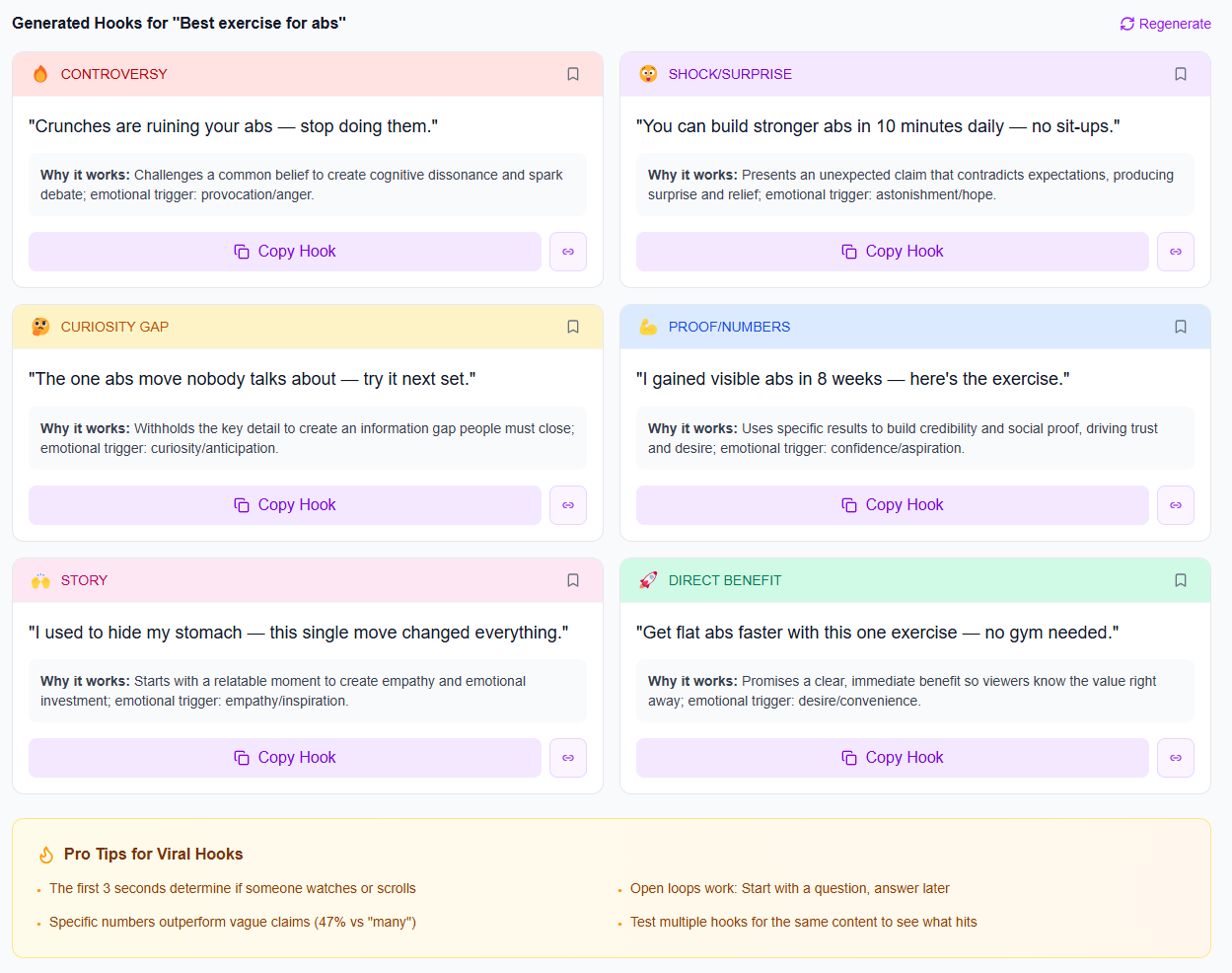
Want a repeatable way to generate better hooks? Use a hook-focused workflow like Hook Lab, which produces multiple hook options per topic and helps you score them. When hooks get more specific, you’re not just hoping—you're selecting.
Consistency is important, but “posting more” can accidentally amplify mistakes. If your content creator workflow is missing feedback loops, you’ll keep repeating what doesn’t work because you don’t know why it underperformed.
Think of your process like an experiment. Every video has variables: topic, audience, hook style, pacing, format, length, title/thumbnail strategy, and distribution method. If you don’t record what you changed, you can’t identify the cause.
Fix (this month): Build a simple measurement loop:
Step 1: For each video, write the “hypothesis” in plain language. Example: “This tutorial will perform because it targets viewers searching for a specific tool workflow.”
Step 2: After 48–72 hours, compare CTR and early retention. If CTR is low, your title/thumbnail/hook is the bottleneck. If CTR is decent but retention is low, focus on editing/pacing/structure.
Step 3: Update only one major element in your next video. Don’t overhaul everything at once.
This is exactly why creators stall: they treat every upload like a new gamble instead of a system. It’s also why the “YouTube algorithm 2026” conversation becomes noise—algorithm talk is a substitute for process.
If you want a practical system for planning and execution, use Content Planner to map topics to goals and Content Queue to schedule so you’re not improvising. You’ll also reduce the “I made a video, now what?” problem because your workflow will include next steps (optimization, distribution, and repurposing).
For a deeper look at how smarter social growth actually works, read why posting more isn’t the answer: grow smarter in 2026.
Sometimes the issue isn’t quality—it’s targeting. Platforms distribute videos to viewers based on signals: watch behavior, engagement, and the topics your audience consistently responds to. If your video mixes audiences (e.g., beginners and advanced creators with no clear through-line), retention drops and the distribution slows.
Here’s a common scenario: a channel starts in one niche (say, “budget YouTube tools”), but later uploads a random set of topics (podcasts, productivity hacks, motivational shorts). Each video might perform decently for a small crowd, but your core audience doesn’t consistently show up—so the algorithm doesn’t find a stable audience segment.
Fix (this week): Decide your primary audience and make every video serve them. Use a “content-to-viewer promise” framework:
Viewer promise: “This is for creators who struggle with X and want Y.”
Episode promise: “In this video, I’ll show you Z step-by-step.”
Then align your format. If your audience wants actionable outcomes, reduce rambling and include tangible steps, templates, or examples. If your audience wants inspiration, increase clarity and story—but still keep structure.
If you’re unsure how to pick an audience that buys and stays, use a niche filter: choose a creator niche where your viewers already spend money (tools, courses, templates, gear, software). It’s easier to monetize and easier for platforms to categorize your content. This concept is covered in creator niche sweet spot: find an audience that buys.
Even great videos often stall because distribution is passive. Uploading and waiting is not a strategy—it's hope. Most platforms give your video an early window to perform. If you don’t actively put it in front of the right people (and help them understand the value quickly), that first performance window can shrink.
Also, optimization is not just titles and thumbnails. It’s metadata, packaging, and traffic sources. The “why” behind the traffic matters. If your audience is coming from search, prioritize SEO titles and clarity. If coming from browse/shorts, prioritize immediate hooks and pattern interrupts.
Fix (before your next upload):
1) Tune the first 30 seconds: introduce the problem quickly, then show what the viewer will do or learn.
2) Align metadata with intent: your title should reflect the outcome, not your process. Your description should support context and include the keywords your audience uses.
3) Repurpose with purpose: turn your video into clips that preserve the “value moment,” not random highlights.
For creators focused on how to get more views with a repeatable starting point, this beginner-friendly approach helps: how to get more youtube views with iBuildInfluence: beginner’s guide. And if you’re building around thumbnails and hooks, you’ll want YouTube CTR mastery: thumbnails, hooks & viewer psychology to improve packaging without guessing.
Key insight: The algorithm isn’t punishing you—it's responding to evidence. If viewers don’t stay, click satisfaction drops, and distribution slows. Fix the evidence points: hook specificity, retention, and audience fit.
iBuildInfluence supports this entire “evidence-based” approach by turning video growth into a creator workflow you can repeat. Start with Trend Scout to identify topics before they peak, then use Hook Lab to generate multiple hooks per angle and score them for strength—so you’re not guessing what will earn the first 3 seconds of attention. If your thumbnails/titles aren’t translating into clicks, the Hook Lab + packaging loop makes your revisions more intentional.
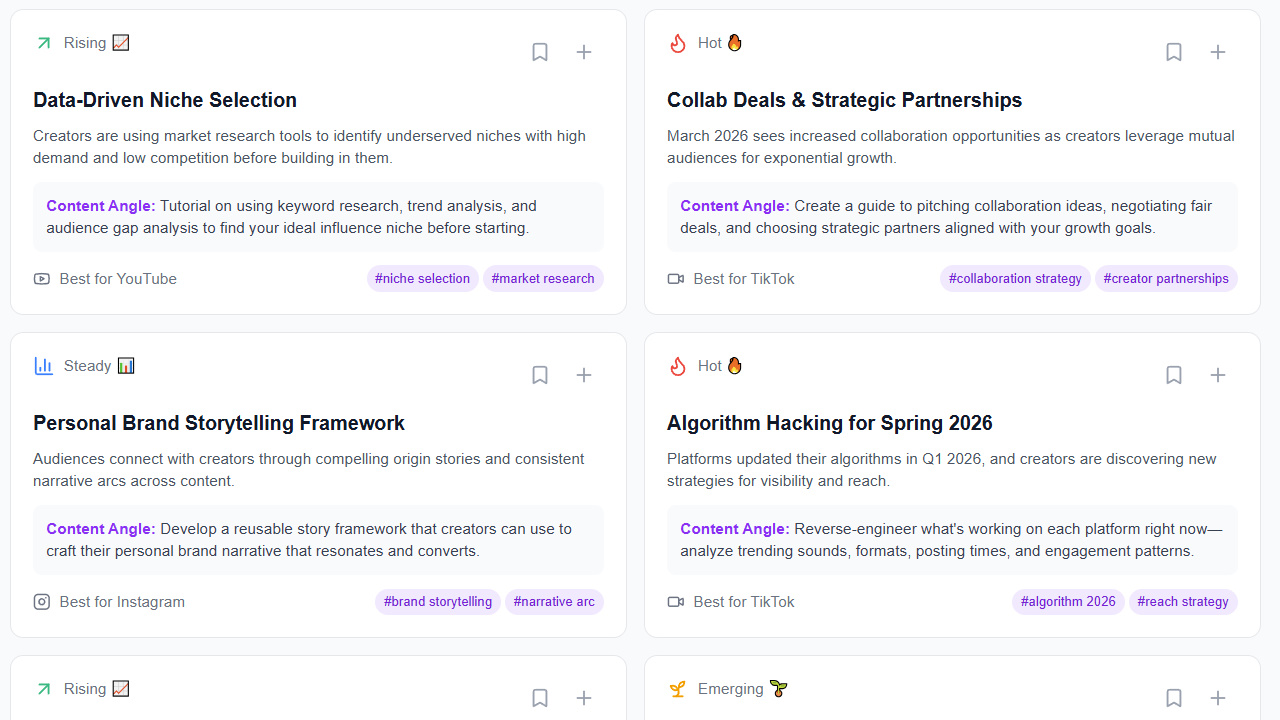
Once you’ve created content ideas, use Content Planner and Content Queue to schedule weeks of videos, reducing “random uploads” that break momentum. For creators who want to know what’s working, Social Statistics helps you track performance signals like engagement rate, reach, shares, and saves across platforms—so you can connect retention and packaging changes to actual outcomes. If your bigger goal is income, Proposal Builder and the deal-focused tools in iBuildInfluence also help you translate consistent content into partnerships without losing the thread of your content creator business plan.
You may be attracting clicks without building a session-based audience—meaning viewers leave quickly or don’t keep watching your next videos. Check retention and audience signals (likes, comments, and returning viewers). Then tighten your hook and structure so the first 30 seconds deliver on the promise.
Usually, it’s not “the algorithm” but the data your video sends it. Platforms distribute based on performance indicators like CTR, watch time, and satisfaction. Improve those metrics first with specific hooks, faster pacing, and clearer viewer intent.
Pick one video and optimize the biggest bottleneck: either CTR (title/thumbnail + hook alignment) or retention (editing/pacing + early payoff). Then apply the same improvement principle to your next upload. Use analytics to confirm whether the change improved the targeted metric.
Your video growth usually stalls because of retention, not “bad luck” with the algorithm.
Hooks fail when they’re vague—make the first seconds solve a specific viewer job.
A consistent content creator workflow (plan → publish → measure → iterate) beats posting more blindly.
Audience fit matters: if you serve the wrong people, platforms can’t reliably distribute your content.
Distribution and optimization (metadata, pacing, repurposing) turn a shipped video into real growth.
Found this helpful? Share it:
iBuildInfluence Team
Creator growth strategist at iBuildInfluence. Helping content creators land brand deals, grow their audience, and build sustainable creator businesses.
Try iBuildInfluenceJump in and use Social Statistics to see what is actually growing.
Open Social Statistics