Creator Tips
How Micro-Influencers Can Build a Profitable Media Kit That Attracts Sponsors
October 17, 2026
Stop losing money on sponsorships. Learn how to track brand deals, manage contract deliverables, send professional invoices, and get paid on time.

Landing your first brand partnership feels like a massive milestone, but the excitement quickly fades when you find yourself chasing down late payments, digging through messy email threads for signed contracts, and wondering if you actually fulfilled all your deliverables. As you transition your channel from a fun hobby into a serious content creator business plan, manual spreadsheets and memory simply will not cut it anymore. If you want to protect your revenue and scale your sponsorships without burning out, you need a bulletproof system to track every dollar from pitch to paid.
Most creators treat their sponsorship pipeline like an afterthought, relying on memory or scattered notes in their phone to keep track of who owes them what. This chaotic approach inevitably leads to missed deadlines, forgotten invoices, and deals falling through the cracks entirely. When you are managing multiple campaigns across YouTube, Instagram, and TikTok, a single dropped ball can damage your professional reputation and cost you thousands of dollars in lost income. Developing a streamlined creator workflow is the only way to ensure nothing slips through the cracks.
Beyond missed deadlines, unstructured tracking makes it nearly impossible to forecast your cash flow or understand your true business profitability. You might know how much total revenue you brought in last year, but do you know which brand partnerships took the most time relative to their payout? Without a clear overview of your active deals, you are essentially flying blind, making it much harder to figure out how much to charge for a sponsored post as your channel grows.
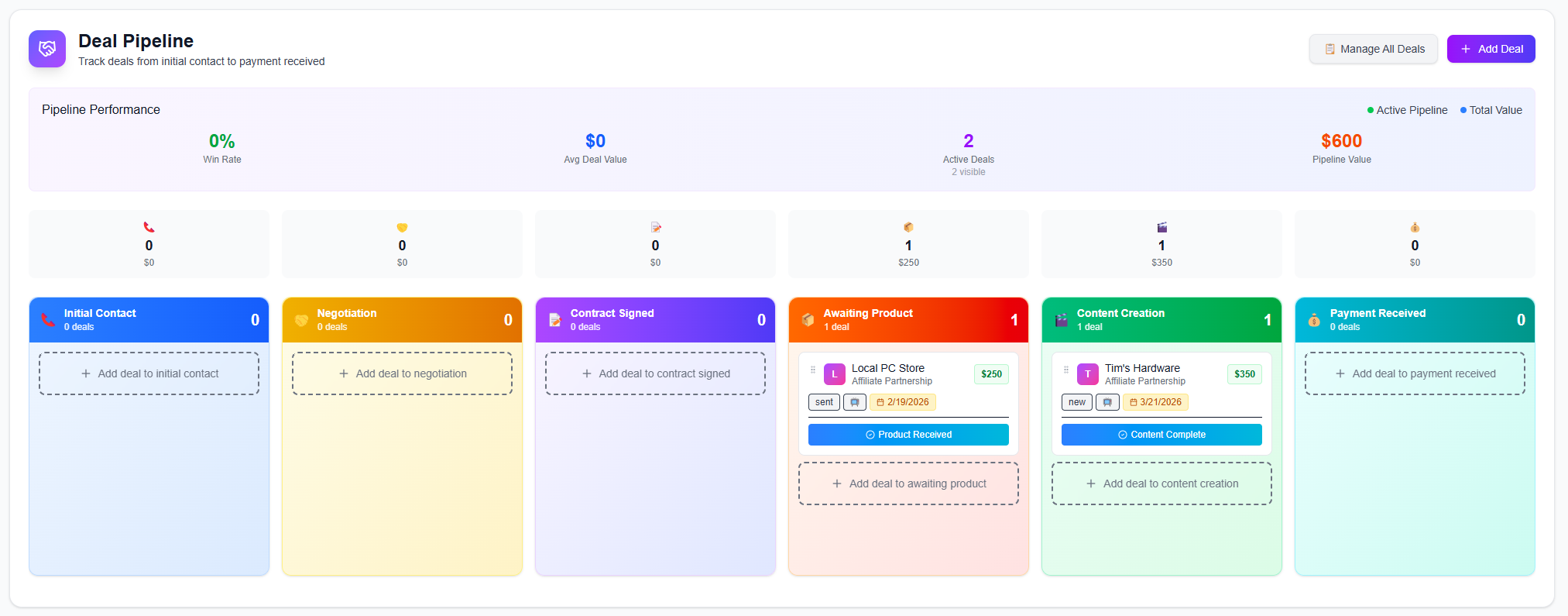
To keep your brand deals organized, you need to map out a clear visual pipeline that mirrors a real sales CRM. Every partnership goes through distinct phases: pitching, negotiating, agreed, active production, invoiced, and finally, paid. Breaking your deals down into these visual buckets lets you see your financial momentum at a glance and identifies precisely which emails you need to send on any given morning to keep cash moving into your bank account.
When an incoming brand inquiry lands in your inbox, create a deal card immediately, even if it is just a warm lead exploring initial rates. Move that card across your board as negotiations progress, and make sure to attach all relevant details—such as agreed-upon posting dates, usage rights, and compensation amounts—directly to the card. This habit ensures you never have to waste time searching through your entire email archive to find out what you promised a sponsor.
Securing the deal is only half the battle; executing the deliverables without violating your contract is where many creators stumble. Brands often try to sneak in extra requests—like an additional Instagram Story or an extra round of revisions—after the agreement is signed. If you do not have your deliverables clearly itemized and tracked against hard dates, you risk sliding into unpaid labor and damaging your relationship with the brand manager.
Every time you sign a contract, extract the key milestones and map them onto your weekly planning schedule. Treat your sponsored video deadlines with the exact same level of seriousness as you would a live broadcast. By keeping a close eye on what is due this week versus what is already completed, you protect yourself against scope creep and ensure you deliver exceptional value that turns one-off sponsors into long-term recurring brand partners.
The cardinal sin of creator finance is finishing your content deliverables, posting the video, and simply waiting for money to magically appear in your bank account. Net-30 and Net-45 payment terms are standard in the industry, which means brands will not pay you immediately upon publication. If you do not track your invoice aging periods, weeks can turn into months before you realize a payment is severely overdue.
Eliminate casual Word document templates and adopt a standardized, professional invoicing process. Your invoices should clearly state your payment terms, include your direct bank details or payment gateway links, and list your itemized deliverables. When an invoice enters the overdue stage, do not hesitate to send a polite but firm follow-up email. Establishing this level of corporate professionalism signals to brands that you run a tight ship, which naturally incentivizes them to pay your invoices faster.
Treat every brand partnership like a high-stakes media business. If your tracking is sloppy, your cash flow will be too.
Keeping your sponsorships organized requires a dedicated command center built specifically for the creator economy, which is where Brand Deals comes into play. This visual financial CRM organizes your sponsorships from initial pitch to final payout, preventing deal leakage and ensuring you always know which follow-ups to send today. Alongside your pipeline, the Contracts dashboard turns static legal documents into active project trackers that visualize your deliverables and deadlines, protecting you from scope creep and missed obligations. Finally, the Invoices tool lets you generate professional billing documents and tracks your money across paid, pending, and overdue buckets so you never work for free.
First, check your original contract to confirm whether you agreed to Net-30, Net-45, or Net-60 terms. If the payment window has officially closed, send a polite follow-up email attaching the original invoice and asking for an update on processing. If they continue to ignore communications after multiple follow-ups, reference the late-fee clauses in your contract if applicable.
Most corporate marketing departments plan their content calendars and sponsored campaigns four to eight weeks in advance. Pitching a holiday campaign in December is usually far too late; you should be reaching out by October. Giving brands ample lead time makes it much easier for them to approve your budget and fit your content into their broader media schedule.
Flat rates are always recommended for baseline compensation because your content creation labor and reach have guaranteed value regardless of a brand's external landing page conversion rates. However, you can use performance bonuses as a smart upsell in your Proposal Builder to align your incentives with their sales goals without risking your core income.
Map out every sponsorship in a visual pipeline to eliminate lost opportunities and forgotten follow-ups.
Strictly track contract deliverables and deadlines to prevent unpaid scope creep and maintain brand trust.
Ditch informal billing methods in favor of professional invoices with clearly defined payment terms.
Monitor your invoice aging periods weekly to catch overdue payments before they hurt your cash flow.
Found this helpful? Share it:
iBuildInfluence Team
Creator growth strategist at iBuildInfluence. Helping content creators land brand deals, grow their audience, and build sustainable creator businesses.
Try iBuildInfluence