Creator Tips
YouTube Hook Examples for the First 5 Seconds (2026)
October 28, 2026
Build a YouTube strategy brands can trust in 2026: choose clear pillars, prove audience fit, package results, and pitch with confidence using a clear creator workflow.

A YouTube content strategy that attracts brand deals starts with making videos for a clear audience, proving what that audience does after watching, and showing brands where they fit naturally. In 2026, brands are not just looking for big channels; they want creators with a focused point of view, reliable content, and evidence that viewers pay attention. This is for YouTubers who want to turn a channel into a real creator business without making every upload feel like an ad.
The first decision is simple: what should a brand immediately understand about your channel? A niche is not just a topic like fitness, gaming, or travel. It is the specific viewer you help and the outcome they want. “Home workouts” is broad. “Strength training for busy people in small apartments” gives both viewers and brands a much clearer reason to care.
Write one audience promise using this formula: I help [specific viewer] achieve [specific outcome] through [your content format or expertise]. Then test every future video idea against it. A skincare company, equipment brand, software company, or retailer should be able to look at your recent uploads and understand how its product could genuinely improve your viewer’s life. That clarity is the foundation of a useful content creator business plan.
The next decision is which repeatable themes will carry your channel. A content pillar is a category you can return to often without becoming repetitive. Good pillars serve your audience first, while leaving room for products, tools, places, or services that can appear naturally in the story.
Build your pillars around viewer intent. For example, a tech creator may combine tutorials, honest comparisons, setup breakdowns, and problem-solving videos. A sponsor can fit into each of those formats without taking over the channel. Avoid making a pillar around “sponsored content.” Make it around a problem your audience already wants solved. This makes your integrations feel useful instead of forced, and it gives brands several ways to work with you.
The key decision is which numbers tell the real story of your audience. Subscriber count may open a conversation, but brands also want signs that viewers are choosing your videos, staying engaged, and responding to your recommendations. Your strongest evidence usually comes from patterns across related videos, not one lucky upload.
Create a simple proof sheet for each pillar: relevant views, click rate, average view duration, recurring comment themes, and any action viewers took after watching. Use this working formula when evaluating a potential campaign: implied sponsor cost per relevant view = sponsor payment ÷ expected relevant views. It does not set your rate, but it helps you explain value in a language a marketing team understands. If you need to improve the inputs, learn how to get more views consistently on YouTube before chasing more pitches.
The decision here is where a brand belongs in the viewer journey. The best integration is not pasted into a finished video at the last minute. It is planned during the idea stage, after you know the viewer’s problem, the promise of the video, and the solution you will show.
Use this structure: viewer problem → your method → product-supported moment → useful result. For example, a creator making a video about organizing a small filming space could naturally use storage products, lighting, editing software, or productivity tools. The sponsor supports the outcome rather than interrupting it. Keep your opinion clear, disclose paid work properly, and never promise results you cannot stand behind. Trust is what makes a viewer willing to listen when you recommend something again.
The final decision is how you present your offer. Do not approach brands with only “I make YouTube videos” or “I have subscribers.” Lead with the audience, the content format, and the campaign idea. A good pitch makes it easy for a brand manager to picture the finished video and why its customers would care.
Your pitch can follow this formula: I create [format] for [audience] who want [outcome]. I think your [product or service] fits a video about [specific idea] because it helps them [clear benefit]. Add recent evidence from similar content, then suggest a deliverable that matches the idea. Before sending anything, review brand deal pitch email templates that get replies so your outreach feels specific rather than copied and pasted. A thoughtful pitch is stronger than a long list of generic compliments.
Build every video around a clear viewer outcome first, and make brand partnerships the natural tool that helps deliver it.
Use Social Statistics to see your reach, follower growth, and engagement across platforms in one view, so you can spot which content pillars create the strongest audience proof before pitching a brand.
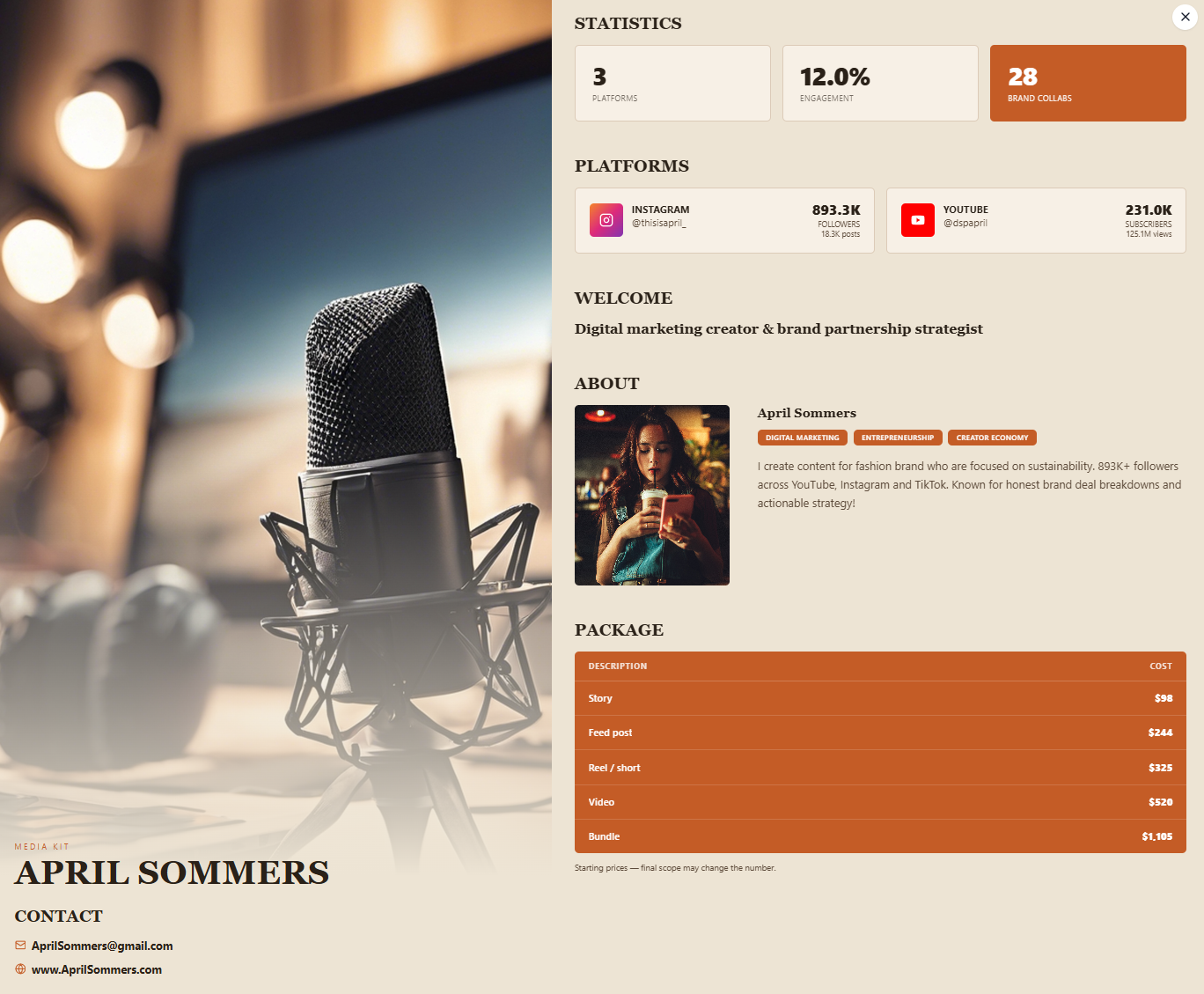
Create a current, shareable channel overview with Media Kit, which pulls live social stats into a professional asset you can export or send with outreach instead of relying on scattered screenshots.
Use Pitch Machine to turn a specific campaign idea into customized outreach, helping you send polished pitches faster while keeping each message relevant to the brand.
There is no universal subscriber requirement for brand deals. A smaller channel can be valuable when it reaches a clear audience with a strong reason to trust the creator. Focus on relevant views, audience fit, consistent uploads, and content that makes sense for a potential partner.
Content that solves repeat problems for a defined audience is usually easier to sponsor than random uploads. Tutorials, comparisons, reviews, routines, behind-the-scenes breakdowns, and challenge-based videos can all work when the product genuinely supports the viewer outcome. The format matters less than the audience intent behind it.
You do not need to pretend a product placement is sponsored. But you can create videos that demonstrate your ability to explain tools, compare options, and recommend products with honesty. This gives brands a clear example of how you would handle a partnership while helping you build passive income for content creators through suitable affiliate recommendations.
Define an audience promise that explains who you help and what result your videos deliver.
Build repeatable content pillars around viewer problems, not around sponsorships.
Track relevant views, click rate, average view duration, and audience response to show real attention.
Plan brand integrations during the video idea stage so the product supports the story.
Pitch a specific campaign concept that connects the brand to a clear viewer outcome.
Found this helpful? Share it:
iBuildInfluence Team
Creator growth strategist at iBuildInfluence. Helping content creators land brand deals, grow their audience, and build sustainable creator businesses.
Try iBuildInfluence