
Creator Tips
YouTube Sponsorship Rates in 2026: How Creators Should Price Brand Partnerships
November 2, 2026
Learn what brand managers look for in an influencer portfolio in 2026. Explore layout formulas, case study formats, and examples that close deals.
Brands look for proof that your creative execution drives viewer action, not an endless archive of your favorite personal posts. An effective influencer portfolio shows brand managers your storytelling structure, camera quality, and understanding of commercial objectives within thirty seconds. This guide is for content creators, vloggers, and freelance talent ready to standardize their pitch assets, refine their brand deal pitch email templates, and land consistent paid partnerships.
Brand managers do not have time to watch your entire back catalog. Your portfolio must immediately present three distinct video formats: a problem-solution hook, a high-retention tutorial or demonstration, and an authentic lifestyle integration. Selecting these three styles demonstrates that you can tailor content to different phases of a marketing funnel. When an agency opens your link, they want to see if your lighting, pacing, and audio match their campaign requirements without needing to scroll through irrelevant personal updates.
To execute this layout, pick your best three to six public assets and label each one by its commercial angle rather than its social platform. For example, instead of naming a file "TikTok Video 1," title it "Problem-Solution: 3-Second Hook with Product Reveal." Accompany each asset with a short two-sentence breakdown outlining the concept and why that pacing was chosen. Showing the creative intent behind your editing choices proves that your previous content wins were deliberate rather than accidental algorithm spikes.
A video link without context forces the brand manager to guess whether your campaign actually worked. Every featured project in your portfolio needs a concise data block containing three variables: the campaign objective, the creative solution you delivered, and the verified performance outcome. If you are building a serious media kit and creator presentation, this context changes the conversation from casual content creation to professional marketing services.
Structure your case study block using this straightforward format: Objective: Drive consideration for a morning routine product. Execution: Sixty-second organic integration highlighting morning fatigue and introducing the beverage as a seamless alternative. Results: 42,000 views, 14% average view duration above channel baseline, and 310 comments asking about purchase details. If you did not have a tracking link for direct sales, highlight retention graphs, saves, shares, and high-intent buyer comments as your tangible metrics. This structure fits neatly into a broader content creator business plan where commercial predictability matters.
Creators frequently confuse an influencer portfolio with a media kit, often sending the wrong asset at the wrong stage of outreach. Your media kit is a demographic snapshot showing follower counts, audience locations, and broad pricing tiers. Your portfolio is a functional work sample gallery that proves your production skills, visual style, and storytelling ability. If a brand contacts you about User Generated Content (UGC) where content will run entirely on their paid ads account, your follower count is irrelevant; your portfolio is the only asset that matters.
Decide whether you are pitching organic reach or production quality before sending your link. When pitching sponsored integrations to run on your own profile, pair your media kit data alongside two relevant portfolio examples. When pitching white-label content, product photography, or whitelisted ad creative, lead exclusively with your portfolio. Clear separation between reach metrics and creative craftsmanship prevents agency confusion and speeds up approval from corporate marketing teams.
Avoid organizing your portfolio tabs by platform names like Instagram, YouTube, and TikTok. Brands frequently repurpose assets across multiple distribution channels, meaning they care far more about the content framework than the app where it first appeared. Organizing by platform makes your portfolio look like an amateur social feed rather than a structured production library. A structured library makes it easy for brands to see how your production fits their specific campaign needs as you establish a clean content creator workflow.
Group your samples into commercial objectives such as "Direct Response Ads," "Unboxing and First Impressions," "Aesthetic Product Integration," or "Educational Walkthroughs." Under each category, embed two high-performing vertical videos and one horizontal video if applicable. This layout shows potential sponsors that you understand different visual languages. A brand seeking an educational explainer can jump straight to your demonstration reel without digging through unboxings or trend remakes.
The final section of your portfolio must make initiating a contract completely frictionless. Most brand managers abandon creator sites because the pricing is completely absent, contact information is hidden behind generic forms, or communication channels are vague. While custom campaigns require scoping conversations, presenting base starting tiers or a clear inquiry outline anchors your commercial value and filters out low-budget inquiries.
Place a direct contact email, clear package parameters, and an invite to review specific deliverables at the bottom of the page. State your standard turnaround time, your policy on revision rounds, and the primary content formats you produce. For example: "Standard video packages include concept scripting, one round of edits, full organic usage rights for 30 days, and delivery within 7 business days." Clearly defining the boundary of a standard project sets expectations early and establishes you as a business operator.
A brand manager evaluates your portfolio in under thirty seconds; they are not checking your follower count, they are confirming whether your production style protects their reputation and moves an audience to act.
Setting up a functional presentation requires software built specifically for creator assets rather than bloated website builders. Inside iBuildInfluence, you can build and organize your pitching ecosystem without manual coding:
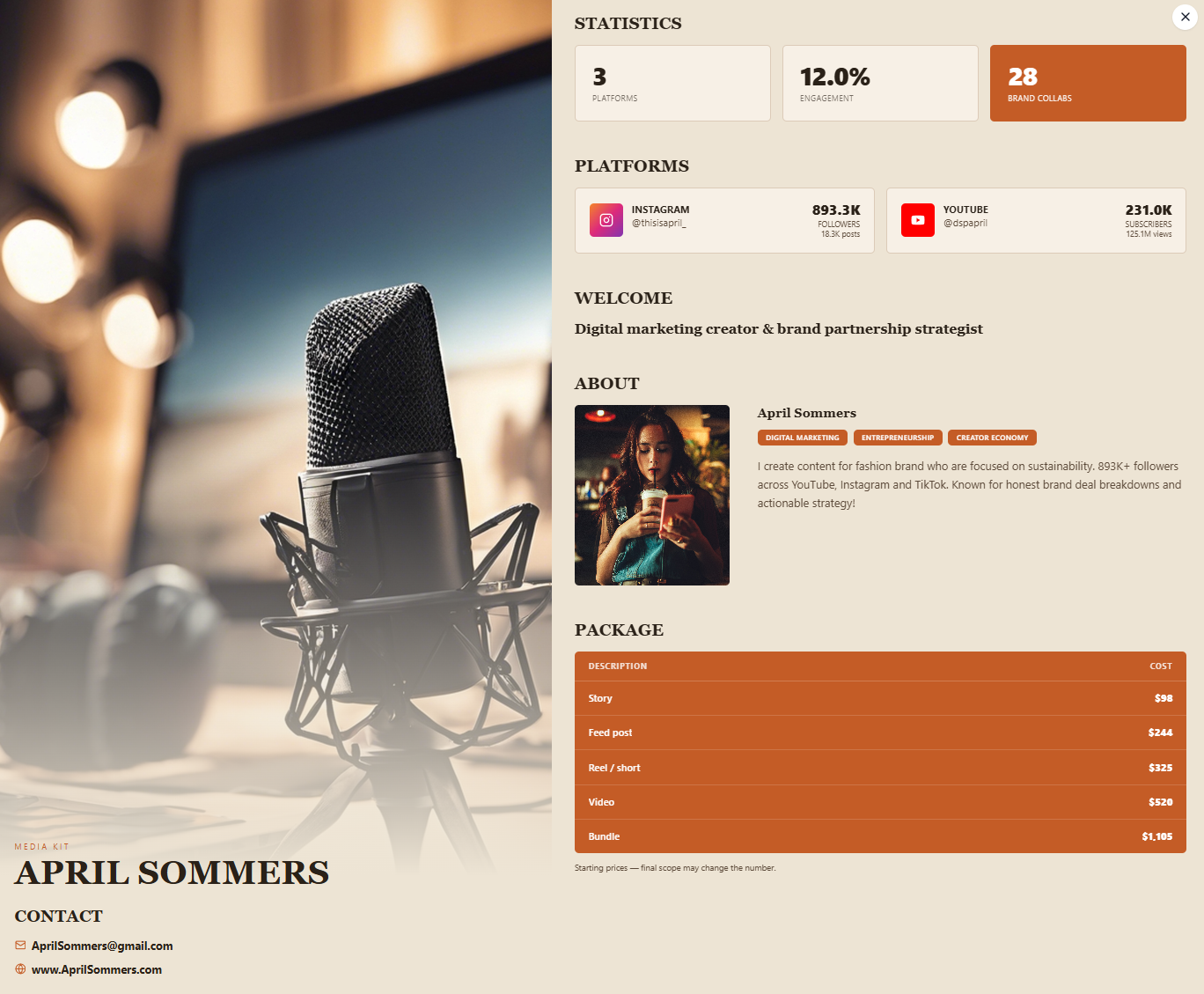
Use the Influencer Portfolio tool to curate a professional, shareable gallery of your best video assets categorized by style, allowing you to showcase verified production quality directly to prospective clients. Pair this with the Media Kit builder to automatically populate real-time follower numbers and channel metrics from your connected platforms into an exportable, polished overview. When a partner agrees to move forward, open the Proposal Builder to generate itemized, high-converting offer documents with clear deliverables and smart add-ons that protect your rates.
A media kit focuses on distribution data, summarizing your follower counts, audience demographics, channel reach, and baseline pricing. An influencer portfolio is a visual showreel that highlights your creative execution, filming techniques, audio clarity, and past commercial campaign results. Media kits sell audience access, while portfolios sell creative capability.
Between six and nine high-quality video examples is optimal. Presenting fewer than six may make your catalog look untested, while offering more than nine overwhelms brand managers. Focus on two to three strong examples across three distinct commercial styles, such as problem-solution hooks, detailed product walkthroughs, and lifestyle integrations.
Yes, you can create speculative work using products you already use and love every day. Film high-quality sample integrations that follow commercial structures, such as a clear hook, feature showcase, and call to action. Clearly label these assets as concept projects or creative samples in your portfolio to demonstrate your filming and editing skills transparently.
Organize your portfolio samples by commercial format and business objective rather than by social media platform names.
Include a three-part context block for every project that outlines the campaign goal, your creative approach, and measurable performance results.
Keep your portfolio separate from your media kit when pitching production skills or UGC where audience reach is not the primary deliverable.
Feature six to nine polished video examples covering hooks, walkthroughs, and organic lifestyle integrations to avoid overwhelming the reviewer.
Include transparent baseline package details, delivery timelines, and direct contact options to make closing deals easy for brand managers.
Found this helpful? Share it:
iBuildInfluence Team
Creator growth strategist at iBuildInfluence. Helping content creators land brand deals, grow their audience, and build sustainable creator businesses.
Try iBuildInfluenceNovember 2, 2026
October 30, 2026
October 29, 2026
Jump in and use the tools from this article on your own channel.
Open iBuildInfluence