Income & Monetization
YouTube Monetization in 2026: 10 Ways Beyond Ad Revenue
October 27, 2026
Learn how to build a high-converting influencer media kit in 2026. Discover the exact metrics, packages, and case study structures that secure premium sponsors.
An influencer media kit gets you higher-paying brand deals when it stops treating follower totals like currency and starts demonstrating verifiable audience alignment and commercial intent. It is built for working creators who want to treat their channels as a media business rather than an ad-hoc hobby. If you are learning how to transition from side hustle to full time, this document operates as your business proposal, creative resume, and rate framework rolled into one clean asset.
Brand managers review dozens of decks every week, and raw follower figures no longer command premium budgets. Your media kit must foreground high-signal metrics: average view duration, thirty-day median reach, click-through rates, and demographic concentration. When a brand buys an integration, they are buying predictable access to a specific subculture, not a dormant subscriber number. Show your top viewer locations, age distributions, and gender split on your primary platform, backed by data directly from your analytics panel.
To implement this, build a dedicated audience profile card. Select your primary platform and calculate your median views across your last ten organic uploads, excluding viral outliers that distort expectations. Pair that figure with your core demographic breakdown—such as viewers aged 25 to 34 located in tier-one purchasing markets. Presenting your numbers as a predictable median demonstrates that you understand commercial media buying and eliminates the risk of a sponsor feeling shortchanged on an underperforming post.
Publishing an isolated thirty-second shoutout rarely solves a brand's marketing objective, and quoting single-post rates leaves money on the table. Structure your media kit around campaign packages that combine long-form depth with short-form distribution and persistent digital real estate. A standard package might bundle one dedicated YouTube integration, two vertical cutdowns for Shorts or Reels, and a permanent tracked link in the video description and pinned comment. By packaging your deliverables, you anchor the conversation around comprehensive campaign value rather than a commoditized unit price.
When drafting your pricing section, establish three distinct tiers: a single-placement test tier, a standard multi-platform bundle, and an enterprise campaign with usage rights. For clear guidance on calibrating these numbers, review how much to charge for a sponsored post in 2026 so you do not underquote your baseline reach. Define the scope of every asset clearly, including exact runtime, exclusivity windows, and delivery timelines. This level of clarity protects your calendar and signals that you run a structured production house.
Nothing justifies four-figure and five-figure sponsor rates faster than evidence of past commercial conversion. Replace generic lifestyle photo spreads with one or two concise case studies highlighting previous brand collaborations. A high-converting case study requires only four elements: the partner's industry, the campaign objective, the specific creative deliverable, and the outcome achieved. If your work drove tracked sales, newsletter sign-ups, or exceptional watch time, highlight those performance milestones plainly.
If you have not worked with an enterprise brand yet, manufacture a proof-of-concept case study using affiliate performance or your own digital product launches. For example, if an affiliate campaign in your niche generated 250 link clicks and 18 purchases from a single integration, document that conversion rate in your deck. Framing your past organic content as a practical demonstration of audience trust proves to prospective sponsors that your community takes action when you recommend a product.
Arbitrary pricing destroys your credibility during negotiations. Smart creators establish a baseline formula based on guaranteed median impressions and commercial demand. While commercial agreements vary based on production complexity, you can calculate a practical starting point using standard Cost Per Mille formulas tailored to your audience's purchasing power.
Use this simple calculation for your baseline integration fee: take your median expected views, divide that figure by 1,000, and multiply by your baseline category rate. For example, if an integration reliably reaches a median of 12,000 views and your agreed baseline rate is a $35 CPM, your starting quote is $420 before applying surcharges for rush turnarounds, whitelisting rights, or category exclusivity. Displaying structured package ranges based on transparent deliverables prevents prolonged haggling and grounds your rate discussions in media value.
Sending an unprompted, heavy PDF attachment to a generic corporate inbox guarantees your email gets flagged by spam filters or ignored by busy marketing managers. A media kit is not an opening line; it is an asset you introduce once interest is established or link seamlessly as a lightweight digital summary. Incorporating your deck into a disciplined content creator workflow means pairing it with targeted cold outreach that addresses the brand's current seasonal initiatives.
When preparing your outbound outreach, study brand deal pitch email templates that get replies to master the initial conversation. Keep your introductory email under 150 words, pitch two specific creative angles suited to their brand, and include a single live link to your public media kit. This allows the marketing manager to inspect your audience demographics and verified stats in a single click without downloading clutter to their desktop.
A media kit does not exist to prove you have an audience; it exists to prove your audience takes action when you speak.
iBuildInfluence provides the operational infrastructure required to pitch, price, and close professional sponsorships without juggling detached spreadsheets. The Media Kit builder automatically pulls your live data—including follower counts and reach metrics across connected platforms—directly into a verified overview, ensuring you never send outdated figures to prospective partners. To eliminate the uncertainty of pricing your deliverables, the Rate Calculator generates industry-standard pricing cards tailored to your niche and audience size, complete with toggleable adjustments for exclusivity and rush turnarounds. When a brand expresses interest, use the Proposal Builder to craft itemized, professional offers with built-in upsells that elevate your deal size and protect your production margins.
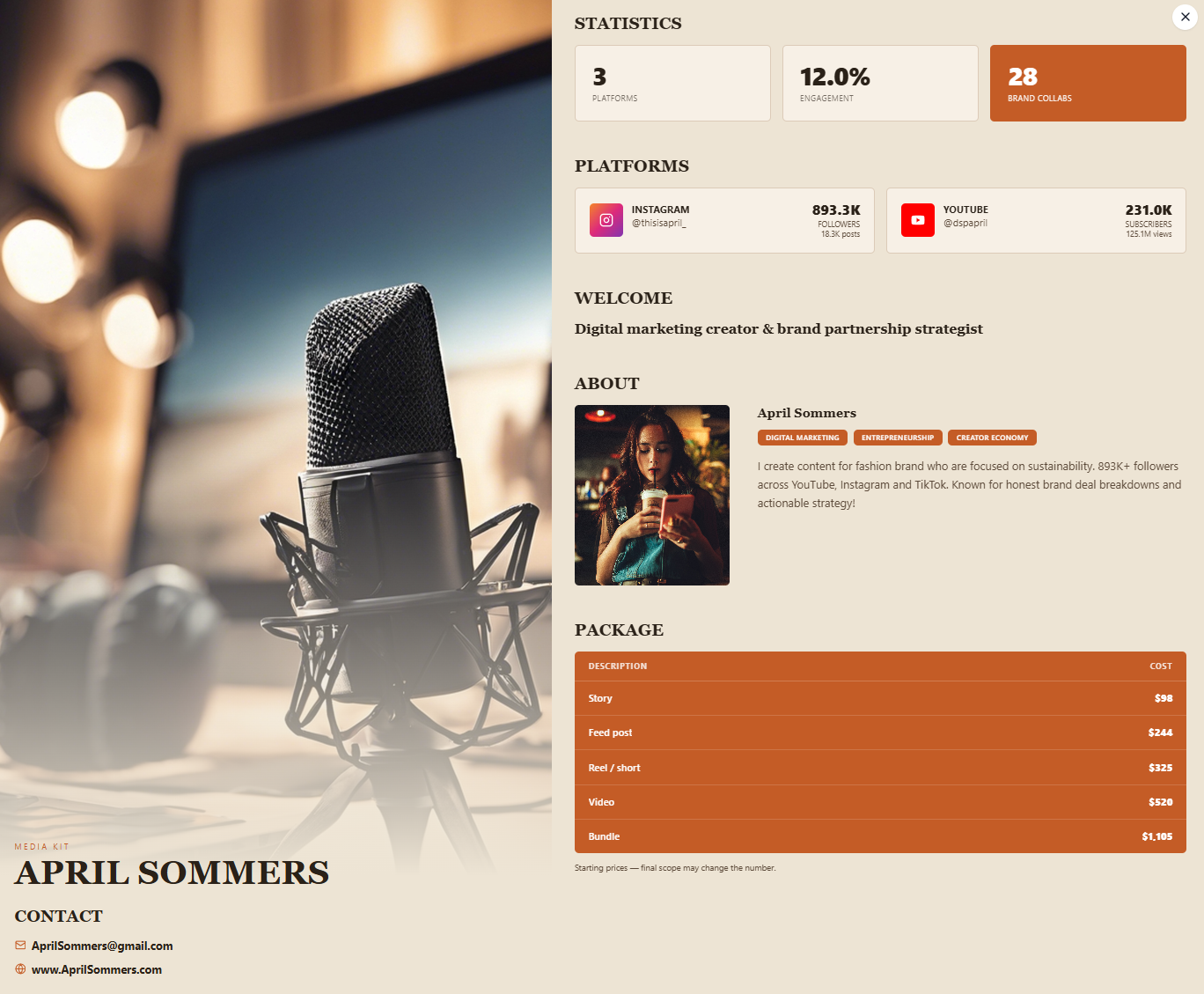
It is generally better to publish a starting-at baseline or package tier rather than rigid, static rates. Every brand partnership carries variable scope, including usage rights, paid whitelisting, and exclusivity demands that impact the final price. Listing a baseline sets an expectations floor while leaving room to negotiate upward based on the sponsor's technical requirements.
A high-converting media kit should span between one and three pages. One-page digital summaries work best for initial outreach, providing an instant snapshot of your reach, niche, core demographics, and past partners. Extended two- or three-page decks are suitable when a sponsor requests detailed case studies, production packaging, and long-term licensing options.
Update your audience data and median view counts every thirty days if you maintain a static document. Platform algorithms and viewership trends fluctuate, and presenting six-month-old data signals an inattentive business operation. Using a dynamic, live-updating media kit link eliminates manual data entry and ensures agency buyers always see current metrics.
Prioritize median view counts, audience retention, and geographic demographics over unverified total follower counts.
Anchor your offerings around multi-asset packages to increase average deal size and deliver comprehensive campaign value.
Include concise case studies that prove your creative recommendations drive measurable viewer action and conversions.
Use structured CPM calculations to ground your pricing discussions in transparent, defensible media metrics.
Host your kit as a dynamic, live-updating digital asset to prevent outdated numbers from reaching prospective agency partners.
Found this helpful? Share it:
iBuildInfluence Team
Creator growth strategist at iBuildInfluence. Helping content creators land brand deals, grow their audience, and build sustainable creator businesses.
Try iBuildInfluenceOctober 27, 2026
October 26, 2026
October 24, 2026
Jump in and use Media Kit to put the numbers a brand asks for on one page.
Open Media Kit